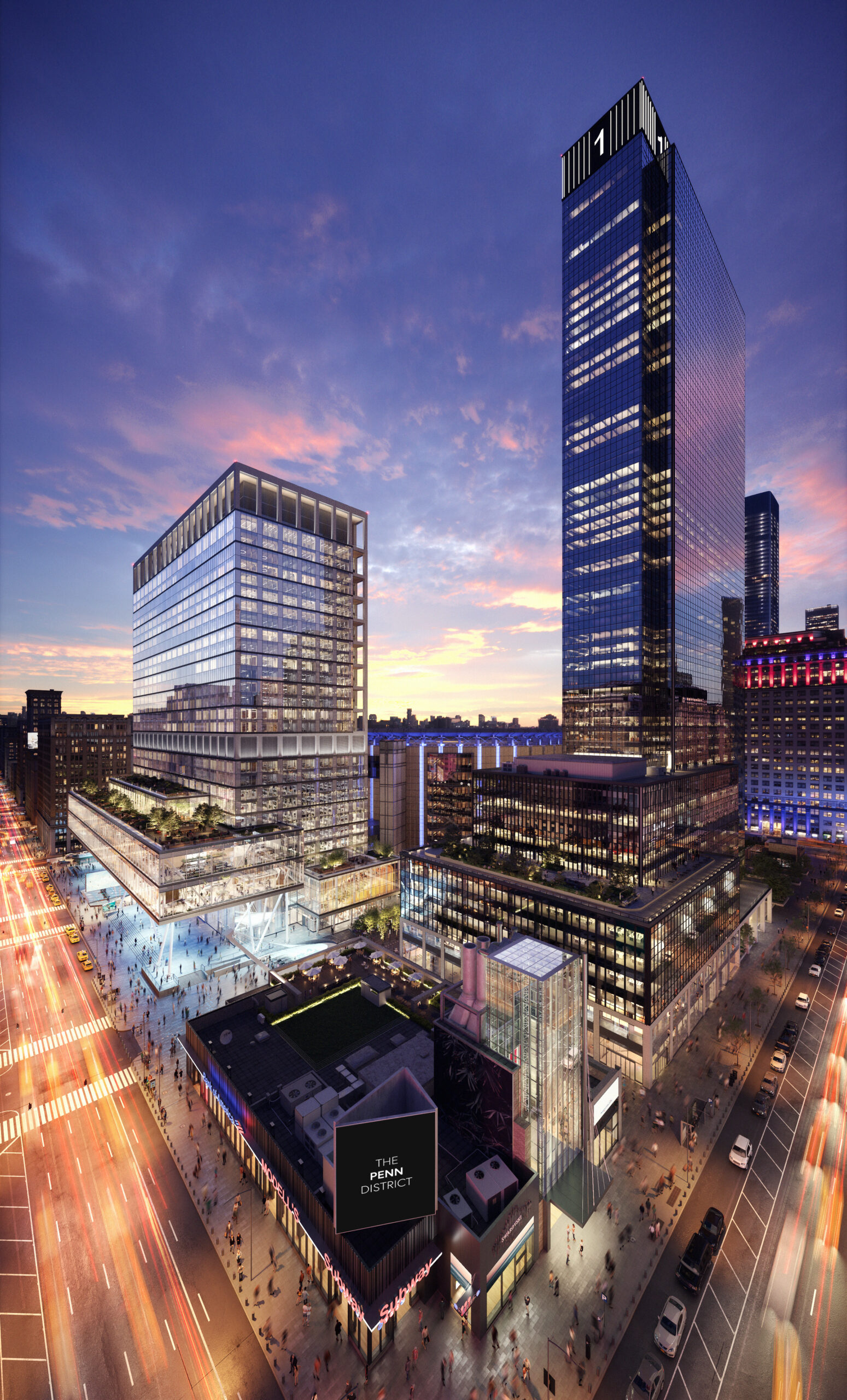
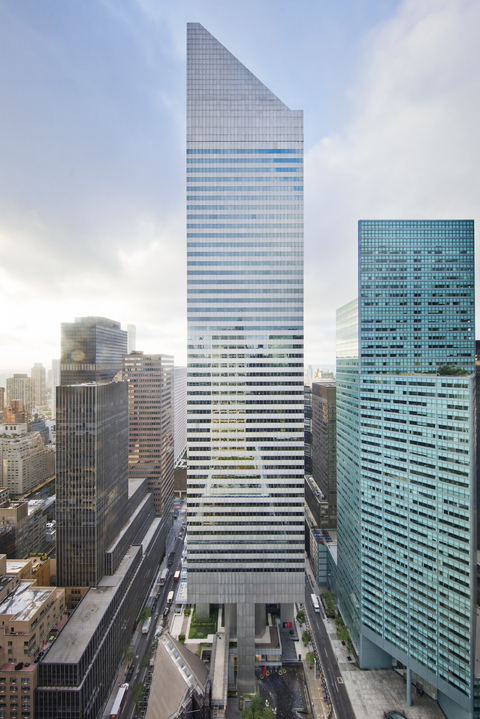
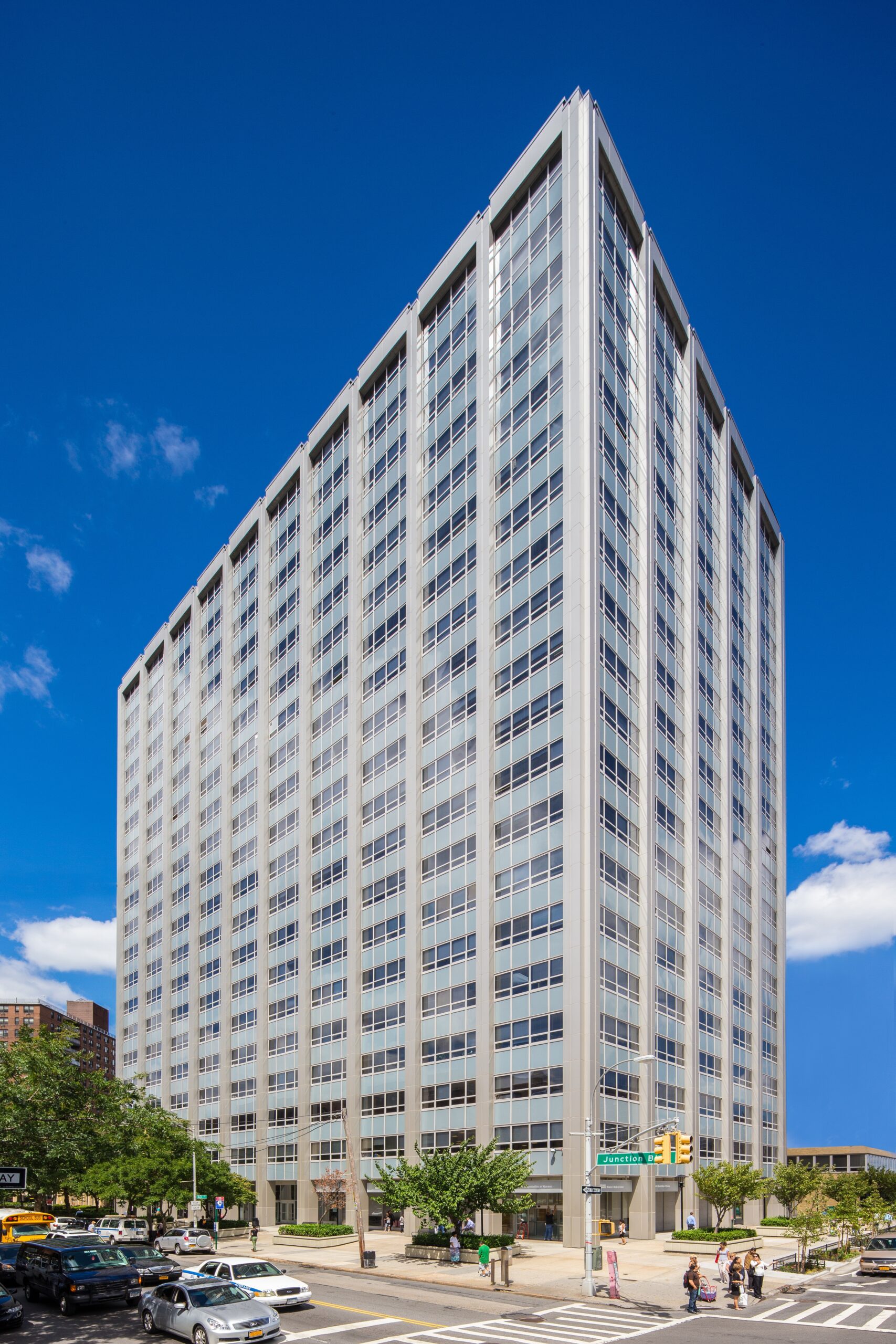
Vornado Realty Trust is spearheading a groundbreaking retrofit at 1 Pennsylvania Plaza (PENN 1) in New York City, aiming to reach 100% carbon neutrality by 2040. This ambitious project is part of the company’s broader commitment to environmental sustainability, as outlined in their Vision 2030. PENN 1, a towering landmark in midtown Manhattan, stands at 57 stories and spans approximately 2.5 million square feet of office and retail space. Constructed in 1972, the building is a key component of THE PENN DISTRICT, Vornado’s flagship property cluster.
The roadmap to carbon neutrality at PENN 1 includes advanced waterside heat recovery measures. This strategy focuses on capturing and reusing heat from the building’s condenser water loop, a method that not only reduces heating loads but also facilitates a subsequent transition to electrification through air-source heat pumps and thermal storage. The PENN 1 project demonstrates a ‘thermal dispatch model,’ in which carbon-free energy sources are gradually deployed to fulfill the heating and cooling demands of a large commercial building.
By adopting this innovative approach, Vornado aims to significantly reduce the carbon footprint of PENN 1 while also setting a replicable model for building decarbonization in New York City. This initiative underscores Vornado’s role as a leader in sustainable real estate development, with a portfolio that includes over 34 million square feet of premier assets across New York City, Chicago, and San Francisco. Through Vision 2030, Vornado’s commitment to achieving carbon neutrality and a 50% site energy reduction reflects their dedication to pioneering sustainable solutions in the urban landscape.
Project Highlights
Emissions Reduction
100%
PENN 1 aims to achieve 100% carbon neutrality by 2030.
Lessons Learned
Accurate, calibrated energy models are essential for realistic projections of energy and carbon reductions, guiding the selection of feasible decarbonization measures for complex buildings.
Lessons Learned
Leveraging existing technologies in innovative ways, such as the purposeful dispatch of thermal energy and optimizing for scalability and affordability, can be as impactful as waiting for new technological breakthroughs.
Lessons Learned
Training and involving operations teams in the design and implementation phases are crucial for ensuring systems function as intended.
Step 1
Step 1: Examine Current Conditions
A baseline assessment is key to understanding current systems and performance, then identifying conditions, requirements or events that will trigger a decarbonization effort. The assessment looks across technical systems, asset strategy and sectoral factors.
Building System Conditions
Equipment nearing end-of-life
New heat source potential
Tenant load change
Resilience upgrades
Efficiency improvements
Asset Conditions
Repositioning
Capital event cycles
Carbon emissions limits
Tenant sustainability demands
Investor sustainability demands
Market Conditions
Technology improves
Policy changes
Utility prices change
Fuels phase out
The project team initially explored two packages of combined reduction measures to assess the impact of eliminating fossil fuels and electrifying the building’s heating end uses. Individual measures studied earlier in the project were selected and combined with additional infrastructure enhancements to develop two electrification packages summarized as follows:
Beneficial Electrification: Incorporates a suite of tenant, airside, and envelope upgrades along with the installation of air source heat pumps working in conjunction with the cogeneration plant to keep the building heated; eliminates all district steam resources.
Full Electrification: Incorporates the same set of upgrades but utilizes more air source heat pumps in place of the cogeneration plant.
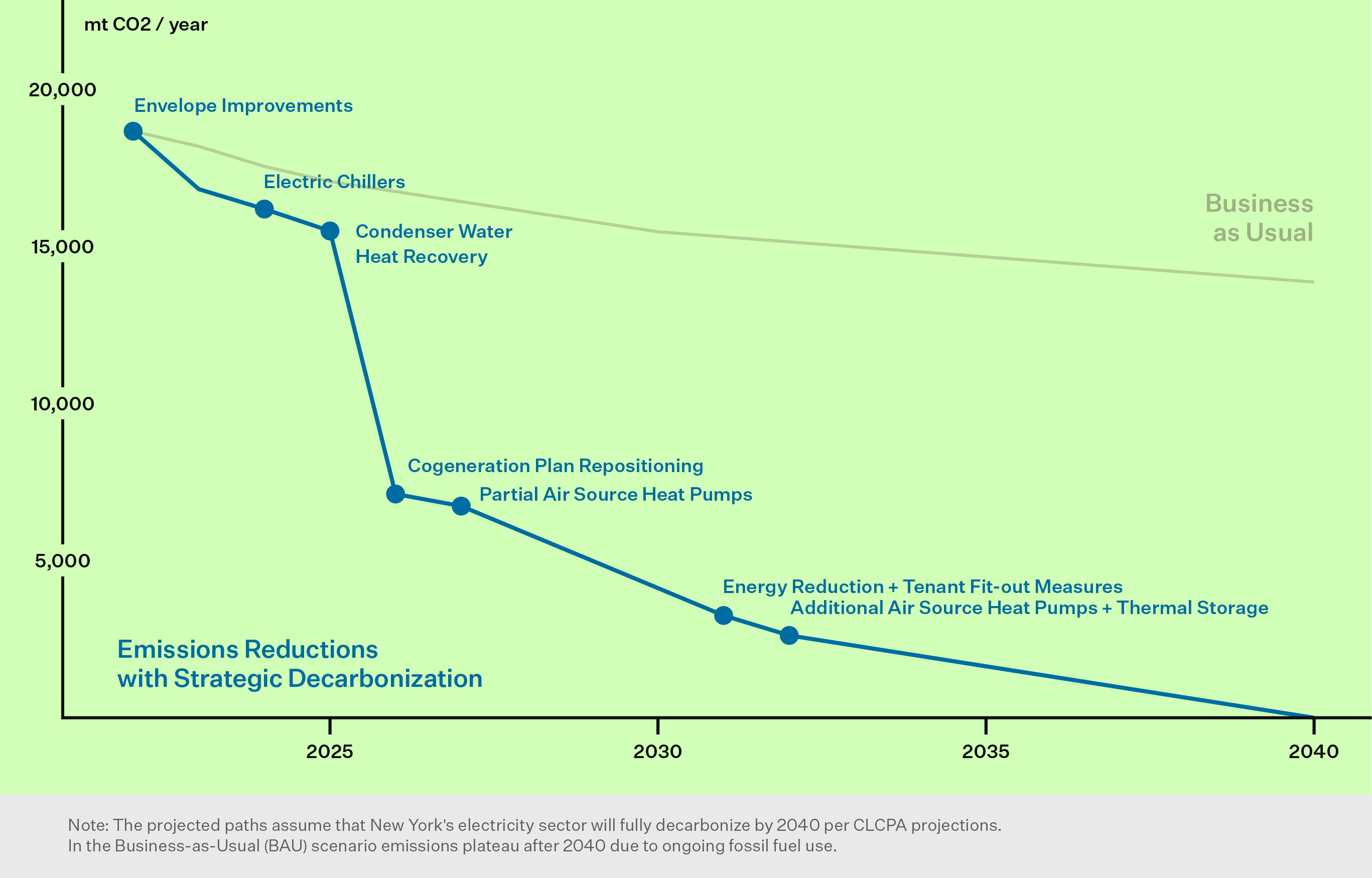
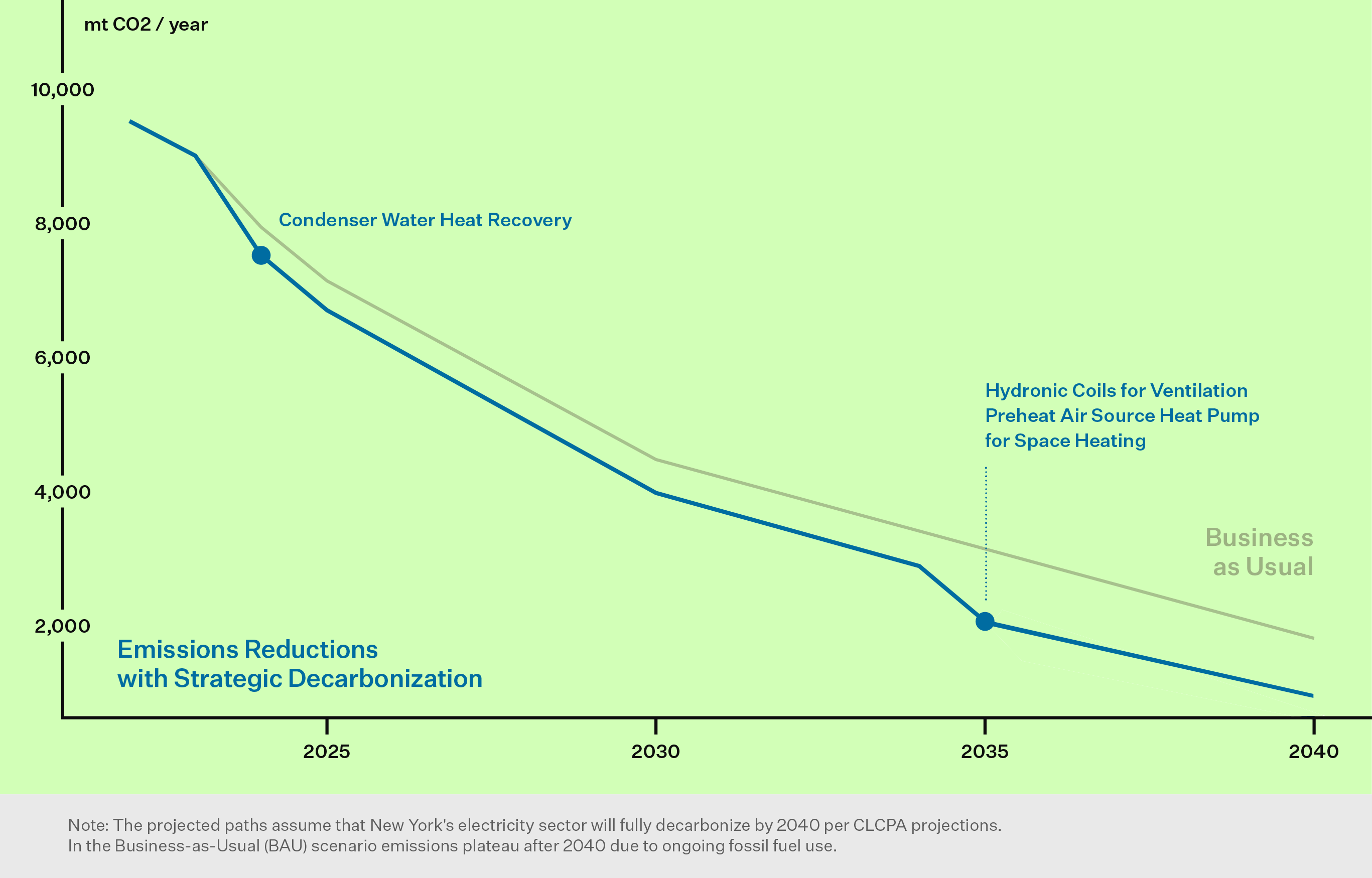
The thermal dispatch approach utilized at PENN 1 allows the building to intelligently prioritize low-carbon thermal resources for operational building needs ahead of those that are more carbon intensive. This strategy, enabled by electrification of heating loads and heat recovery measures, will reduce energy use by 22% and carbon emissions by 38% by 2030.
Step 2
Step 2: Design Resource Efficient Solutions
Effective engineering integrates measures for reducing energy load, recovering wasted heat, and moving towards partial or full electrification. This increases operational efficiencies, optimizes energy peaks, and avoids oversized heating systems, thus alleviating space constraints and minimizing the cost of retrofits to decarbonize the building over time.
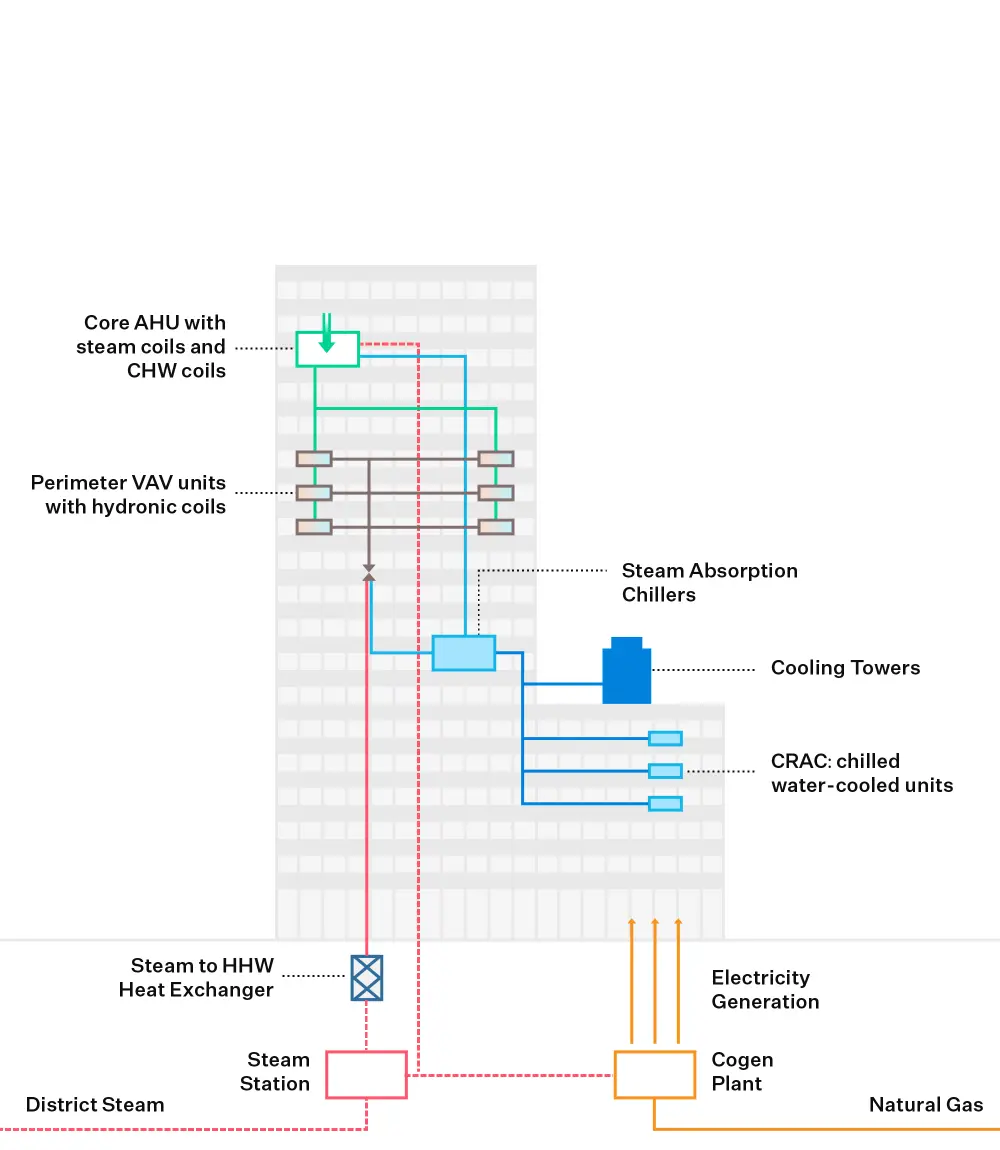
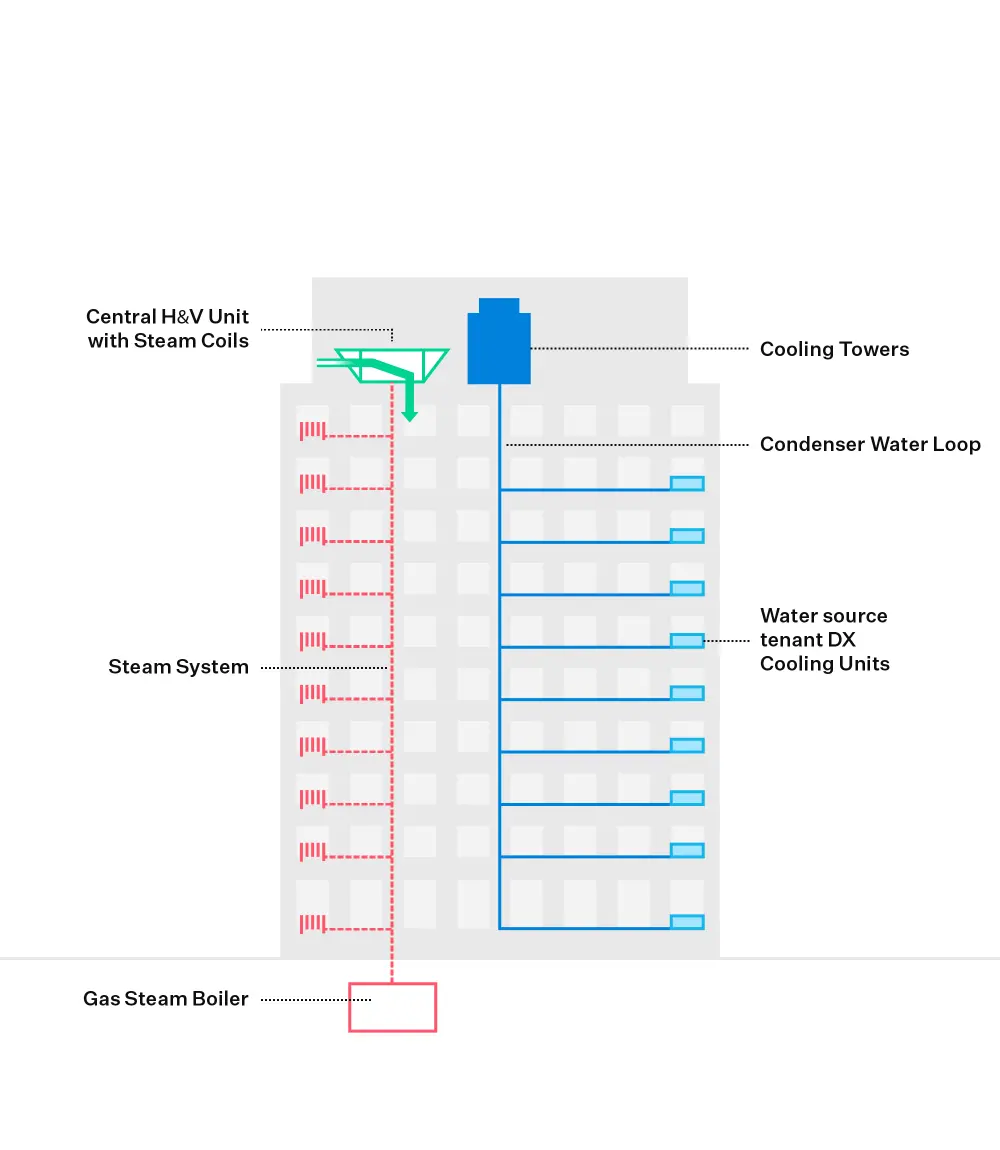
Existing Conditions
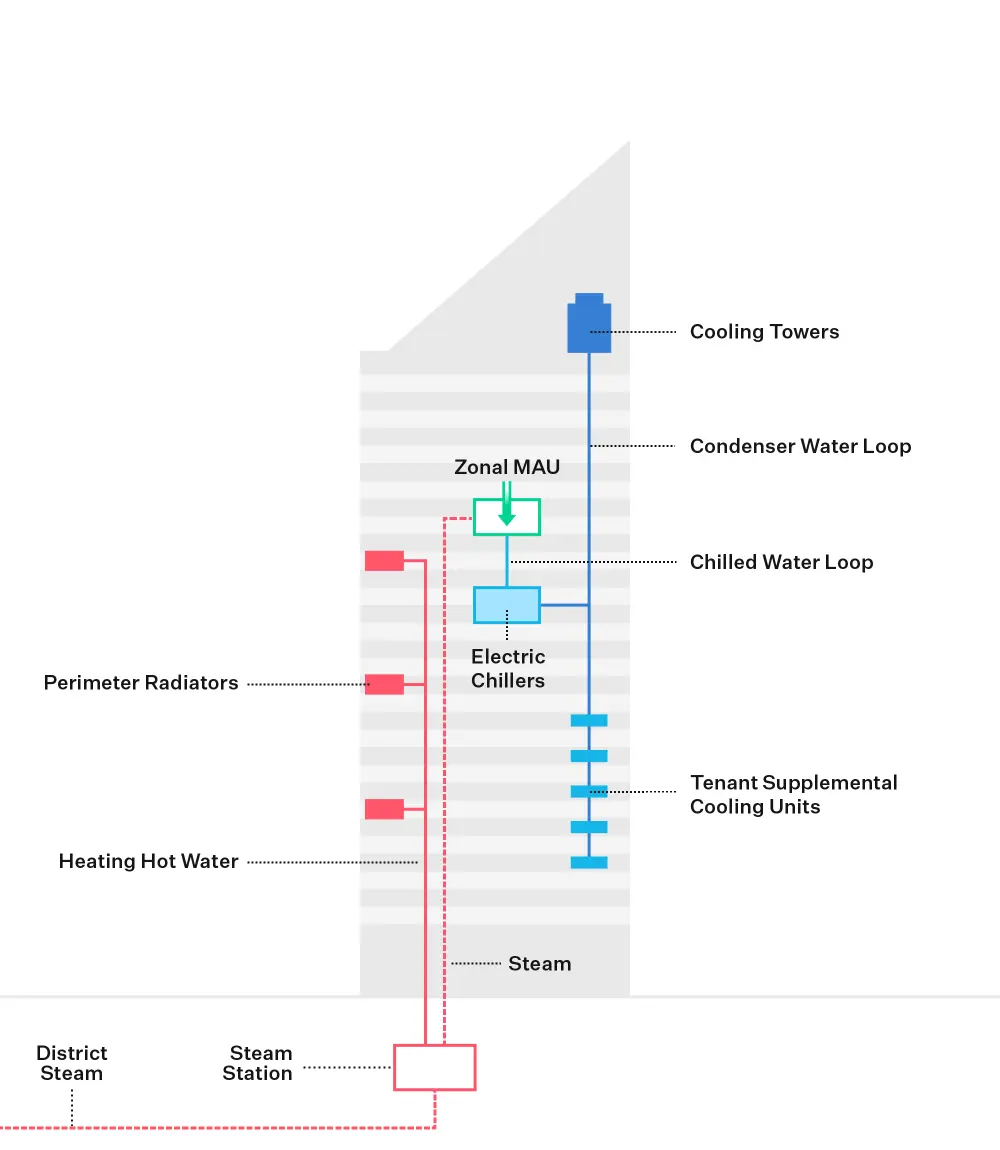
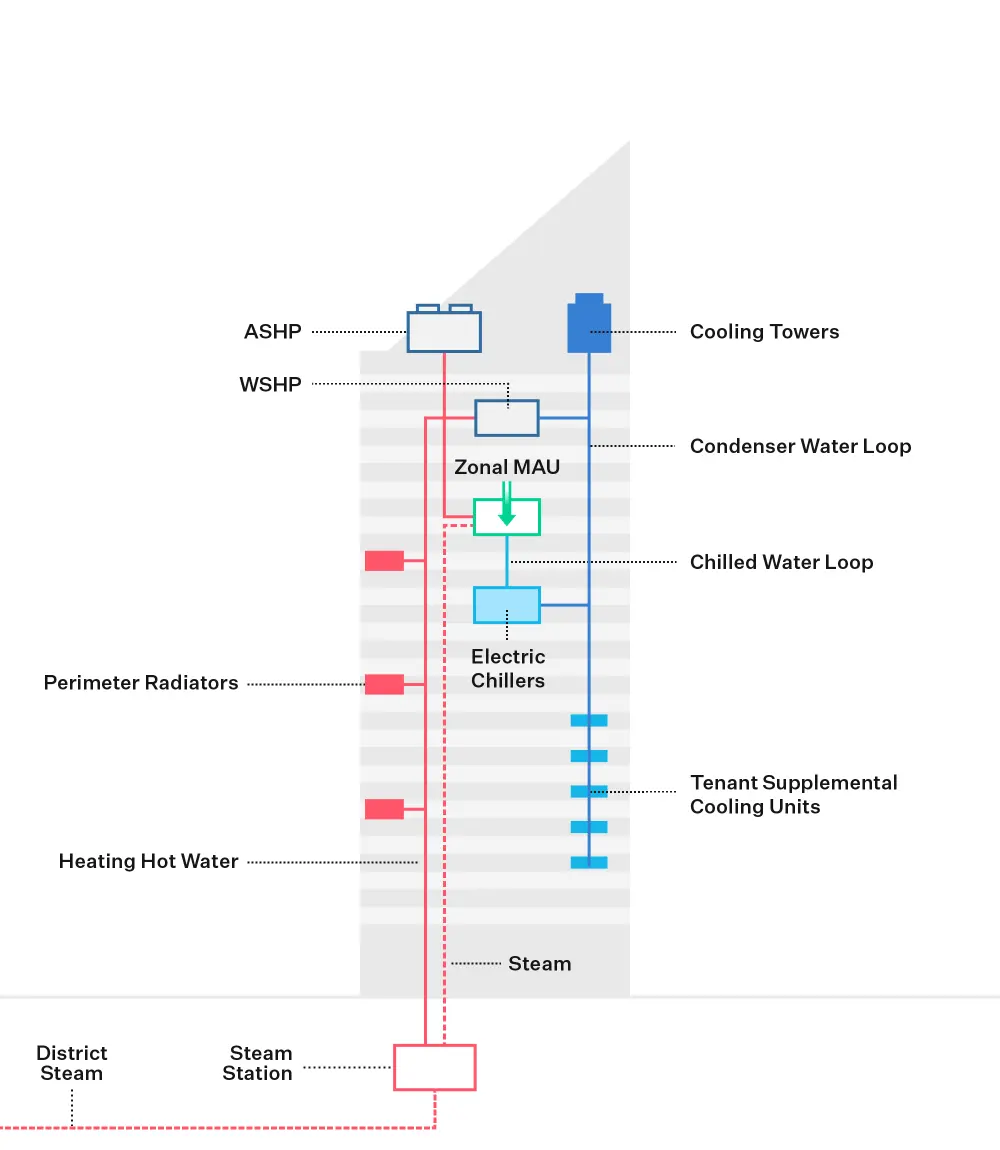
This diagram illustrates the building prior to the initiation of Strategic Decarbonization planning by the owners and their teams.
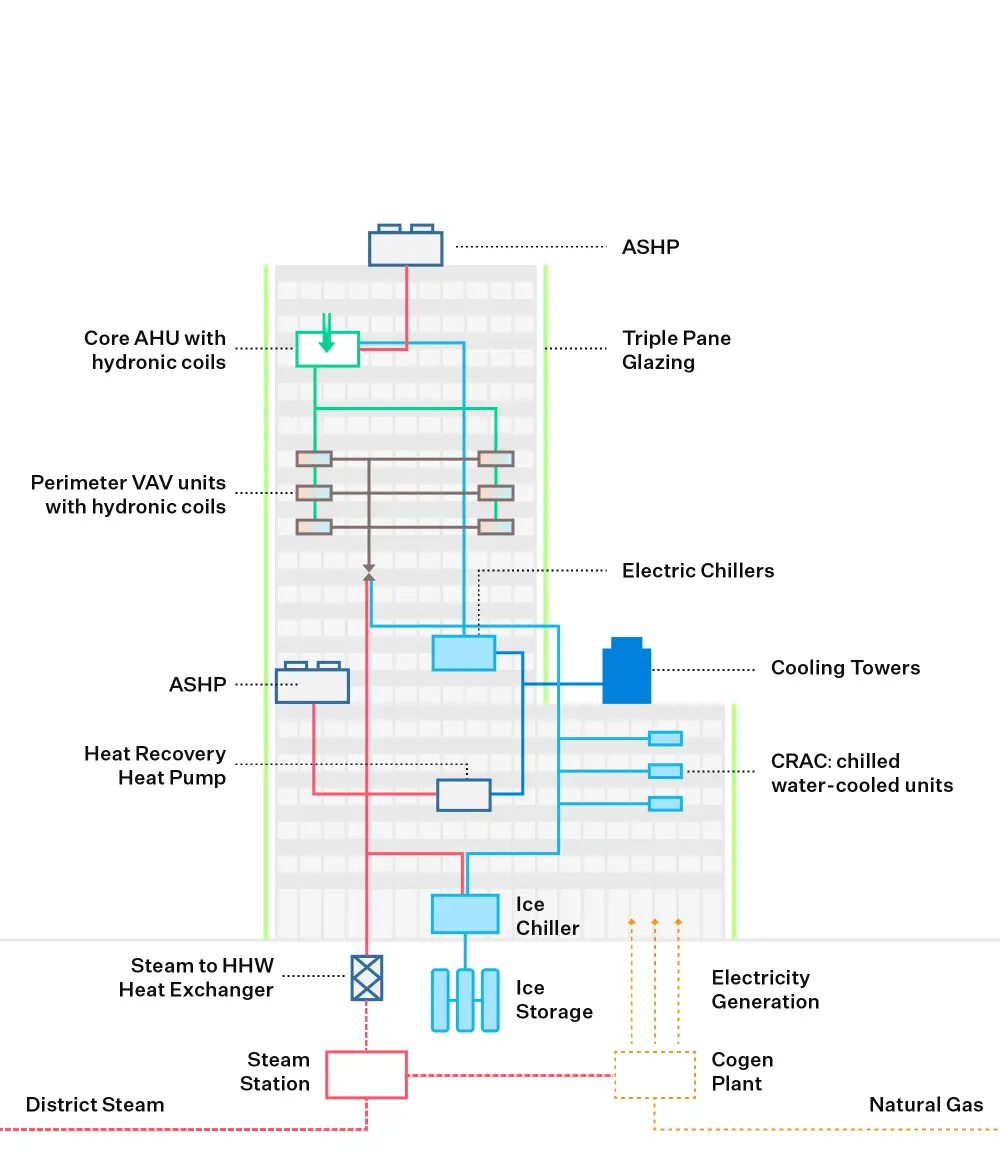
Click through the measures under “Building After” to understand the components of the building’s energy transition.
Sequence of Measures
2022
2023
2024
2025
2030
Building System Affected
heating
cooling
ventilation
Reduce Energy Load
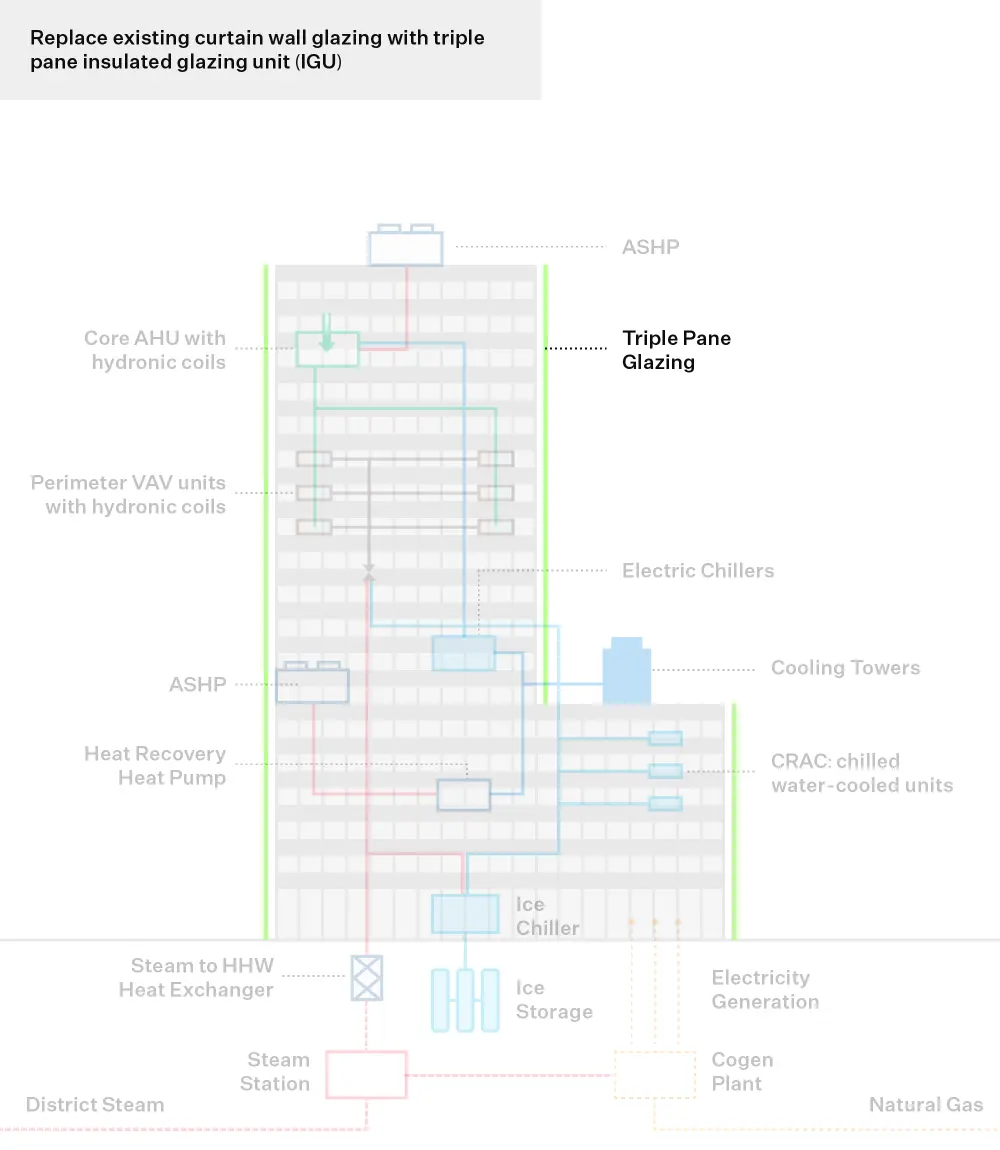
Envelope Improvement: install new triple pane glazing
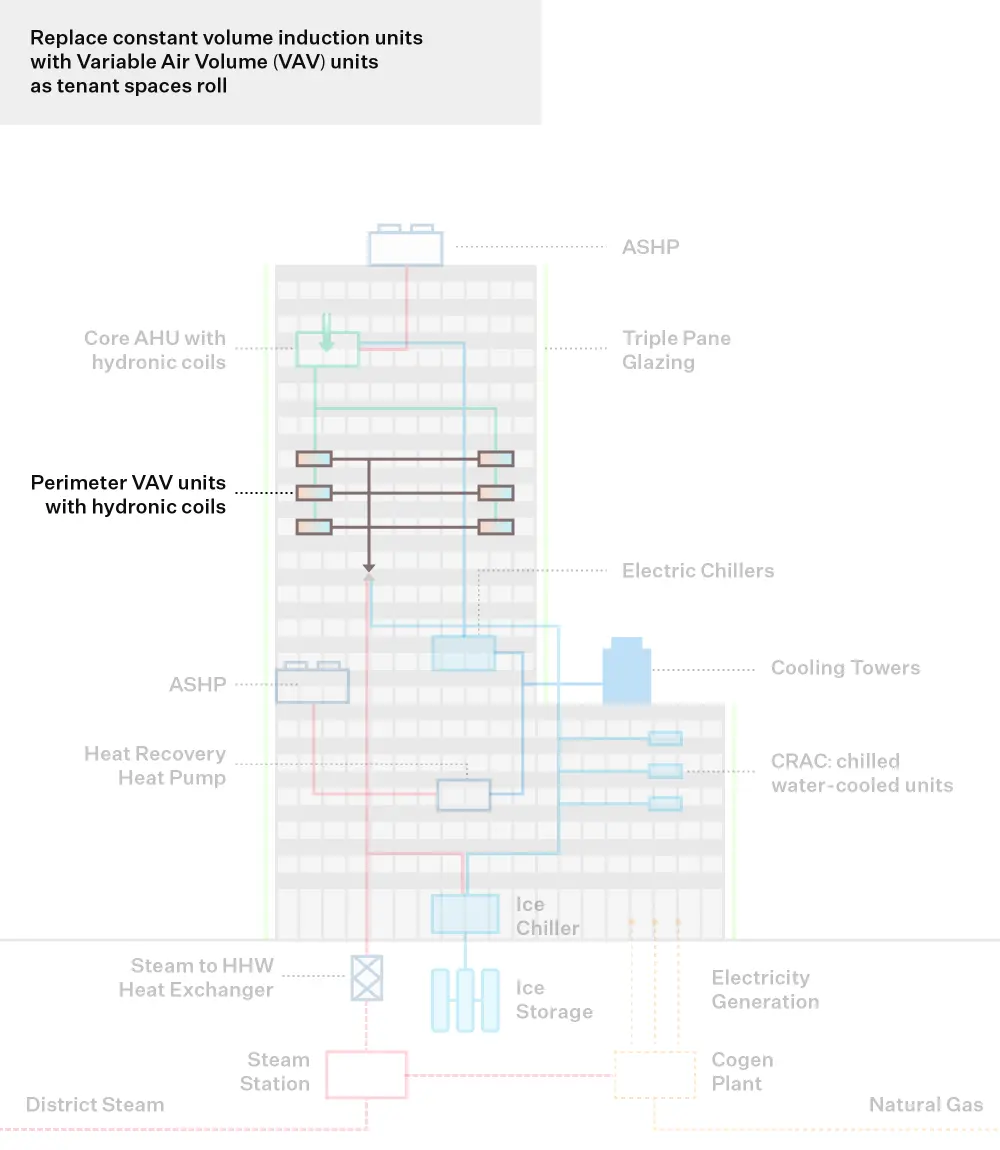
Induction Units Replacement: replace constant volume perimeter induction units with VAV units
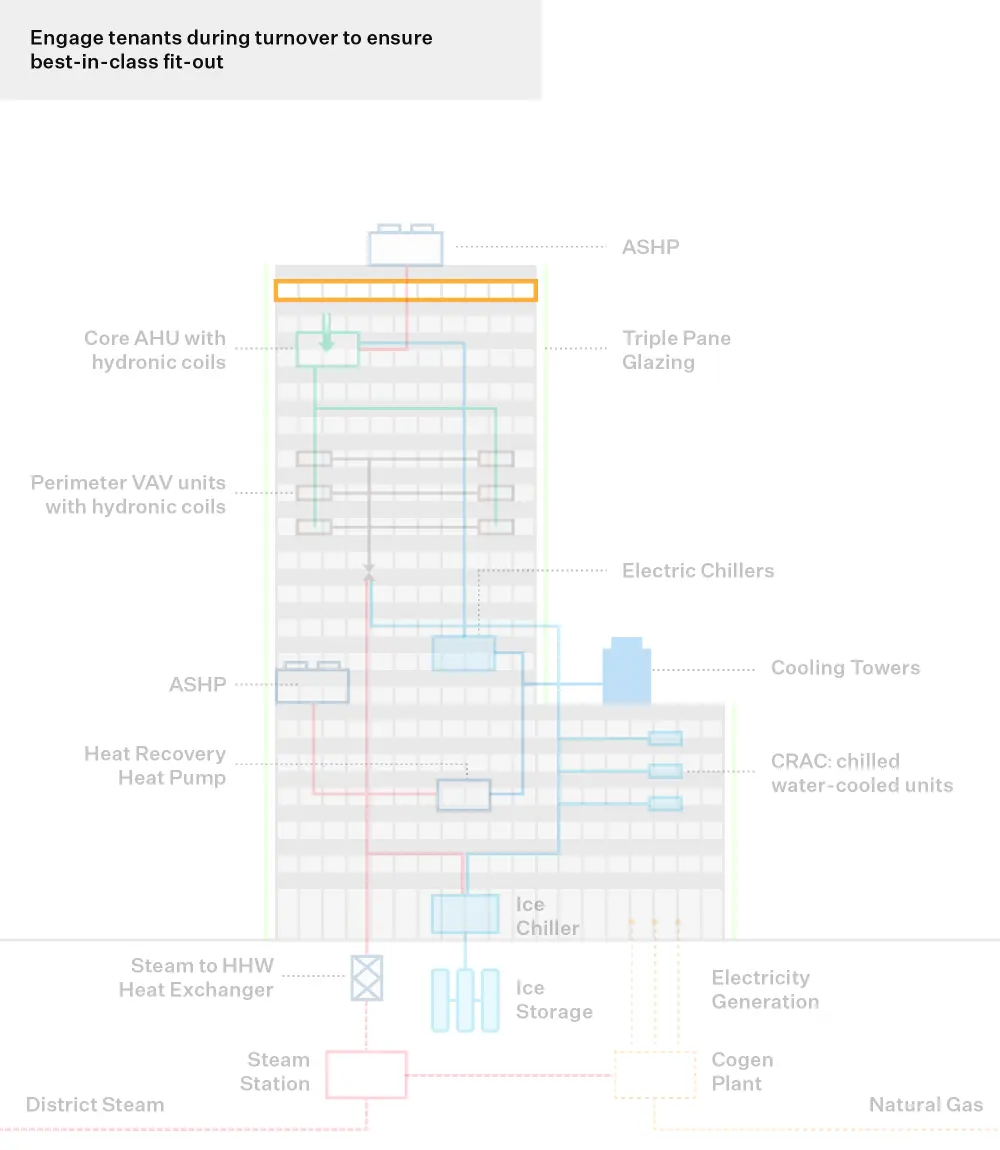
Enhance Tenant Fit-out: Install high-efficiency equipment and engage with tenants to ensure best-in-class fit-out during turnover
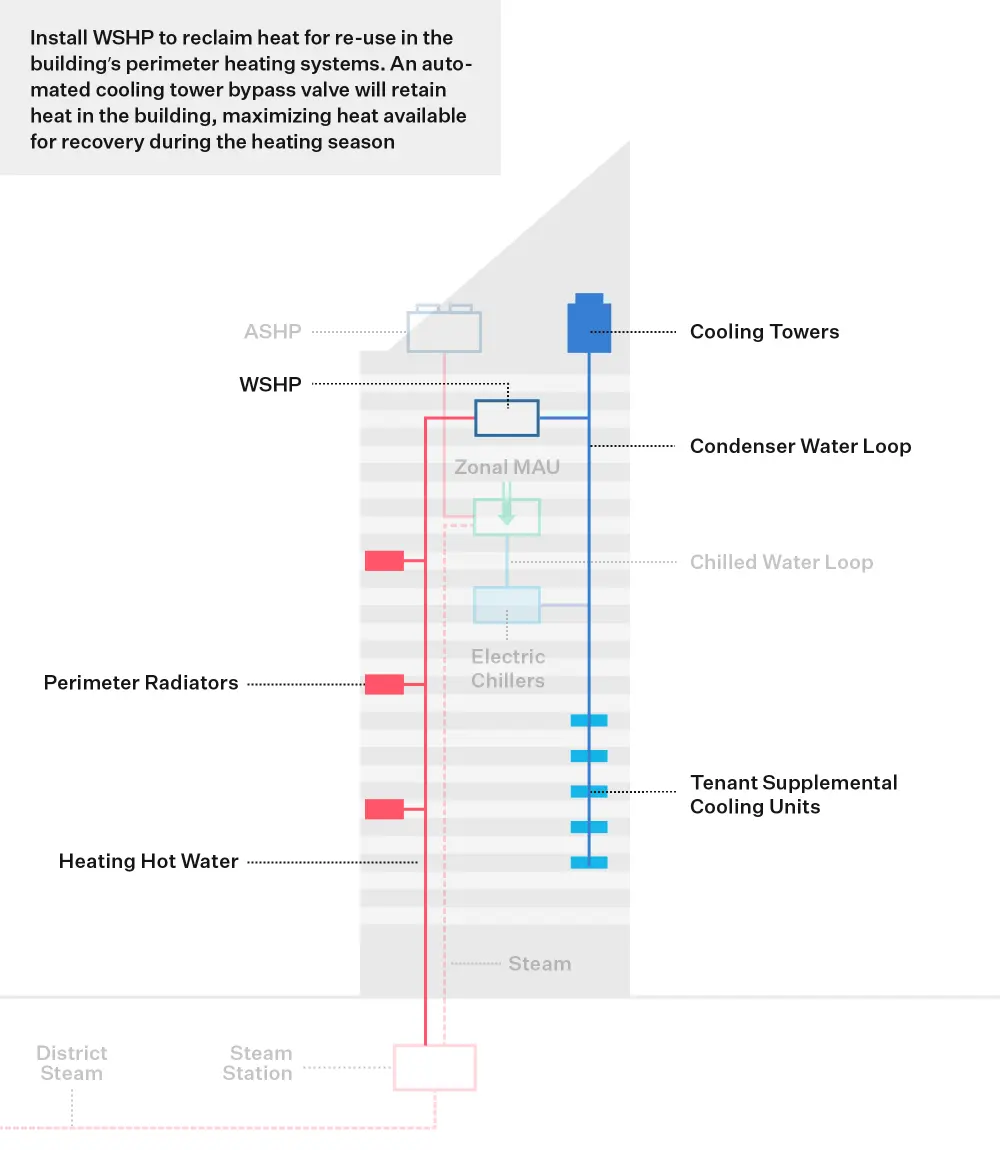
Thermal Layering: Heating loads are sequenced and prioritized to first engage low-carbon resources to meet the building’s heating demand, and then use next-available or higher carbon-intense thermal resources to come online. For example, first use low carbon electric thermal resources from water-source heat pumps, and then utility steam to meet remaining demand. When the ASHPs are installed, they will be dispatched second, as another low carbon alternative. This approach makes it possible to meet peak heating loads during extreme cold events with relative ease and low carbon emissions.
Recover Wasted Heat
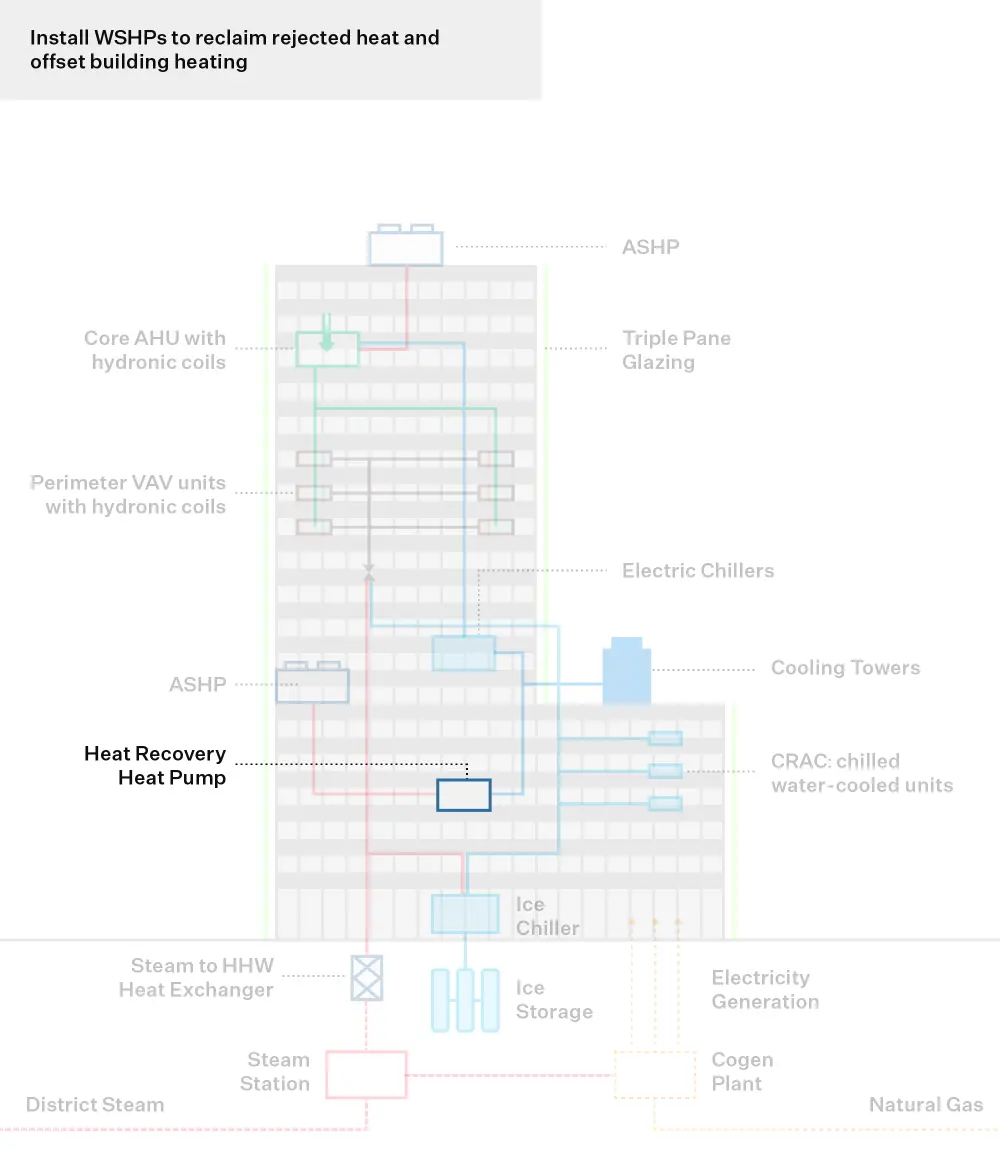
Condenser Water Heat Recovery: This tactic will use water-source heat pumps (WSHP) to utilize heat from the condenser water system to supplement heating hot water for the building’s hydronic system.
The WSHP method creates a “heat-lifting” machine that will raise the temperature of hot water to match the building’s existing supply – usefully extracting heat that would otherwise be wasted and reducing steam heat emissions.
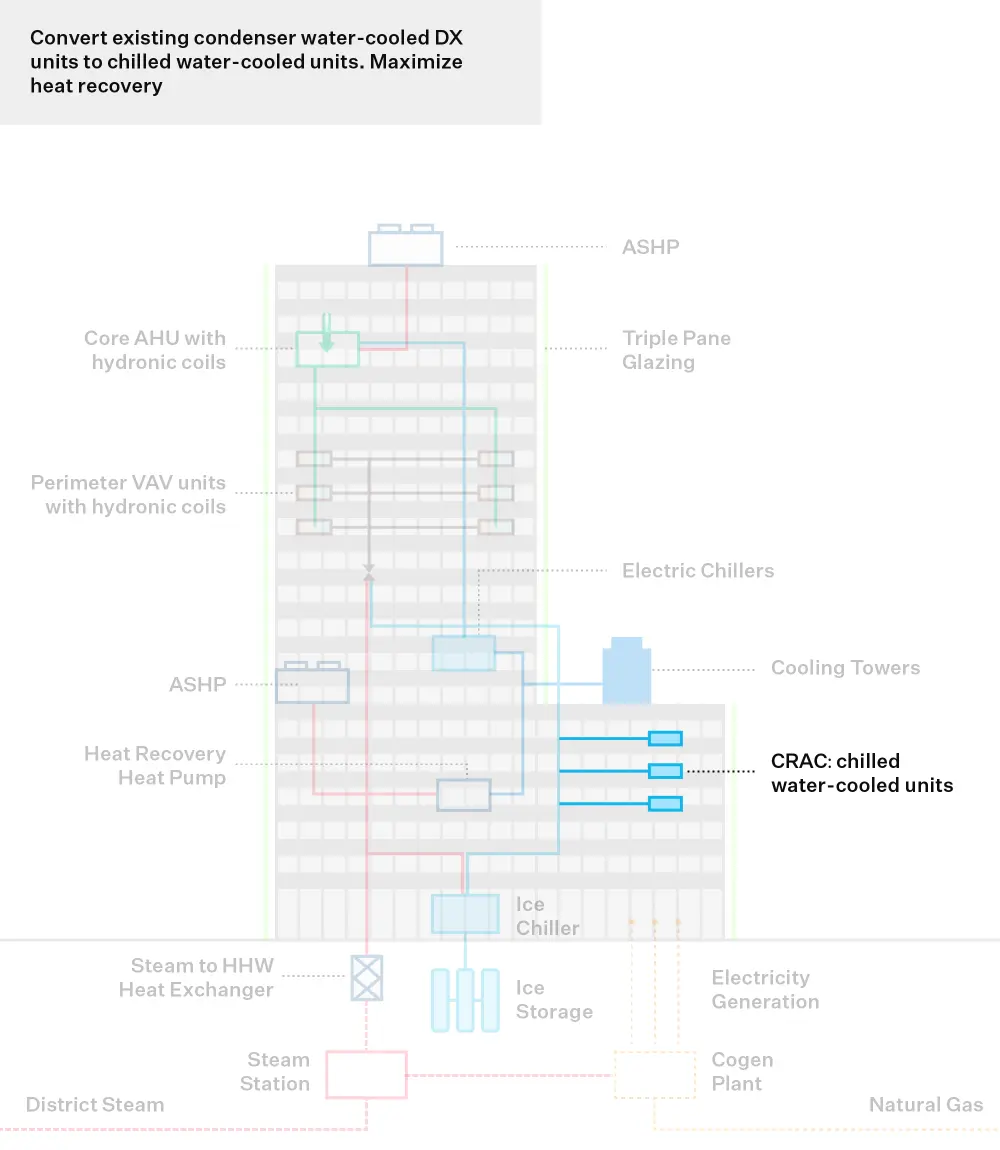
Computer Room Air Conditioning (CRAC) Conversion: Convert existing condenser water cooled DX units to chilled water-cooled units to maximize heat recovery and improve cooling efficiency
Partial Electrification:
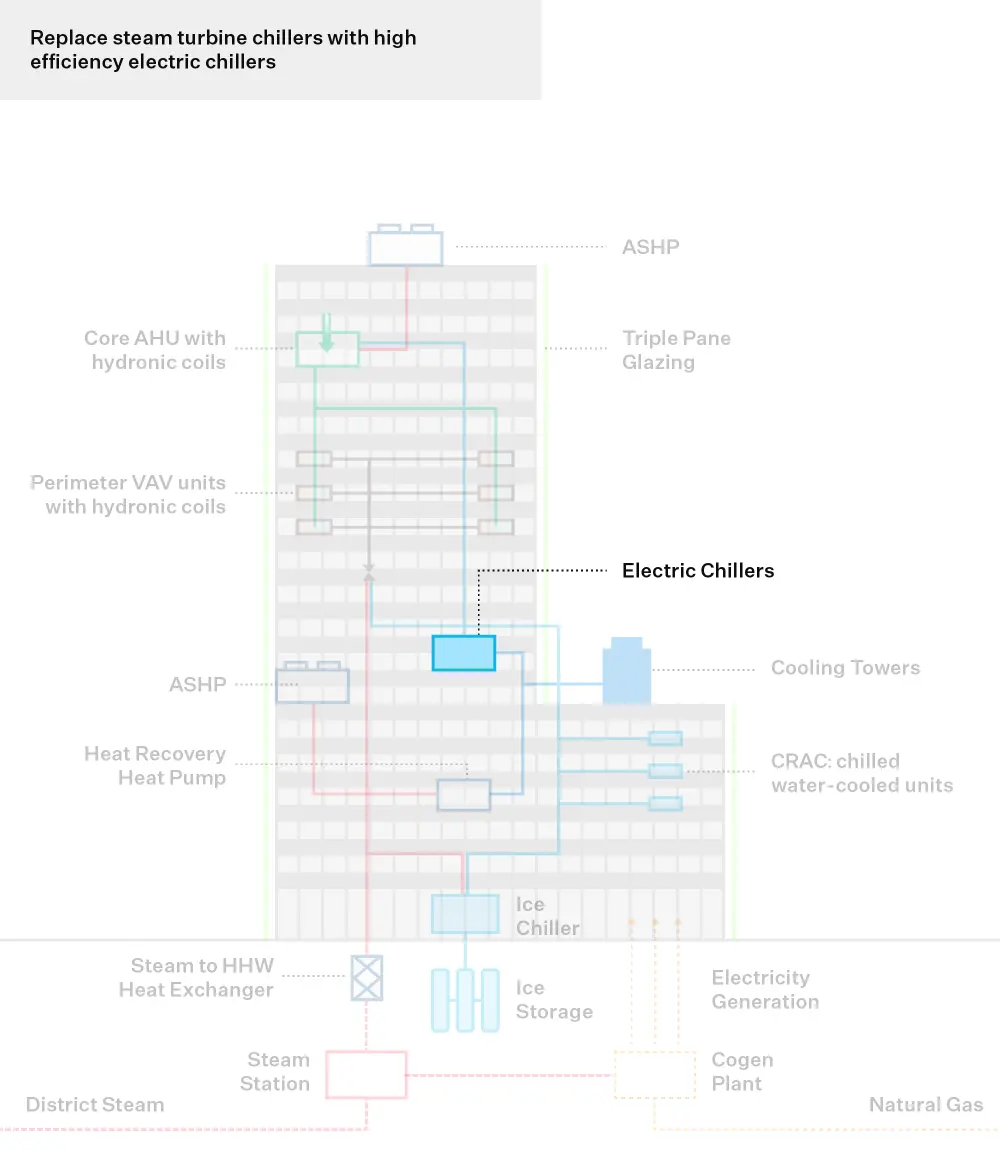
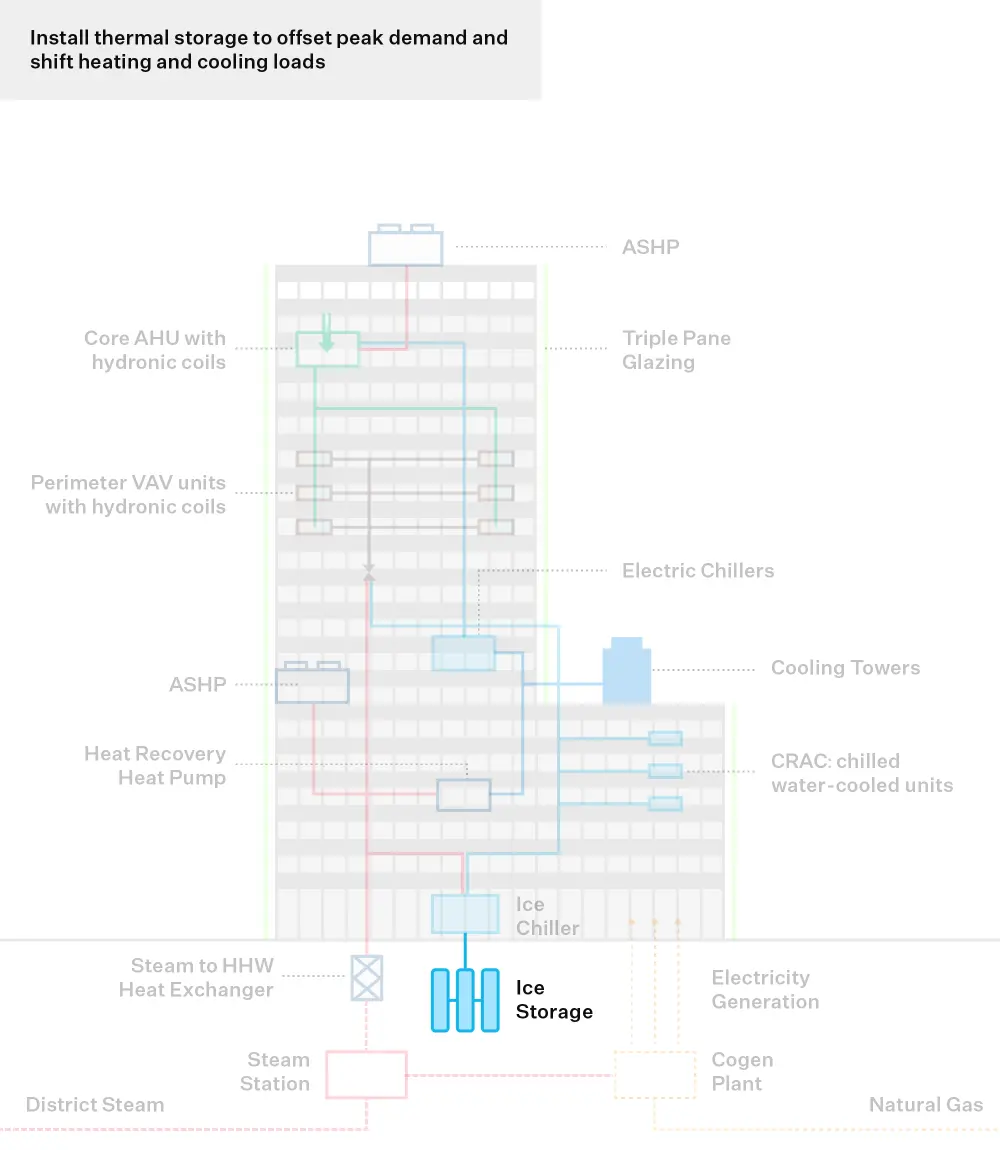
Electric Chillers: Replace steam turbine chillers to electric chillers
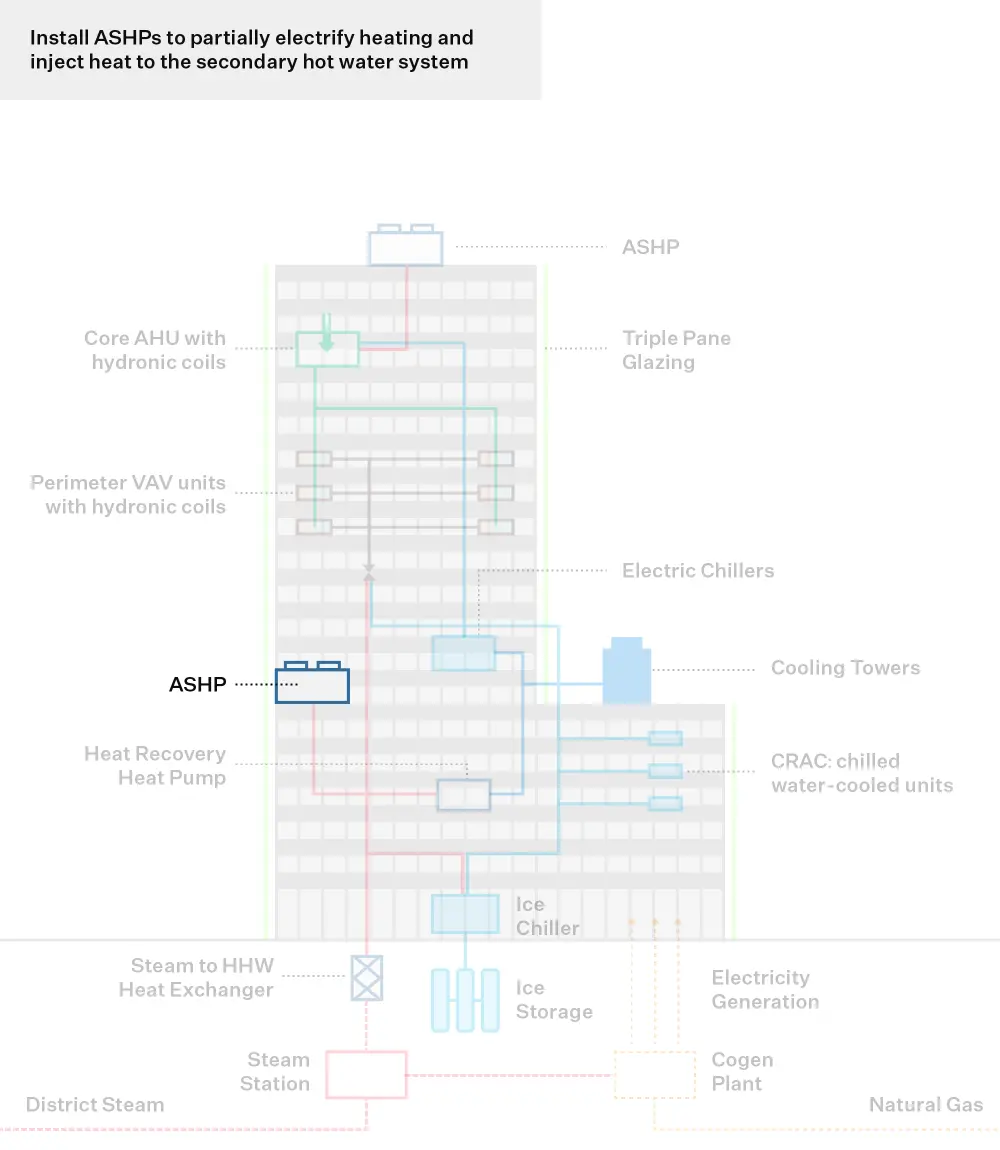
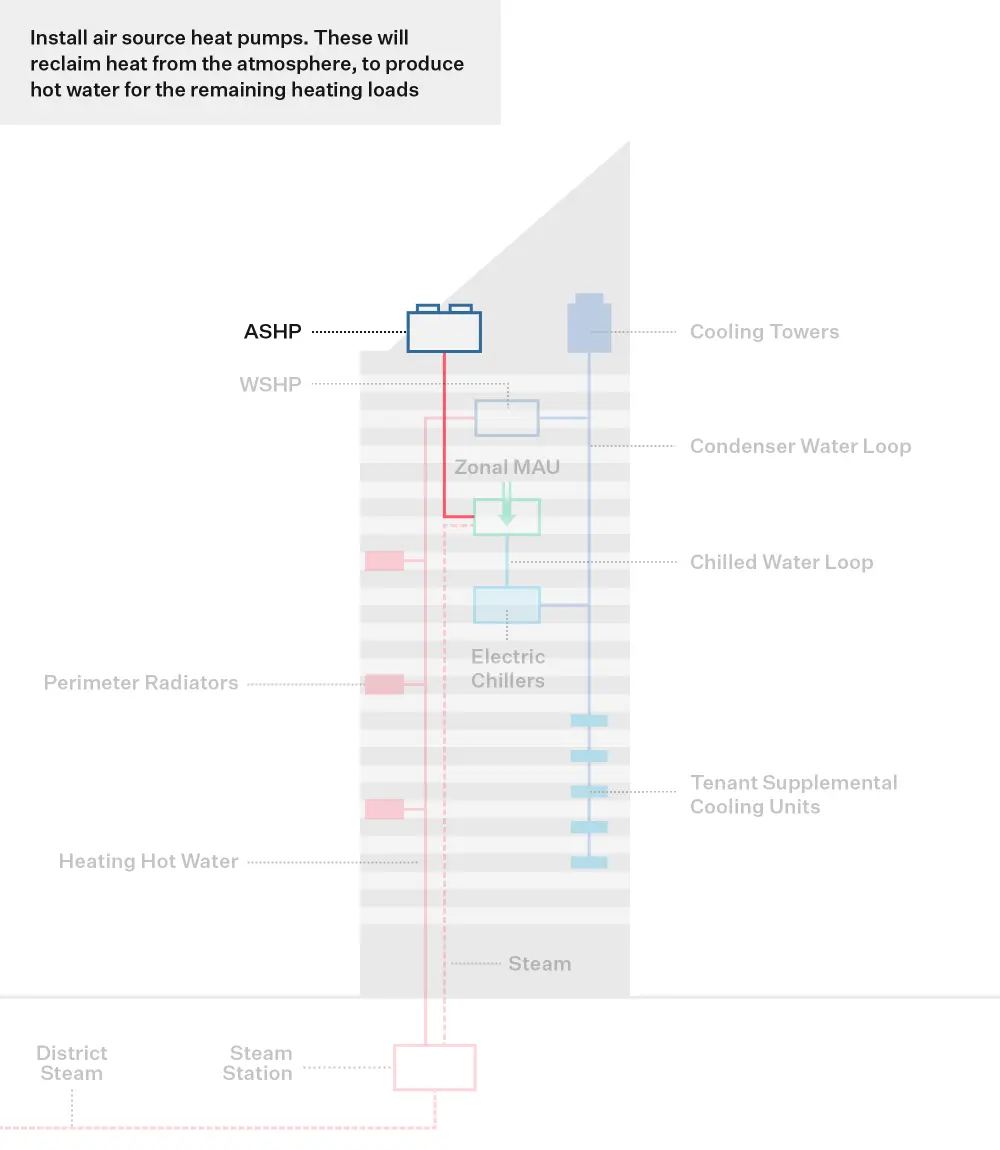
Partial Air Source Heat Pumps: Install ASHPs to partially cover heating load served by the secondary hot water loop
Full Electrification:
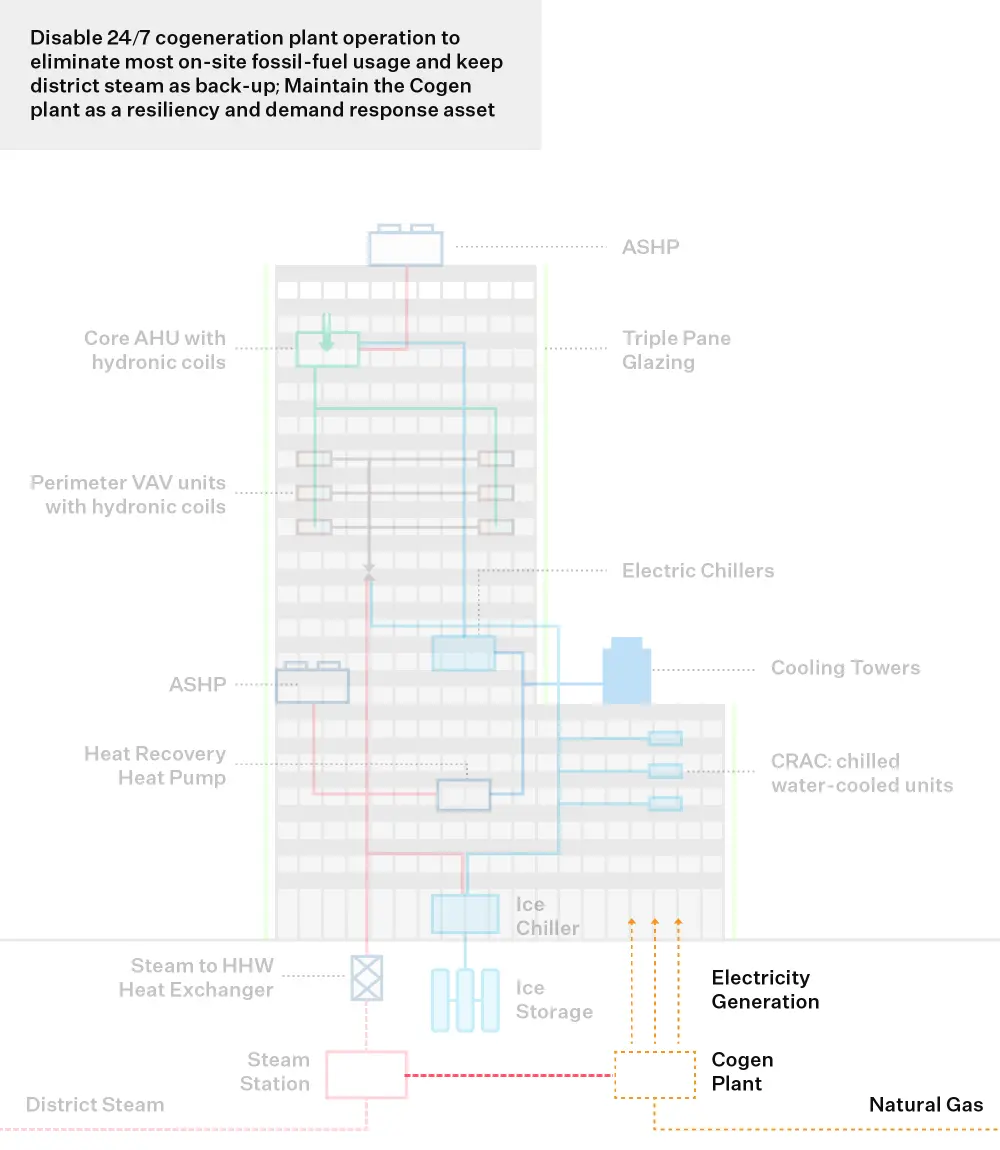
Cogen Decommissioning: Retire cogeneration plant and eliminate on-site fossil fuel usage; keep district steam as back-up
Thermal Storage: Install thermal storage systems to enable full-building electrification by shifting and support heating and cooling peaks and empower grid flexibility
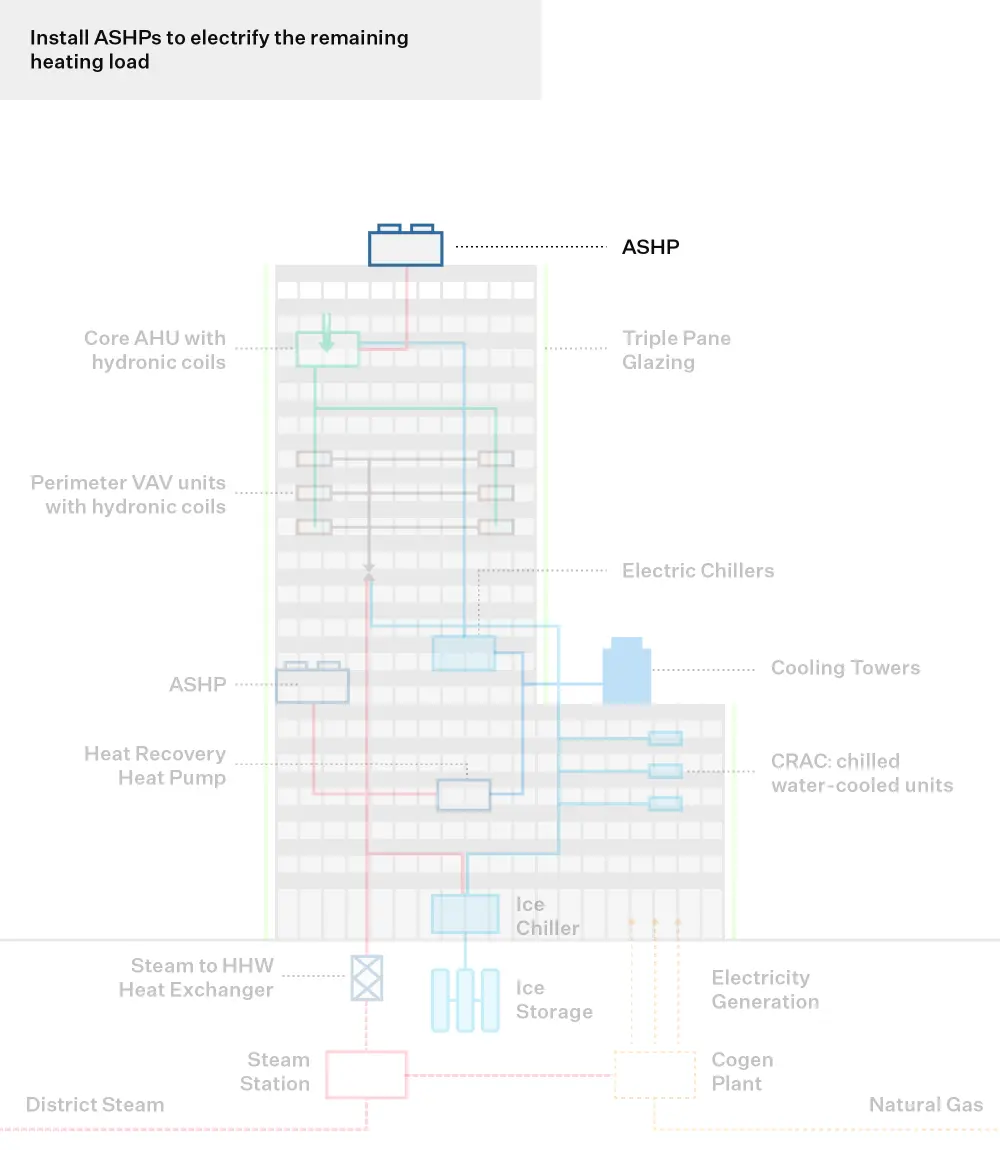
More ASHPs: Install ASHPs to cover remaining heating load
Step 3
Step 3: Build the Business Case
Making a business case for strategic decarbonization requires thinking beyond a traditional energy audit approach or simple payback analysis. It assesses business-as-usual costs and risks against the costs and added value of phased decarbonization investments in the long-term.
Decarbonization Costs
$4.15M
Capital costs of decarbonization (est. in 2025 $).
Business-as-Usual Costs
$8.01M
Energy cost savings (2026–2050 [25 yrs]): 3.56M.
Repairs and maintenance savings: 99k.
BAU cost of system replacement/upgrades: 2.7M.
Residual cost (remaining equipment value): 764k.
Business-as-Usual Risks
$724k
LL97 fines avoided starting in 2030.
Decarbonization Value
$1M
Incentives.
Net Present Value
$1.015M
Net difference between the present value of cash inflows and outflows over a period of time.
Heat recovery remains a very costly endeavor. Even with the Empire Challenge award of $1 million, the energy savings alone yields a payback in excess of 7 years. Compared to other energy conservation measures with rapid ROIs, this is not in the realm of being a “no-brainer.” However, unlike other retrofits or upgrades that target electricity savings, this project reduces our future reliance on district steam, a utility that is expected to undergo very high cost escalations as they incorporate renewables into their production.
Strategic Decarbonization Action Plan
An emissions decarbonization roadmap helps building owners visualize their future emissions reductions by outlining the CO2 reductions from selected energy conservation measures. This roadmap is designed with a phased approach, considering a 20- or 30-year timeline, and incorporates the evolving benefits of grid decarbonization, ensuring a comprehensive view of long-term environmental impact.
The Vornado team has gained countless lessons-learned on their decarbonization planning journey. The following are essential insights from the project team:
Insights from the energy model
The predictive energy model revealed that while the renovations to the building will yield significant energy and carbon reductions, the energy consumption from tenant spaces, such as computer and plug loads, must also be significantly reduced and intelligently managed to drive down the carbon intensity of the building (and reduce/eliminate exposure to LL97 through the 2030 compliance period).
While every effort was made to ensure that the model reflects the design team’s best understanding of the building’s existing conditions and future usage, the modeled energy consumption, energy cost, and carbon emission estimates will likely vary from the actual energy, cost, and carbon of the building after construction. This is due to variables such as weather, occupancy, building operation and maintenance, changes in energy rates, changes in carbon emission coefficients, and energy uses not covered by the modeling scope.
Underscoring the importance of an iterative design process
In the first iteration of the decarbonization strategy, the Vornado team approached the project with an all-or-nothing electrification mindset. They found that the strategies that achieve the deepest levels of decarbonization through fully eliminating district steam and co-generation waste heat as heating sources may not be practical nor cost efficient to implement in such a complex existing building. So, they went back to the drawing board.
In the second iteration of the project, a more holistic strategy emphasizing the following core principles was developed:
Re-use existing infrastructure (i.e., piping and ductwork) where possible
Recovery wasted heat from internal loads
Electrify heating loads affordably with heat pumps
Compress space requirements for electrification equipment/systems
Dispatch thermally stored energy to shift and smooth loads to promote grid flexibility
Resource Efficient Electrification framework: With these guiding principles, the Vornado team developed a new strategy that follows the Resource Efficient Decarbonization Framework, which JB&B refers to as “Reduce, Recycle, Electrify”. Phasing, cost compression, and space compression were prioritized so that measures are more likely to be installed and scaled to other Vornado properties.
Key takeaways on the broader decarbonization decision-making process
Invest in a Calibrated Energy Model – In large and complex buildings, building owners should commission a decarbonization study with an investment-grade calibrated energy model. Energy models should be custom built to the building’s unique characteristics, ensuring the analysis of retrofits are accurate and adds confidence to decision making. An energy model is a flexible tool that captures interactivity of all systems and ensures the strategies and measures studied have realistic energy and carbon reduction projections.
Just Because It’s Feasible Doesn’t Mean It’s Practical – Anything is possible in an energy model. Technical teams must be aware that building ownership teams care about more than just the energy and carbon results from the model. Strategies must be practical in real-world scenarios and should aim to re-use existing infrastructure where possible, minimize disruption, use space efficiently, and compress costs as much as possible. Technical teams must be prepared to show building owners how a particular measure will be installed practically.
Don’t Expect 5–7 Year Paybacks on Decarbonization Measures – Deep decarbonization measures will likely have long paybacks. This is due to high upfront costs of electrification technology, supporting infrastructure, and invasive retrofitting. Working against these high-efficient electric systems is the price of electricity, which is 5 to 6 times more expensive per unit of energy than natural gas. Simple payback analyses are unable to capture the true value of decarbonization investments, including non-energy benefits. Ownership teams have to adjust their payback expectations when considering deep decarbonization measures.
Technological Innovation Isn’t the Only Innovation – There is new and exciting technology out there that has the potential to revolutionize the way we electrify buildings, but in the meantime, there are innovative approaches to electrifying buildings today with currently available technology. Purposeful dispatch of thermal energy sources and optimization for scalability, practicality, and affordability are innovative strategies.
Conditioning Exhaust Air – Recycling waste heat from exhaust air streams isn’t a new idea, but using the refrigeration cycle to extract and lift heat from exhaust air streams to serve heating loads is a new and innovative concept. Essentially, by air conditioning the exhaust air, like traditionally avoided toilet exhaust, heat can be recovered and lifted to higher temperatures by a heat pump to offset heating loads. The reverse is also true in the summertime, where exhaust air can serve as a heat rejection medium for the chilled water production of chiller plants.
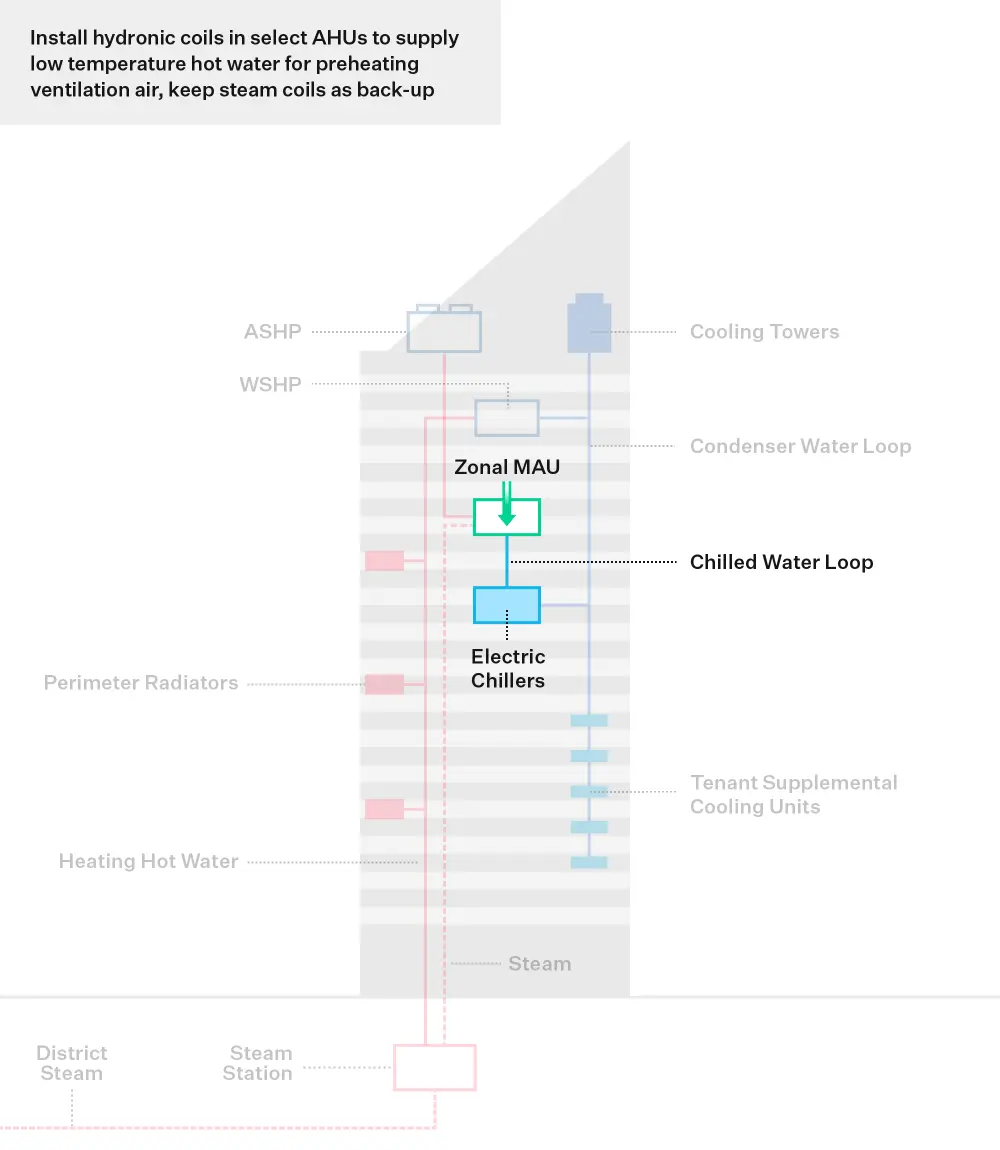
Potential of Low Temperature Hot Water in Existing Chilled Water Coils –Low temperature hot water enables heat recovery and air source heat pumps to have a big impact, but reconfiguring all comfort heating systems in existing buildings to be low temperature is difficult and costly. The following approach offers a more practical alternative:
Partially electrify high temperature hot water systems (i.e., perimeter systems) with water-source heat pumps and condenser heat recovery. This allows existing distribution infrastructure to stay in place – critical to wider spread of heat pump adoption.
Transition air handling unit steam or hot water coils to low temperature, which can be served by air source heat pumps. The cost and scope of coil replacements is much more manageable than replacing all heating systems with low temperature hot water infrastructure. In some cases, existing chilled water coils can be used with low temperature hot water and become a modified change-over coil, negating the cost of replacement.
Operations Team Integration: These decarbonization strategies are new and complex. Existing operations teams must be part of the design and implementation of these systems and training is of critical importance. A system that is designed to be low-carbon will not be successful if it is not operated per the design intent and understood thoroughly by those operating them.
Disruption and Phasing: Some of the best decarbonization strategies are also some of the most disruptive. Phasing must be based upon several factors including the rate of grid decarbonization, leasing turnover cycles, capital planning cycles, and equipment nearing its end of useful life.
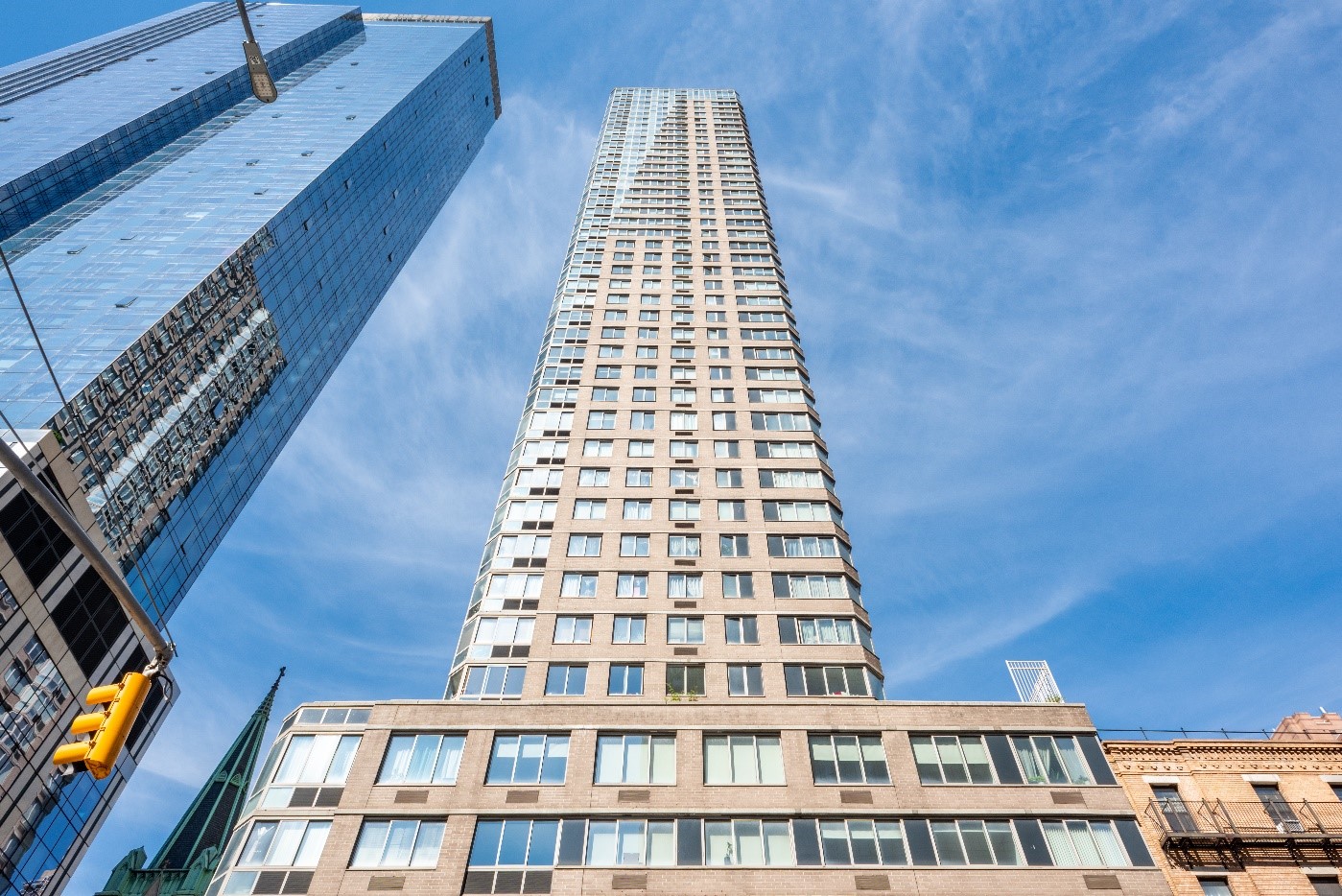
As a partner of the Empire Building Challenge, BXP will complete a decarbonization pilot project at 601 Lexington Avenue. The 1.52 million square foot, 59-story, multi-tenant premier workplace in midtown Manhattan was constructed in 1977 and features building systems typical among commercial high-rises of a similar vintage. The innovative measures planned for implementation demonstrate a scalable and replicable decarbonization opportunity within a difficult-to-decarbonize building type.
As part of their demonstration project, BXP will install water-to-water heat pumps to transfer heat from the condenser water loop to secondary water systems. Recovered heat will then be used to offset perimeter heating loads. By deploying existing technology in a novel way, this project creates a thermal network which utilizes heat that would otherwise be rejected to the atmosphere from the building’s cooling system. BXP will reduce the building’s annual steam consumption by over 30% with this innovative thermal system.
BXP is a fully integrated real estate investment trust and is the largest publicly traded developer, owner, and manager of premier workplaces in the U.S. with a portfolio spanning 54.5 million square feet.
Project Highlights
Progress
Construction drawings are complete, and the project is awarded to the selected General Contractor. Water source heat pump equipment procurement has also been released.
Steam Use Reduction
30%
Heat recovery retrofit at 601 Lexington Ave will reduce annual steam consumption by over 30%. The project uses an existing technology in an innovative way to create a thermal network in the building, using heat that would otherwise be wasted.
Lessons Learned
Reducing demand and dependence on fossil fuel driven heating systems is an enablement step for building decarbonization.
Testimonial
“At BXP, we are committed to carbon-neutral operations and the advancement of built environment climate action. Climate action is collective action and alongside our partners at Norges Bank Investment Management, we are thrilled to pursue this decarbonization initiative at 601 Lexington Avenue.”
Ben Myers Vice President, Sustainability
Boston Properties, Inc. (BXP)
Lessons Learned
The project is highly replicable elsewhere within the BXP portfolio and provides a bridge to carbon neutral planning.
Step 1
Step 1: Examine Current Conditions
A baseline assessment is key to understanding current systems and performance, then identifying conditions, requirements or events that will trigger a decarbonization effort. The assessment looks across technical systems, asset strategy and sectoral factors.
Building System Conditions
New heat source potential
Efficiency improvements
Asset Conditions
Carbon emissions limits
Owner sustainability goals
Market Conditions
Technology improves
Policy changes
Utility prices change
Fuels phase out
BXP is committed to carbon-neutrality by 2025 for its actively managed occupied office buildings. Starting in 2010, BXP adopted a phased approach with a long-term goal of achieving low site energy use and reducing GHG emissions at 601 Lexington Ave. Compared to a 2010 baseline, BXP has reduced the building’s GHG Emissions by 47% and site EUI by 33%. The notable reduction in energy use was achieved through a series of targeted energy efficiency measures, including a building automation system upgrade, installation of Variable Speed Drives on all major HVAC equipment pumps and fans, lighting upgrades, modernization of the central chiller plant (replacing steam chillers with high efficiency variable speed electric chillers), and optimization of operational controls.
To accelerate decarbonization efforts, the next phase of retrofit projects should be geared to reduce district steam consumption within the building. This initiative aligns with BXP’s decarbonization strategy and energy efficiency objectives and positions the building on a path towards full compliance with Local Law 97.
The heat recovery project focuses on minimizing the dependence on district steam, a fossil-fuel sourced commodity. This project demonstrates a replicable decarbonization solution in existing commercial high-rise buildings and joins a list of energy conservation measures already deployed at the property.
To compare the energy and carbon reduction impact of the measure on a business-as-usual scenario, a comprehensive energy analysis was performed to establish a baseline operation and compare alternatives. The effort included review of existing HVAC systems, electrical infrastructure, space constraints, submetering of heating and cooling loads, potential for energy recovery to offset heat loads, and evaluation of energy use and costs.
The detailed energy analysis indicated a considerable reduction in energy and GHG emissions compared to baseline energy use and significant utility savings per year.
Step 2
Step 2: Design Resource Efficient Solutions
Effective engineering integrates measures for reducing energy load, recovering wasted heat, and moving towards partial or full electrification. This increases operational efficiencies, optimizes energy peaks, and avoids oversized heating systems, thus alleviating space constraints and minimizing the cost of retrofits to decarbonize the building over time.
Existing Conditions
This diagram illustrates the building prior to the initiation of Strategic Decarbonization planning by the owners and their teams.
Click through the measures under “Building After” to understand the components of the building’s energy transition.
Sequence of Measures
2024
2034
Building System Affected
heating
cooling
ventilation
The project at 601 Lexington Avenue will deploy existing technology in a novel way, creating a thermal network that recovers and utilizes heat which is otherwise rejected by the cooling towers.
Through NYSERDA’s Empire Building Challenge, BXP will install water source heat pumps (WSHPs) that will capture waste heat from the condenser water loop. The recovered heat will be reused into the building’s perimeter heating.
Currently, the building condenser water system carries heat from base building and tenant cooling systems to the cooling towers, where it is rejected evaporatively to the atmosphere. In office buildings, this heat is often constant and available for recovery year-round. In the proposed measure, WSHPs will be installed. They will replace the function of the cooling towers during the heating season and will reclaim heat from the condenser water loop for beneficial use. An automated bypass valve will divert condenser water from the cooling towers, retaining as much heat in the building as possible for recovery by the WSHPs. The heat recovered will be reused in the building’s heating systems and will significantly offset reliance on fossil fuel-based steam. These measures will reduce annual steam consumption by an estimated 30%.
These measures partially electrify building heat sources while recovering waste heat for beneficial re-use. This results in reduced energy consumption and enhanced demand management. These measures are replicable for existing buildings, designed to be both space-efficient and cost-effective.
In addition to the WSHPs, air source heat pumps (ASHPs) may be installed in the future to produce low-temperature hot water to cover some of the remaining heating loads. The project team plans to continue investigating ASHP infrastructure within the physical space constraints of this occupied building to minimize reliance on steam heating.
Step 3
Step 3: Build the Business Case
Making a business case for strategic decarbonization requires thinking beyond a traditional energy audit approach or simple payback analysis. It assesses business-as-usual costs and risks against the costs and added value of phased decarbonization investments in the long-term.
Decarbonization Costs
$3.65M
Capital costs of decarbonization.
Business-as-Usual Costs
$262k / YR
Energy cost savings: 287k / YR.
Repairs & maintenance savings: 25k / YR.
Business-as-Usual Risks
$120k / YR
LL97 avoidance from 2030-2034.
No fines in 2035+ assuming electric grid coefficient aligns with CLCPA goals.
Decarbonization Value
$1.1M
Incentives.
Pursuing ConEd Rebates through the Clean Heat Rebate Program.
Net Present Value
$525k
Net difference between the present value of cash inflows and outflows over a period of time.
A simple payback measure as a standalone analysis does not accurately represent the benefit of decarbonization over time. A long-term outlook for decarbonization investments that accounts for utility cost escalations, building performance standard compliance fine avoidance, procurement costs to meet voluntary carbon neutral operations commitment over the life-cycle of the project, and other risks associated with taking the business-as-usual approach are critical while creating a business case for decarbonization.
The financial analysis for the project included a relative comparison to business-as-usual costs under various scenarios as described below:
Scenario 1 represented the financial impact of paying Local Law 97 penalties;
Scenario 2 represented a proactive procurement of carbon credits to minimally comply with Local Law 97;
Scenario 3 represented RECs and Carbon Credit procurement costs to achieve the goal of Carbon Neutral Operations by 2025.
The proposed project has a positive NPV when compared to a business-as-usual scenario and is a critical first step in the building’s long-term decarbonization plan as it significantly reduces the dependence on district steam for building heating loads. This is an enablement step for future decarbonization phases in 2034 and beyond. Additionally, the project is highly replicable elsewhere within the BXP portfolio and provides a bridge to carbon neutral planning.
Strategic Decarbonization Action Plan
An emissions decarbonization roadmap helps building owners visualize their future emissions reductions by outlining the CO2 reductions from selected energy conservation measures. This roadmap is designed with a phased approach, considering a 20- or 30-year timeline, and incorporates the evolving benefits of grid decarbonization, ensuring a comprehensive view of long-term environmental impact.
To advance the building’s broad decarbonization objectives, and through the reduce, recycle, electrify approach, the team studied energy and carbon emission reduction pathways for 601 Lexington Avenue through a robust, collaborative process with multiple stakeholders.
The decarbonization projects require a phase-in plan and a multi-step approach, which includes technical analysis, detailed design, procurement, and implementation. The preliminary technical analysis for the decarbonization roadmap was performed in Q4 of 2022 as part of the Empire Building Challenge application. The first phase of the decarbonization roadmap is the Condenser Water Heat Recovery project, which received NYSERDA funding through the Empire Building Challenge. The full design (DD and CD) of this project was completed in 2023 and construction is expected to be complete in 2025.
On-site decarbonization efforts may be furthered in a subsequent second phase implemented in 2034 with electrification of heating and DHW through air source heat pumps. It is anticipated that the heat pump technology and pricing will continue to improve; because of that, the energy and GHG reductions reflected in the carbon neutrality roadmap below are conservative estimates. As an interim phase, starting in 2025, the building will achieve Carbon Neutral Operations for Scope 1 and Scope 2 emissions by offsetting them through a combination of renewable energy and carbon credits procurements.
A Rational Approach to Large Building Decarbonization
Tags
Project Highlights
Step 1
Step 1: Examine Current Conditions
A baseline assessment is key to understanding current systems and performance, then identifying conditions, requirements or events that will trigger a decarbonization effort. The assessment looks across technical systems, asset strategy and sectoral factors.
Building System Conditions
Asset Conditions
Market Conditions
Step 2
Step 2: Design Resource Efficient Solutions
Effective engineering integrates measures for reducing energy load, recovering wasted heat, and moving towards partial or full electrification. This increases operational efficiencies, optimizes energy peaks, and avoids oversized heating systems, thus alleviating space constraints and minimizing the cost of retrofits to decarbonize the building over time.
Step 3
Step 3: Build the Business Case
Making a business case for strategic decarbonization requires thinking beyond a traditional energy audit approach or simple payback analysis. It assesses business-as-usual costs and risks against the costs and added value of phased decarbonization investments in the long-term.
Decarbonization Costs
Business-as-Usual Costs
Business-as-Usual Risks
Decarbonization Value
Net Present Value
Strategic Decarbonization Action Plan
An emissions decarbonization roadmap helps building owners visualize their future emissions reductions by outlining the CO2 reductions from selected energy conservation measures. This roadmap is designed with a phased approach, considering a 20- or 30-year timeline, and incorporates the evolving benefits of grid decarbonization, ensuring a comprehensive view of long-term environmental impact.
Project Team
Additional Resources
Tags
Lessons from New York’s Empire Building Challenge
This article, published in NESEA’s BuildingEnergy magazine (Vol. 40 No. 1), addresses common “decarbonization blind spots” that impede progress and shares insights gained from the incremental methodology and integrated design process pioneered through NYSERDA’s Empire Building Challenge.
345 Hudson, developed by Hudson Square Properties (HSP), provides a roadmap for sustainable practices by applying the Nordic design principles of holistic energy recycling and electrification. The 17-story commercial property located in Manhattan, NY was built in 1931 and features a mid-tier energy rating, aging heating system burning natural gas, and recurring carbon emissions fines starting in 2035.
The comprehensive retrofit takes advantage of tenant turnover as an opportunity to upgrade the building’s infrastructure to new, carbon-efficient, energy cost-saving technology and completely decarbonize the 856,000 gross square foot property. This project will demonstrate the power of thermal networking through an innovative approach by which heating and cooling is shared between tenants throughout the building and eventually between neighboring buildings.
Hudson Square Properties is a joint venture with Hines, Trinity Church Wall Street, and Norges Bank Investment Management, that owns 13 buildings totaling 6.3 million square feet in the Hudson Square Neighborhood.
Project Highlights
Emissions Reductions
90%
345 Hudson will achieve a 30% EUI reduction and 90% carbon emissions reduction by 2035 with its decarbonization roadmap.
Lessons Learned
The analysis examined opportunities to reuse, recycle, and balance energy flows via hydronic-based HVAC retrofits at multiple scales of renovation.
Testimonial
“The carbon reduction and energy efficiency strategy at 345 Hudson, one of our flagship properties, exemplifies Hudson Square Properties’ stewardship and commitment to the long-term strength of our neighborhood. 345 Hudson will provide a roadmap for sustainable practices throughout our portfolio and beyond.”
Sujohn Sarkar
Managing Director, Asset Management
Trinity Church Wall Street
Emissions Reductions
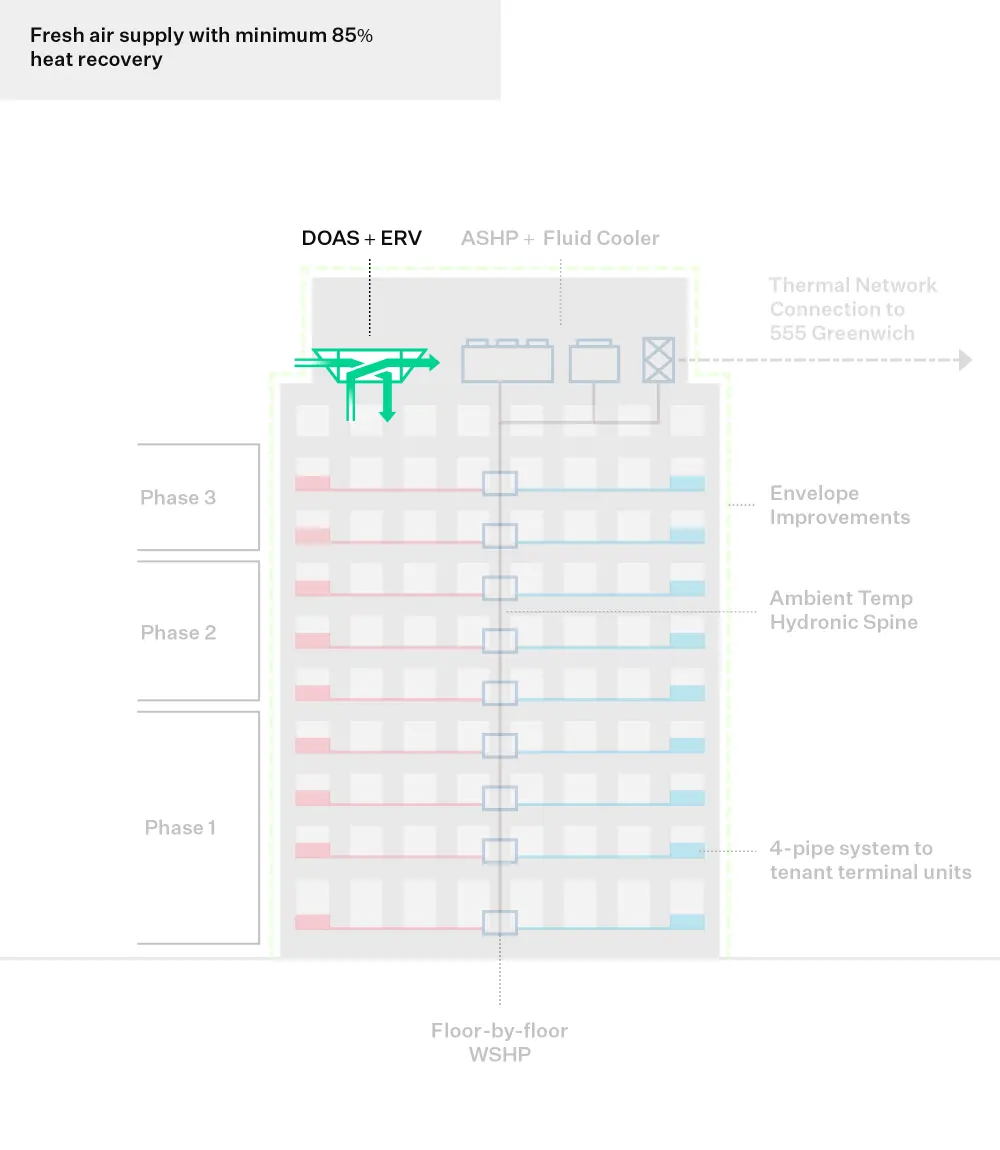
A water source heat pump system is accompanied by a new, highly efficient energy recovery ventilation system to minimize energy waste.
Step 1
Step 1: Examine Current Conditions
A baseline assessment is key to understanding current systems and performance, then identifying conditions, requirements or events that will trigger a decarbonization effort. The assessment looks across technical systems, asset strategy and sectoral factors.
Building System Conditions
Equipment nearing end-of-life
Comfort improvements
Indoor air quality improvements
Efficiency improvements
Asset Conditions
Repositioning
Tenant turnover/vacancy
Carbon emissions limits
Investor sustainability demands
Owner sustainability goals
Market Conditions
Market demand changes
Policy changes
The Hudson Square partnership is committed to future-proof its flagship property by upgrading its building infrastructure while meeting legislative climate goals and staying competitive in the commercial office market. The project team brought together a consortium of global solution providers and engineering expertise to develop a long-term retrofit plan to minimize energy usage and carbon emissions.
Step 2
Step 2: Design Resource Efficient Solutions
Effective engineering integrates measures for reducing energy load, recovering wasted heat, and moving towards partial or full electrification. This increases operational efficiencies, optimizes energy peaks, and avoids oversized heating systems, thus alleviating space constraints and minimizing the cost of retrofits to decarbonize the building over time.
Existing Conditions
This diagram illustrates the building prior to the initiation of Strategic Decarbonization planning by the owners and their teams.
Click through the measures under “Building After” to understand the components of the building’s energy transition.
Sequence of Measures
2022
2023
2024
2025
2026
2027
2029
Building System Affected
heating
cooling
ventilation
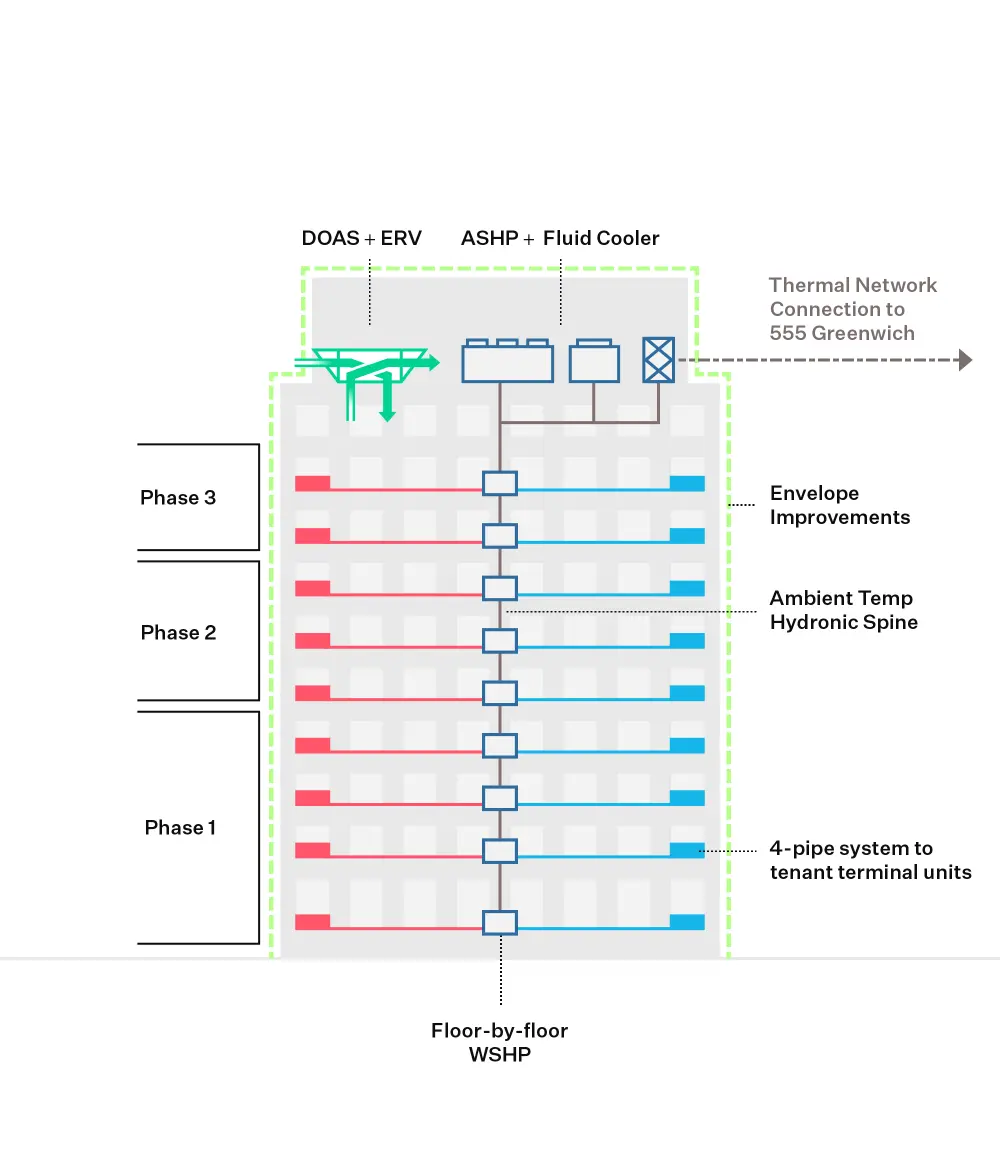
Applying the Nordic design principles of holistic energy recycling and electrification to make decarbonization technically and economically feasible over time. This design approach follows a circular systems philosophy to reduce heating demand by recovering and redistributing heat from high-energy areas to low-energy areas, rather than simultaneously cooling and heating different zones. Heat is moved to or from different floors, and only then is energy introduced to the system via air source heat pumps.
Reduce Energy Load and Recover Wasted Heat
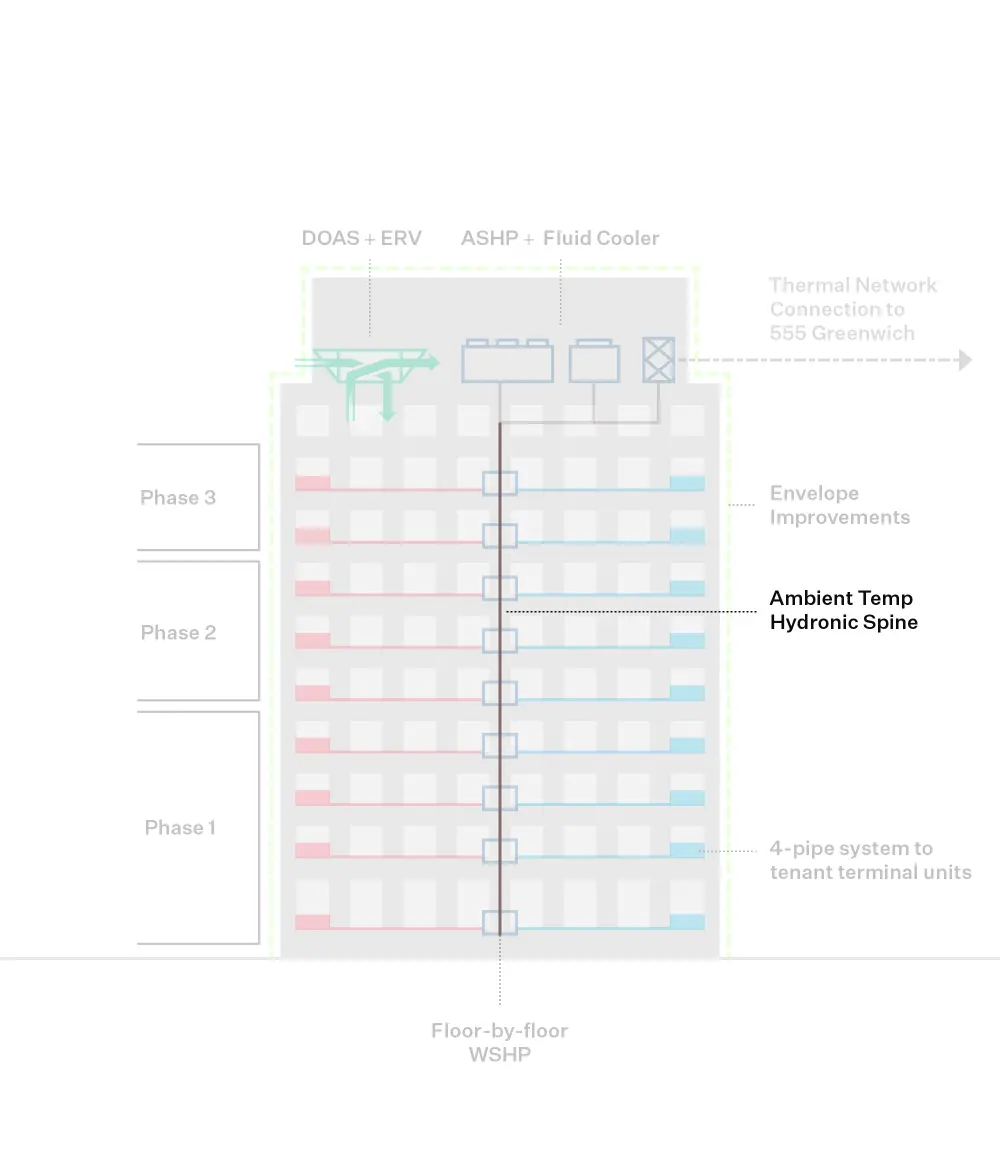
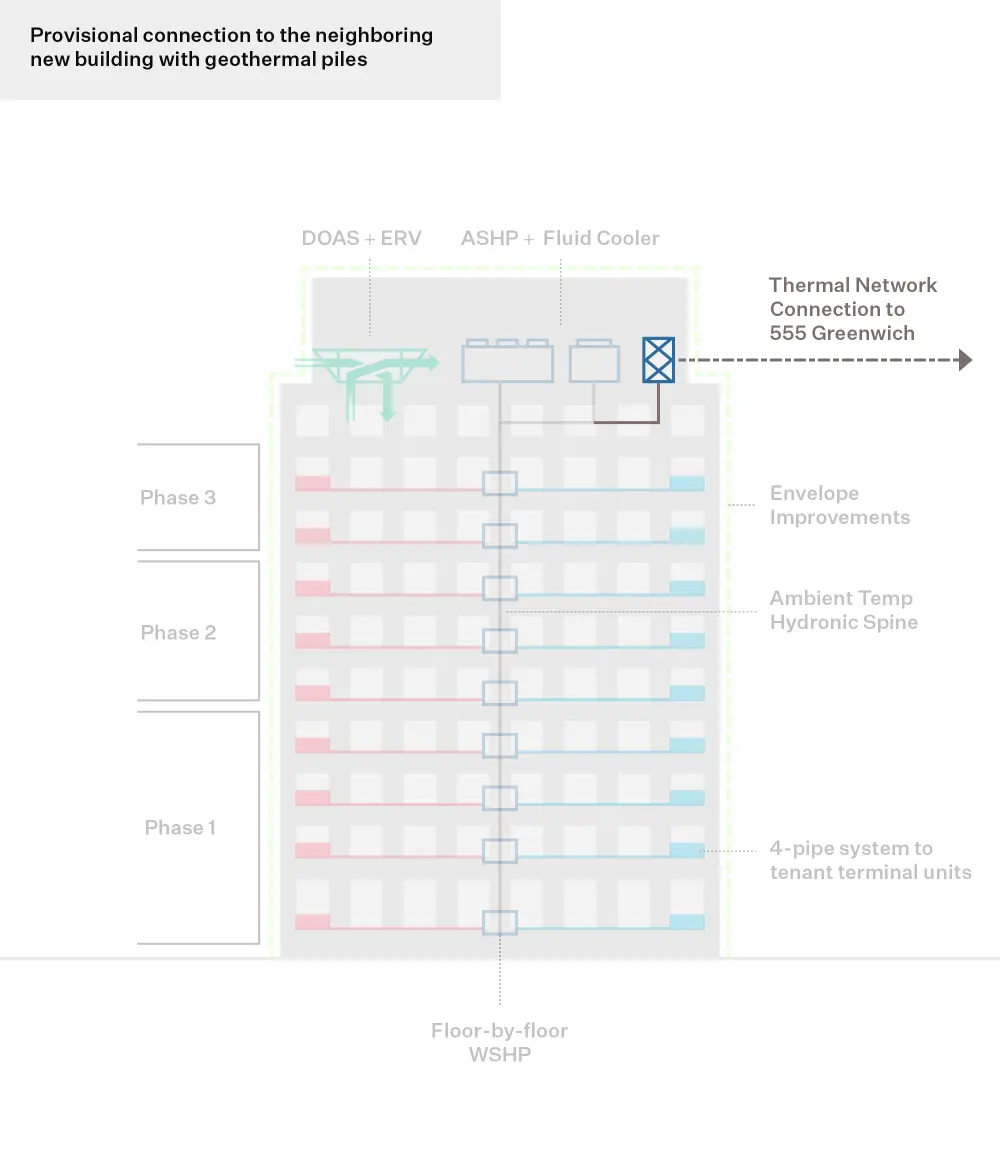
Developing a hydronic loop operating at ambient temperatures by converting the existing condenser water riser. The ambient loop enables future optionality with the integration of different heat sources and takes advantage of simultaneous heating and cooling opportunities between spaces and floors to reuse otherwise wasted heat.
Ambient Loop Hydronic Spine: high efficiency water-based distribution system, lower supply temperature and heat sharing between floors/zones
Dedicated Outside Air System (DOAS) with Energy Recovery Ventilator (ERV): decouple ventilation from heat and cooling systems, and recapture exhaust air energy to condition fresh air
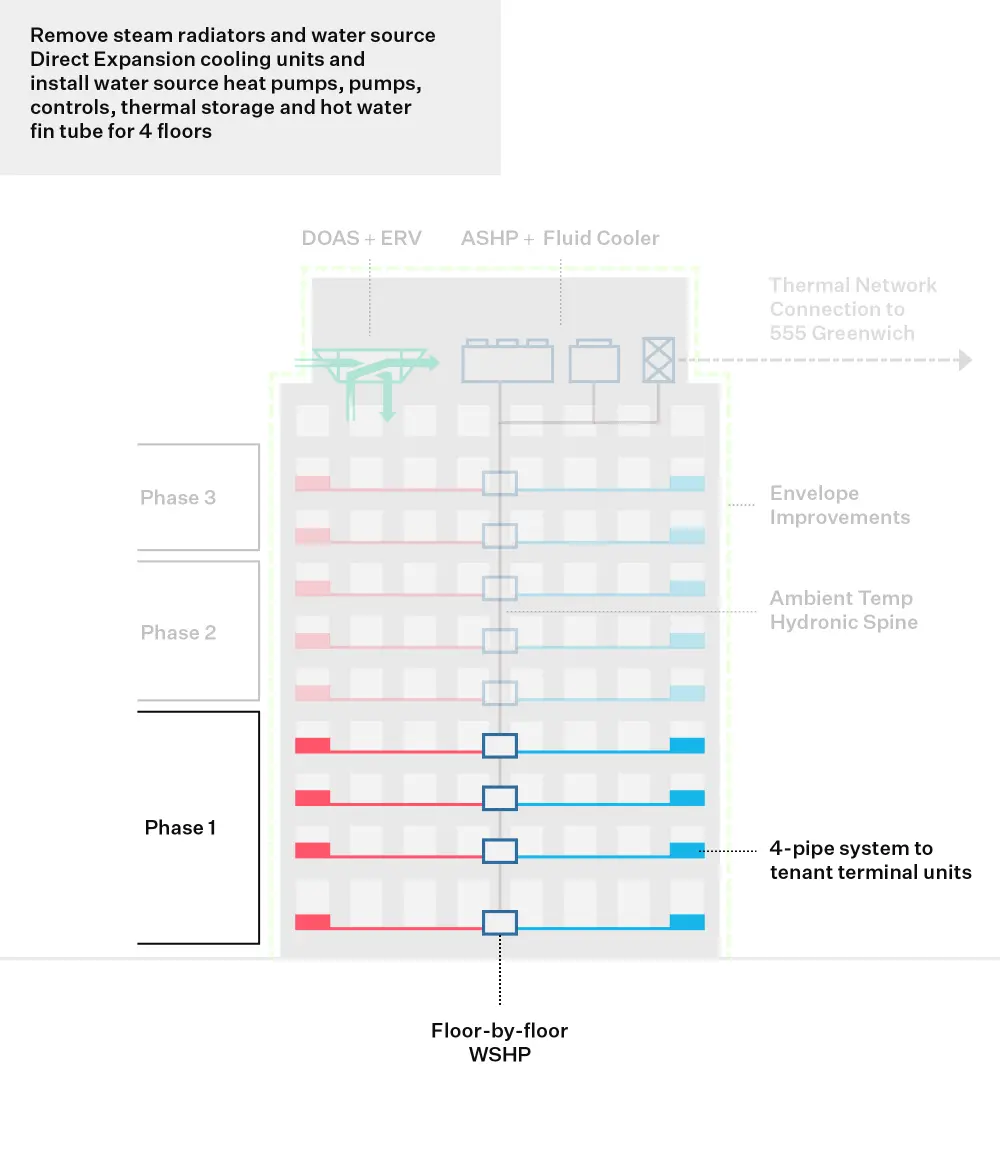
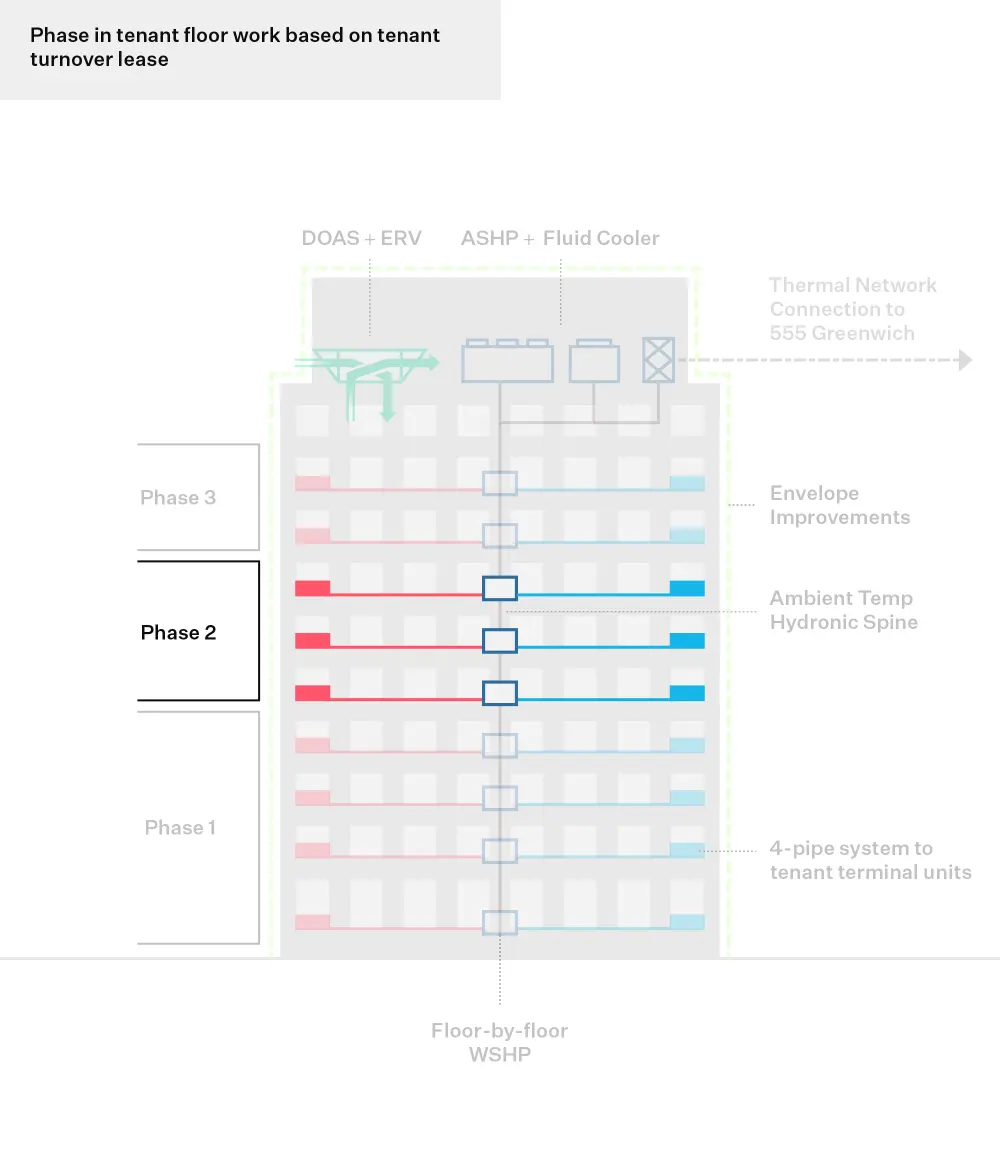
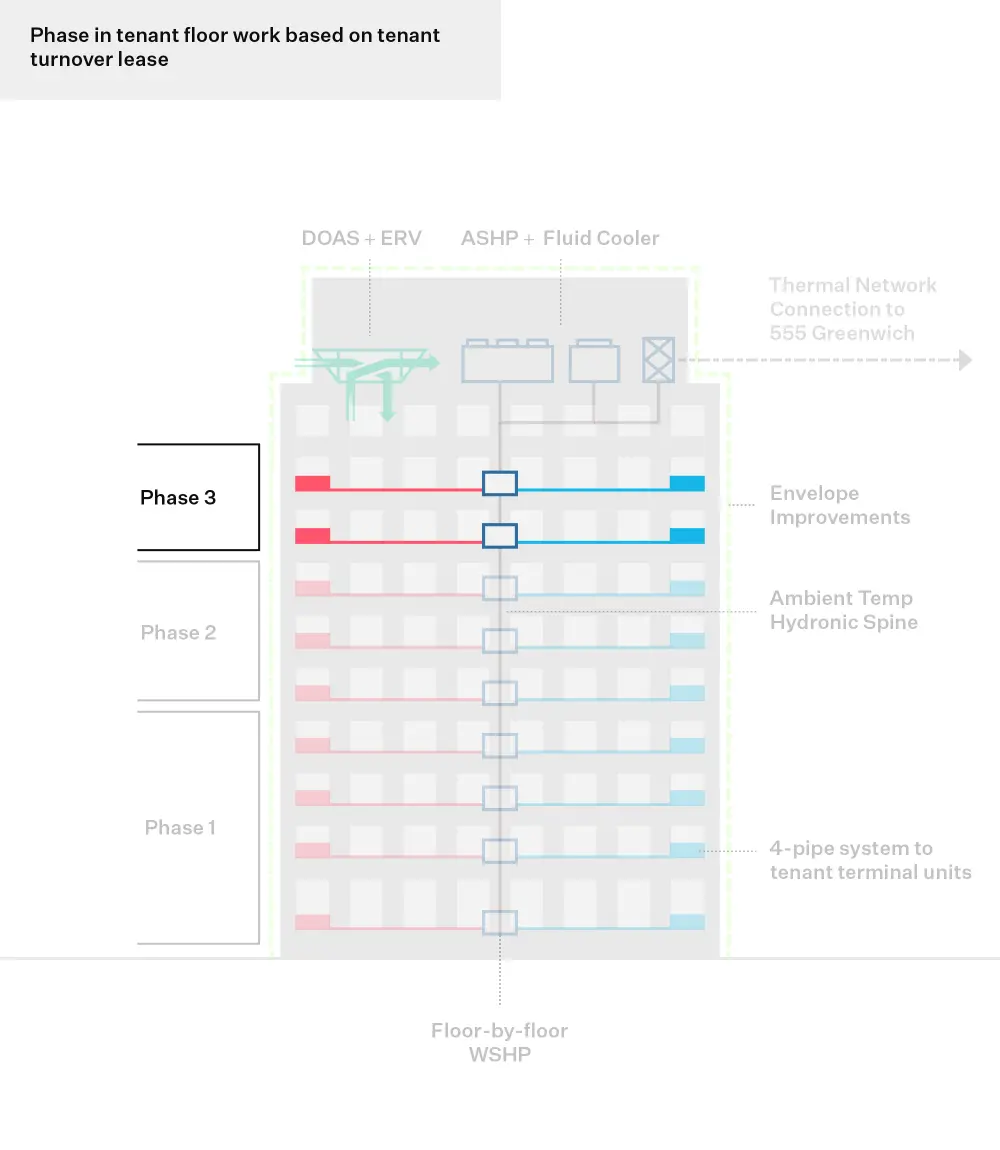
Tenant Conversion: install floor by floor WSHPs and convert to hydronic low temperature heating and high temperature cooling
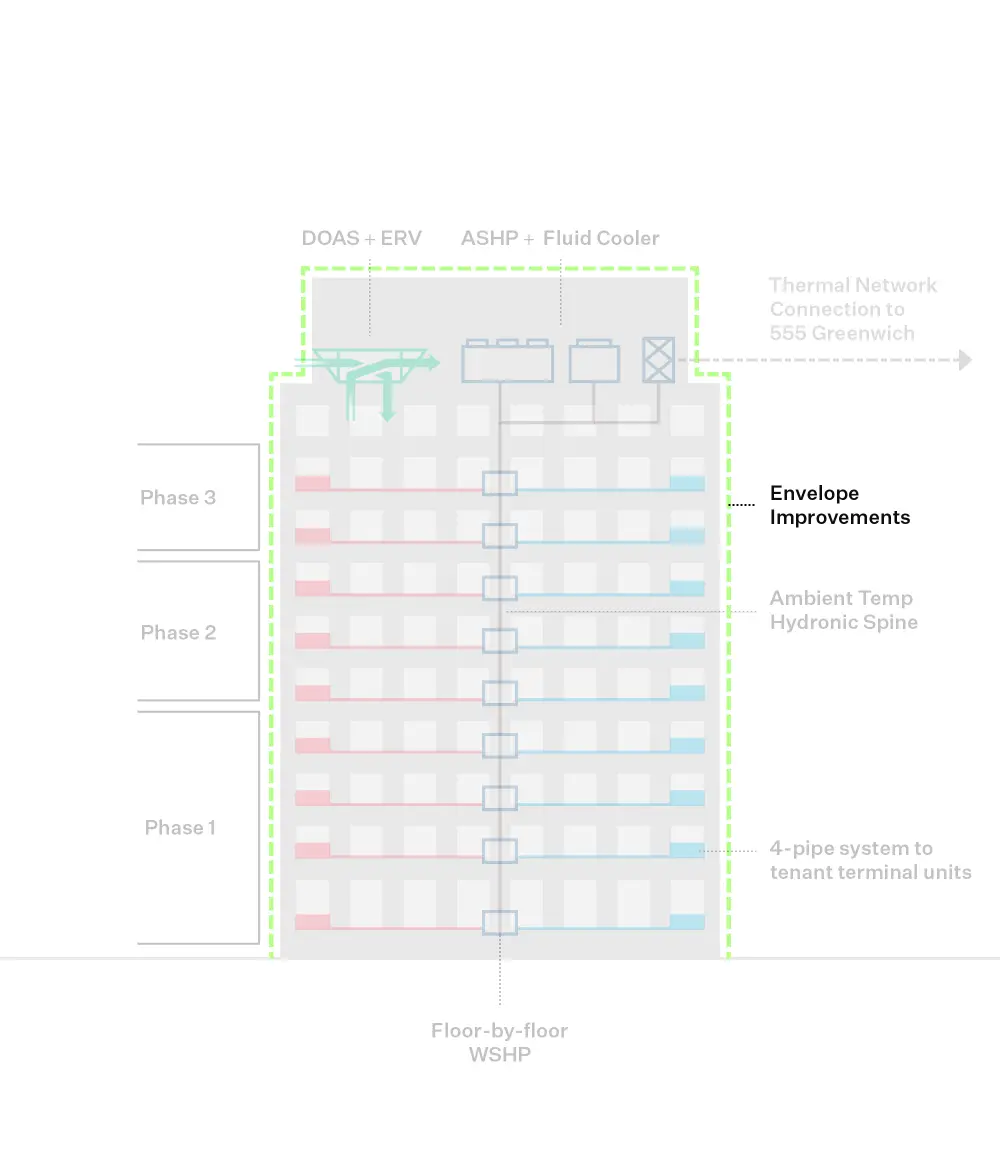
Window replacement (provisional): reduce air infiltration and reduce energy loads
Partial Electrification: right-size heat pump
Leverage the high efficiency of heat pump technologies, enable grid interactivity, and take advantage of future low-carbon electricity production planned by the state.
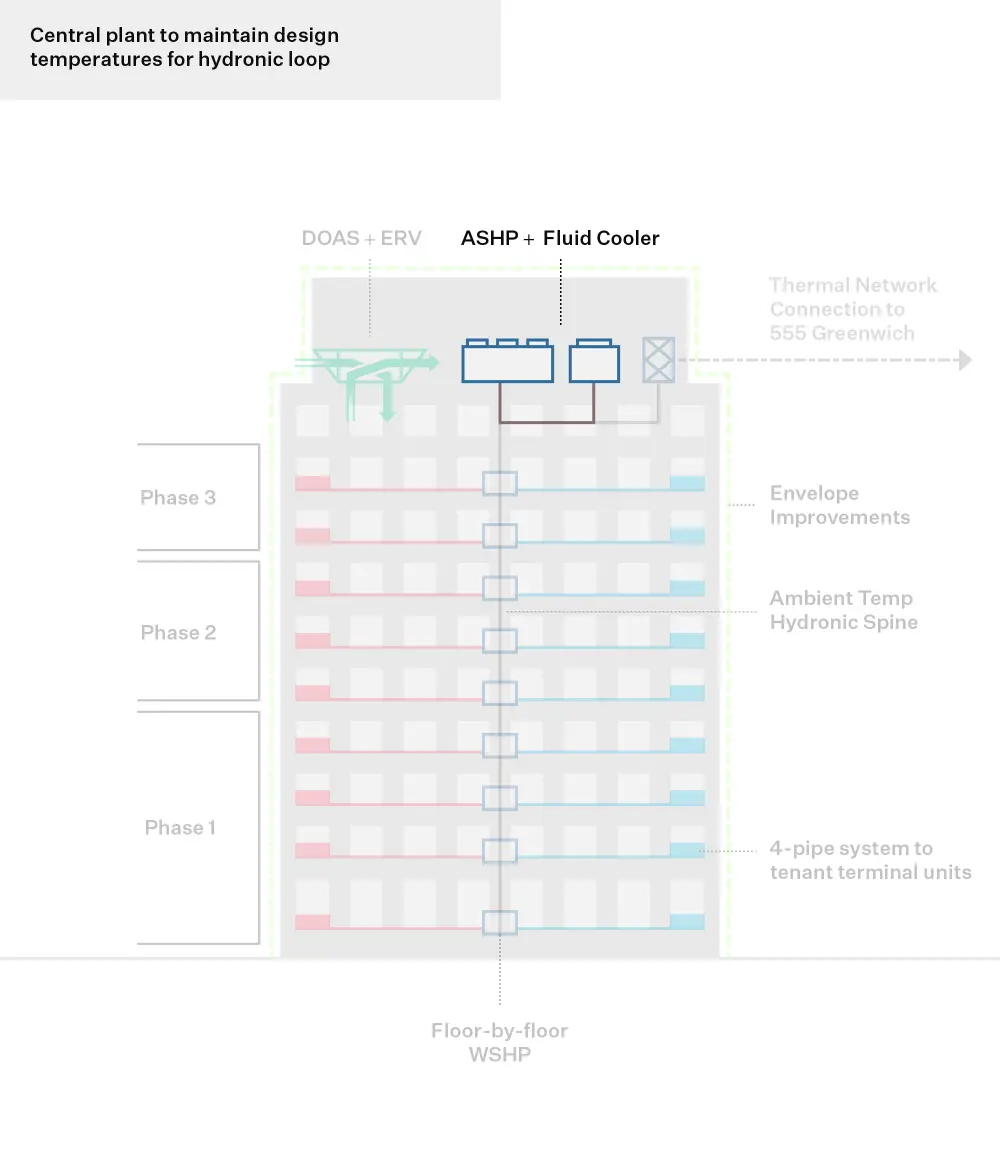
Central ASHP + Adiabatic Fluid Cooler: heat supply and heat rejection, maintain design temperatures for ambient loop
Full Electrification: replace/remove peak load equipment
Thermal Storage: leverage heating hot water and chilled water storage for peak load
Thermal network connection to neighboring building: heat sharing capability and leverage geothermal piles in the property next door
Decommission natural gas boilers
Other Project Highlights
Floor-by-floor replacement of packaged terminal cooling units and steam heating with a comprehensive water source heat pump system significantly reduces heating and cooling needs by recycling heat from different spaces in the building
A more sustainable and circular approach consists of:
Leveraging Energy Recovery Ventilation (ERV) to reduce conditioning loads
Separating fresh air delivery and conditioning from heating and cooling systems by using a Dedicated Outdoor Air System (DOAS)
Recycling existing sources of heat within the building during the cold weather rather than rejecting it to the atmosphere.
Utilizing heat pumps to satisfy remaining heating loads in buildings and fully eliminate the use of fossil fuel combustion
New systems can be phased in over time: Rather than retrofitting the entire building, work can be done on a floor-by-floor basis, which is easier on the budget, allows for greater flexibility and is less disruptive to existing tenants. It is estimated that full-floor tenants vacate spaces every 10 to 15 years.
Step 3
Step 3: Build the Business Case
Making a business case for strategic decarbonization requires thinking beyond a traditional energy audit approach or simple payback analysis. It assesses business-as-usual costs and risks against the costs and added value of phased decarbonization investments in the long-term.
Decarbonization Costs
Central ASHP and Adiabatic Dry-Cooler.
Tenant Conversions 1-3 with WSHP and 4-pipe system.
Connection to neighboring 555G.
Central DOAS + ERV.
Window Replacement (provisional).
Business-as-Usual Costs
Energy costs savings.
Repairs & maintenance savings.
Business-as-Usual Risks
$204k / YR avoided LL97 fines starting in 2030.
Decarbonization Value
Empire Building Challenge incentive.
Utility program incentive.
Net Present Value
Net difference between the present value of cash inflows and outflows over a period of time.
Using a phased approach, Hudson Square Properties (HSP) spreads costs across the term of their decarbonization project, incorporating key milestones like equipment end-of-life and tenant turnover to take advantage of previously planned capital expenditures. HSP’s phased approach was informed by the Strategic Decarbonization Assessment (SDA) tool, a long-term financial planning tool for building owners to manage emissions and energy use. Developed for NYSERDA, the SDA tool has been piloted by the first EBC cohort and will be continually revised based on feedback from these partners, producing a resource that will help the broader real estate investment community compare business-as-usual pathways to proposed improvements over time, and develop a detailed Discounted Cash Flow (DCF) model of different investment scenarios. The SDA tool is designed to help owners move away from reactive decision-making and towards proactive planning to simultaneously optimize for operational expenses, net operating income, and emissions reductions. The phased retrofit plan provides long-term financial value to Hudson Square Partners, transforming 345 Hudson into a green asset—a class-A building with no legislative risk and very little tenant disruption risk. The hydronic heating infrastructure allows HSP to meet Local Law 97’s building emissions targets, saving an estimated $204,000 each year starting in 2030. In the near-term, these low carbon systems deliver health and comfort benefits and act as a key differentiator for prospective tenants in a commercial market still rebounding from the devastating impacts of COVID-19.
Strategic Decarbonization Action Plan
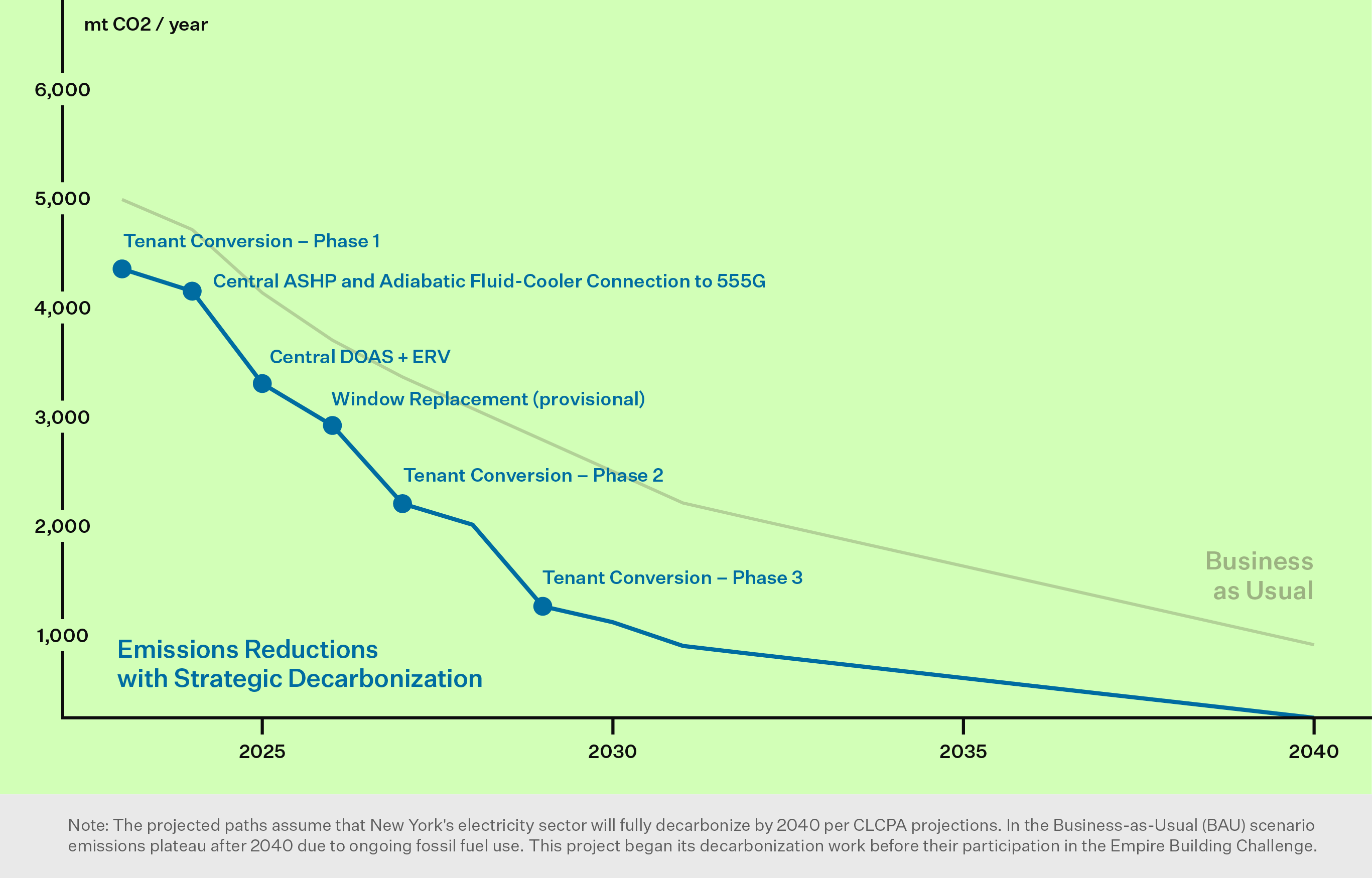
An emissions decarbonization roadmap helps building owners visualize their future emissions reductions by outlining the CO2 reductions from selected energy conservation measures. This roadmap is designed with a phased approach, considering a 20- or 30-year timeline, and incorporates the evolving benefits of grid decarbonization, ensuring a comprehensive view of long-term environmental impact.
Key to HSP’s strategy was understanding how to meet aggressive climate targets while addressing the practical objectives of their tenants—stable temperatures, fresh air, and reliable equipment—without placing too much onus on tenants to devise their own solutions or diligently manage their own consumption. To devise this approach, HSP divided building systems into three distinct spheres of ownership and influence. The first sphere encompasses the heating, cooling, and air distribution equipment under tenant control (e.g., radiators, fan coil units, etc.). The second sphere includes equipment commonly installed and maintained by the landlord, but controlled by the tenant (e.g., air conditioning units). The third sphere covers the core building infrastructure, under full control of the landlord, like cooling towers, boiler plants, and primary air handling units. This framework identified a major opportunity area in which to address carbon and energy goals: equipment supplied by the landlord but controlled by the tenant. Given this, the core objective was to create a scenario in which the landlord provides the solid grounding—such as the thermal network—for tenants to condition their spaces most efficiently. With this core functionality in place, tenants are afforded efficient systems performance simply by occupying the space and tapping into the building infrastructure. Incidentally, projected long term savings will be dependent on tenant plug loads and equipment fit-outs. The potential saving values displayed above are based on best-case scenario and CLCPA carbon projections.
As floors are phased in and more tenants take advantage of the thermal network, the amount of energy recycled across the building increases, incrementally improving the efficiency of 345 Hudson. By 2035, once fully implemented, whole-building energy use would be expected to drop by more than 30%. Total building carbon emissions would fall 90%, compared to a pre-retrofit baseline, with reductions increasing towards 100% as New York’s electric grid becomes fully renewable. These reductions reflect both emissions avoided by capturing 11GWh of waste heat currently rejected by the building (e.g., via cooling towers), and via the application of high-efficiency heat pumps. With a fully deployed thermal network and energy recovery ventilation, modeling reflects a scenario in which only 4 GWh of energy would be rejected. Notably, post-retrofit peak heating and cooling loads would fall dramatically—by 92 and 63% respectively—reflecting the significant benefits of capturing, sharing, and recycling heat across floors. The thermal network is key to electrifying buildings via heat pumps, as it reduces floor-level energy demand, allowing for smaller capacity heat pump systems.
345 Hudson’s 10-year deployment plan first targets improvements to the building’s core infrastructure, then phases in tenant retrofits, floor by floor. Select vacant floors will be retrofitted up front, with the hope of providing showcases to prospective tenants and their engineering staff to witness engineering solutions applied in practice—a critical step in moving the market given the systems’ novelty in New York. From there, additional floors will be phased in during periods of tenant turnover. As the project progresses floor by floor and use of the thermal network expands, heat pumps will supplant existing packaged terminal units and efficiency will improve dramatically. Updated floors will effectively become energy producers engaging in intra- floor heat exchange, rather than receivers of linear energy supply, benefiting the overall system. By 2025, HSP aims to connect the ambient loop at 345 Hudson to the neighboring building at 555 Greenwich, to share loads as needed and take advantage of its geothermal system. By 2030, the building will operate using only electricity, and take full advantage of the fully formed thermal network across all floors. With all floors connected, the thermal inertia (the energy stored within the hydronic network itself) of the whole building will often be substantial enough to store or release energy in response to changing utility rates or renewable energy generation—importing or exporting heat energy when needed, particularly during peak demand conditions. Reactive to grid demands, this solution allows the building to become an asset to the grid rather than simply a consumer.
A baseline assessment is key to understanding current systems and performance, then identifying conditions, requirements or events that will trigger a decarbonization effort. The assessment looks across technical systems, asset strategy and sectoral factors.
Building System Conditions
Asset Conditions
Market Conditions
Step 2
Step 2: Design Resource Efficient Solutions
Effective engineering integrates measures for reducing energy load, recovering wasted heat, and moving towards partial or full electrification. This increases operational efficiencies, optimizes energy peaks, and avoids oversized heating systems, thus alleviating space constraints and minimizing the cost of retrofits to decarbonize the building over time.
Step 3
Step 3: Build the Business Case
Making a business case for strategic decarbonization requires thinking beyond a traditional energy audit approach or simple payback analysis. It assesses business-as-usual costs and risks against the costs and added value of phased decarbonization investments in the long-term.
Decarbonization Costs
Business-as-Usual Costs
Business-as-Usual Risks
Decarbonization Value
Net Present Value
Strategic Decarbonization Action Plan
An emissions decarbonization roadmap helps building owners visualize their future emissions reductions by outlining the CO2 reductions from selected energy conservation measures. This roadmap is designed with a phased approach, considering a 20- or 30-year timeline, and incorporates the evolving benefits of grid decarbonization, ensuring a comprehensive view of long-term environmental impact.
Project Team
Additional Resources
Tags
Insights from Empire Building Challenge
Large commercial and residential buildings must overcome various hurdles before implementing deep retrofits or capital projects that help achieve building decarbonization. This section addresses technical barriers and questions often faced by building owners and retrofit project developers.
Decentralized Systems and Tenant Equipment
Access to Occupied Spaces.
Lease Concerns.
Regulatory Limitations of Rent Stabilized Apartments.
The building owner is required to provide free heat and hot water.
No mechanism to recover investment in new systems is necessary to achieve decarbonization.
Buildings are capital constrained.
Split Incentives (e.g. tenants pay for energy).
Facade and Windows
Work must be completed at the end of facade/window useful life; very long useful life.
Building codes.
Glazing reduction at odds with aesthetic/marketability concerns.
Difficult installing with occupied spaces.
Reduce Local Law 11 recurring cost via overcladding
Aesthetic concerns
At odds with historic preservation
Capital intensive
Lot line limitations
Technology Limitations
Need higher R-value/inch for thinner wall assembly:
Vacuum insulated panels
Aerogel panels/batts
Zero-GWP blowing agents for closed cell spray foam (nitrogen blowing agent needs to be more widely adopted)
Ventilation
Energy Recovery Ventilation (ERV)
Space constraints
System tie-in point accessibility/feasibility
Rooftop Supply Air (Reznor) Unit Alternatives
Heat pump alternatives to eliminate resistance heat
Combine with ERV
HVAC Load Reduction (HLR) Technology
Vent or capture exhaust gases
Space constraints
System tie-in point accessibility/feasibility
Central vs. Decentralized Ventilation Systems
Direct Outside Air System (DOAS)
Modular perimeter ducted air heat pumps:
Competition for leasable space
Space constraints
Ventilation Points-of-Entry
Aesthetic concerns
Lot line facades/building setbacks
Competition with leasable space
Space constraints
Heat Pump Limitations
Variable Refrigerant Flow (VRF)
Fire and life safety concerns about volume of refrigerant gas located within occupied spaces.
Regulatory risk from new refrigerant policies
PTAC and VTAC
Ducted Supply/Exhaust Air Source Heat Pumps
Domestic Hot Water
Central DHW Systems:
Limited domestic production.
Performance not confirmed by independent third parties.
More demonstration projects needed.
Decentralized DHW Systems
More open-source interconnection between devices/interoperability is needed to achieve energy distribution flexibility and capacity expansion:
Air source that has a manifold connection to interconnect with water source or refrigerant gas distribution.
Interconnectivity/simplified heat exchange between refrigerants/water/air, etc.
Other options and add-ons.
Steam Alternatives and Barriers
Below are high temperature renewable resource alternatives to district steam. These alternatives are limited and face barriers to implementation due to cost, scalability, and other factors.
Deep Bore Geothermal
Renewable Hydrogen
Carbon Capture and Sequestration
Biomethane
Electric Boilers
High-temperature thermal storage
Hight-temperature industrial heat pumps
Waste Heat Capture and Reuse
Fission
Barriers to Electrification and Utility Capacity Limitations
Building Electric Capacity Upgrades
Electric riser capacity
Switchgear expansion
New service/vault expansion/point-of-entry space constraints
Capacity competition with other electrification needs:
Space heat and cooling
DHW
Cooking
Pumps and motors
Local Network Electric Capacity Upgrades
Excess Distribution Facility Charges (EDF)
Contributions in Aid of Construction (CIAC)
Gas Utility Earnings Adjustment Mechanisms (EAM) focused on System Peak Demand Reductions
Partial Electrification concepts achieve deep decarbonization but do not necessarily achieve peak gas demand reductions (debatable)
Total Connected Loads and Peak Demand drive need for capacity upgrades
Demand reduction strategies do not obviate capacity limitations unless the utility accepts the solution as a permanent demand/load reduction strategy.
Battery Storage:
Fire danger
Space constraints
Electricity distribution limitations
Structural loads
Building Automation/BMS/Demand Response:
Cost
Integration limitations; Blackbox software
Microgrid development cost and lack of expertise
On-site Generation:
Space constraints
Gas use; Zero carbon fuels availability is non-existent
Structural loads
Pipe infrastructure
Thermal Storage
Space constrains
Structural loads
Technology limitations:
Vacuum insulated storage tanks
Phase change material (DHW, space heating)
Geothermal (ambient temperature), Deep Bore Geothermal (high temperature) or Shared Loop District Energy Systems provide cooling and heating with lower peak demand than standard electric equipment
Building pipe riser limitations; need additional riser capacity:
Building water loops are typically “top down” – cooling capacity is typically located at rooftop mechanical penthouses; cooling towers at roof. Some exceptions to this rule
Space Constraints
Drilling Difficulty:
Outdoor space constraints for geothermal wells
Difficult permitting
Mud and contaminated soil disposal
Overhead clearance constraints for drilling in basements/garages
Shared Loop/Thermal Utility Limitations:
Requires entity that may operate in public ROWs and across property lines
Utilities are limited by regulations for gas, steam or electric delivery versus shared loop media (ambient temperature water).
Only utility entities can provide very long amortization periods
Utilities are best suited to work amid crowded underground municipal ROWs.
Deep Bore Geothermal Limitations:
Requires test drilling and geological assessment
Seismic risk
Drilling equipment is very large – more akin to oil and gas development equipment
Subsurface land rights and DEC restrictions
Other Energy Efficiency/Conservation Measures with proven/attractive economics (these measures are limited by lack of capital or knowledge)
A baseline assessment is key to understanding current systems and performance, then identifying conditions, requirements or events that will trigger a decarbonization effort. The assessment looks across technical systems, asset strategy and sectoral factors.
Building System Conditions
Asset Conditions
Market Conditions
Step 2
Step 2: Design Resource Efficient Solutions
Effective engineering integrates measures for reducing energy load, recovering wasted heat, and moving towards partial or full electrification. This increases operational efficiencies, optimizes energy peaks, and avoids oversized heating systems, thus alleviating space constraints and minimizing the cost of retrofits to decarbonize the building over time.
Step 3
Step 3: Build the Business Case
Making a business case for strategic decarbonization requires thinking beyond a traditional energy audit approach or simple payback analysis. It assesses business-as-usual costs and risks against the costs and added value of phased decarbonization investments in the long-term.
Decarbonization Costs
Business-as-Usual Costs
Business-as-Usual Risks
Decarbonization Value
Net Present Value
Strategic Decarbonization Action Plan
An emissions decarbonization roadmap helps building owners visualize their future emissions reductions by outlining the CO2 reductions from selected energy conservation measures. This roadmap is designed with a phased approach, considering a 20- or 30-year timeline, and incorporates the evolving benefits of grid decarbonization, ensuring a comprehensive view of long-term environmental impact.
Project Team
Additional Resources
Tags
These playbooks summarize retrofit strategies that maximize occupant comfort and energy savings through a transition from fuel to electricity- based heating, cooling and hot water systems.
Playbooks are organized by building system— lighting & loads, envelope, ventilation, heating & cooling, and domestic hot water– detailing common existing systems, typical issues, and recommended measures.
A baseline assessment is key to understanding current systems and performance, then identifying conditions, requirements or events that will trigger a decarbonization effort. The assessment looks across technical systems, asset strategy and sectoral factors.
Building System Conditions
Asset Conditions
Market Conditions
Step 2
Step 2: Design Resource Efficient Solutions
Effective engineering integrates measures for reducing energy load, recovering wasted heat, and moving towards partial or full electrification. This increases operational efficiencies, optimizes energy peaks, and avoids oversized heating systems, thus alleviating space constraints and minimizing the cost of retrofits to decarbonize the building over time.
Step 3
Step 3: Build the Business Case
Making a business case for strategic decarbonization requires thinking beyond a traditional energy audit approach or simple payback analysis. It assesses business-as-usual costs and risks against the costs and added value of phased decarbonization investments in the long-term.
Decarbonization Costs
Business-as-Usual Costs
Business-as-Usual Risks
Decarbonization Value
Net Present Value
Strategic Decarbonization Action Plan
An emissions decarbonization roadmap helps building owners visualize their future emissions reductions by outlining the CO2 reductions from selected energy conservation measures. This roadmap is designed with a phased approach, considering a 20- or 30-year timeline, and incorporates the evolving benefits of grid decarbonization, ensuring a comprehensive view of long-term environmental impact.
Project Team
Additional Resources
Tags
Insights from Empire Building Challenge
It is clear today that the use of fossil fuel-fired equipment in buildings has a limited future due to technological advancements, policy changes, ESG requirements, and other externalities. As asset managers, sustainability managers, and their consultants pursue decarbonization plans, misconceptions about decarbonization arise that can delay action and progress. Below is a list of the misconceptions encountered by NYSERDA’s Empire Building Challenge team and our recommended approaches that debunk these inaccuracies.
1. Simple Payback Measures
Instead of looking for tangential ways to create value, energy efficiency and decarbonization projects repeatedly fall into the trap of using energy savings (and some may now include carbon emissions fines savings) to justify investments in energy conservation measures. Often, this linear thinking approach yields unattractive investment economics. Alternatively, conduct scenarios analyses including net present value calculations: The lowest net present cost or negative net present value (NPV) over the decarbonization period will help inform the prioritization and selection of energy conservation measures. Demonstrating the return on investment (ROI) and/or internal rate of return (IRR) on the incremental cost of action over a do-nothing baseline will help persuade real estate owners to prioritize these projects. Rather than a simple payback analysis that looks only at the decarbonization path, the analysis should focus on comparing a decarbonization path with a “business-as-usual” path. This approach helps isolate the incremental cost of decarbonization over a business-as-usual approach.
This type of analysis requires completing a Strategic Decarbonization Assessment (SDA), which is based on a Discounted Cash Flow (DCF) analysis over the decarbonization period. The SDA should include the complexities of a capital refresh, tenant improvements, and non-energy benefits. Asset investment should be in the context of a comprehensive decarbonization roadmap rather than simply reactive maintenance.
2. One-to-one Equipment Swap with Air Source Heat Pump Is the Best Electrification Option
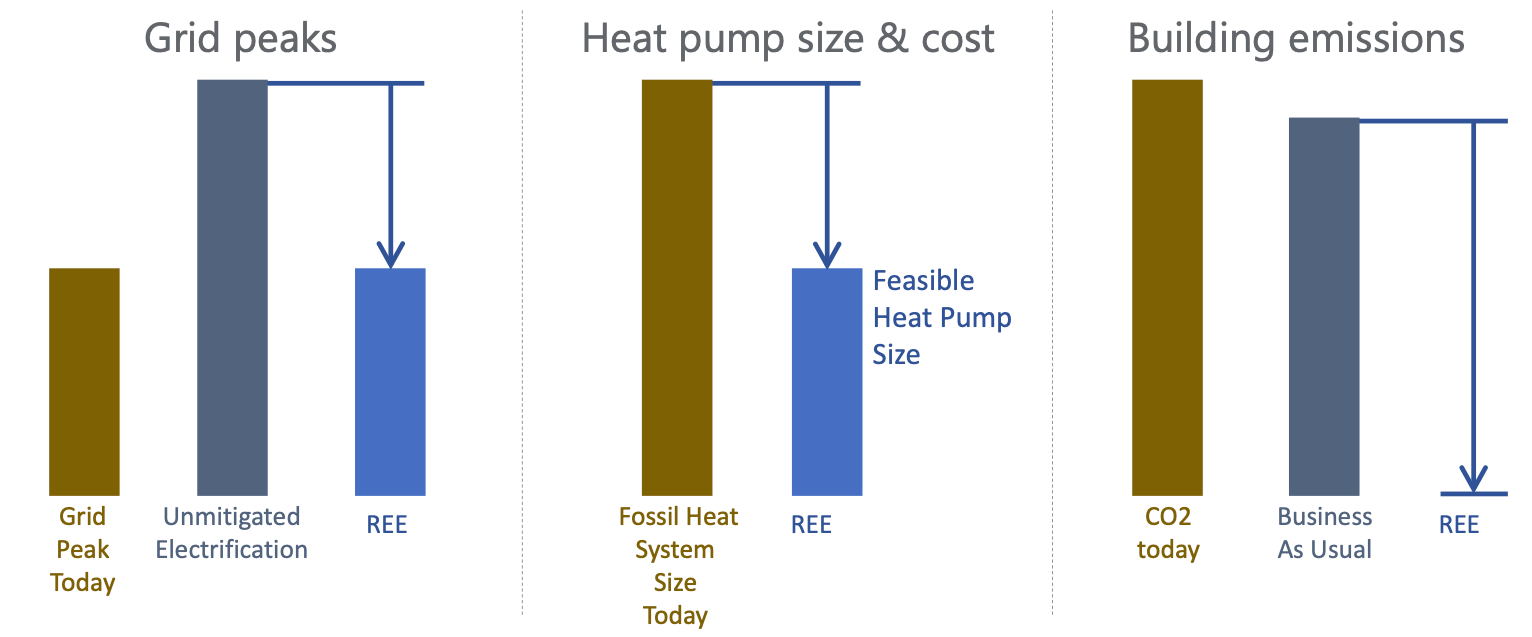
A one-to-one equipment swap with air source heat pumps, which is typically the first full-electrification option considered, may not be a realistic decarbonization strategy – particularly for owners of large buildings facing various constraints around thermal distribution systems, roof space, tenant disruption, and energy supply. In fact, it is advantageous to determine the building’s need for heat pumps toward the end of the decarbonization road mapping process to ensure that the heat pumps can run optimally. Significantly reducing loads, recovering and reusing heat wherever possible by enabling thermal networking, and using a cascading approach to decarbonizing easy-to-electrify loads are likely advantageous steps to take before installing heat pumps. Systems should be optimized to deliver heating or cooling efficiently over the integrated sum of the year’s diverse conditions, the vast majority of which are at part-load. Efforts to reduce and shift loads can help reduce peak capacity. However, electrification of more difficult peaks may require special consideration within the building’s roadmap and taking a rational approach to resilience and accounting for evolving electric grid or thermal network supply conditions. This is the foundation of Resource Efficient Decarbonization.
3. Electrify Everything… Immediately and All at Once!
Perhaps because the electrification movement was born in mild-climate California, the cold-climate, tall-building narrative has been incomplete. Decarbonization skeptics suggest that if it doesn’t make sense to electrify everything in one simple move, then it doesn’t make sense to electrify anything. The reality is that tall buildings in cold climates like New York must overcome space constraints and distribution challenges to provide comfort at peak load conditions without straining the electric grid or requiring oversized, sticker-shock-inducing equipment capacity.
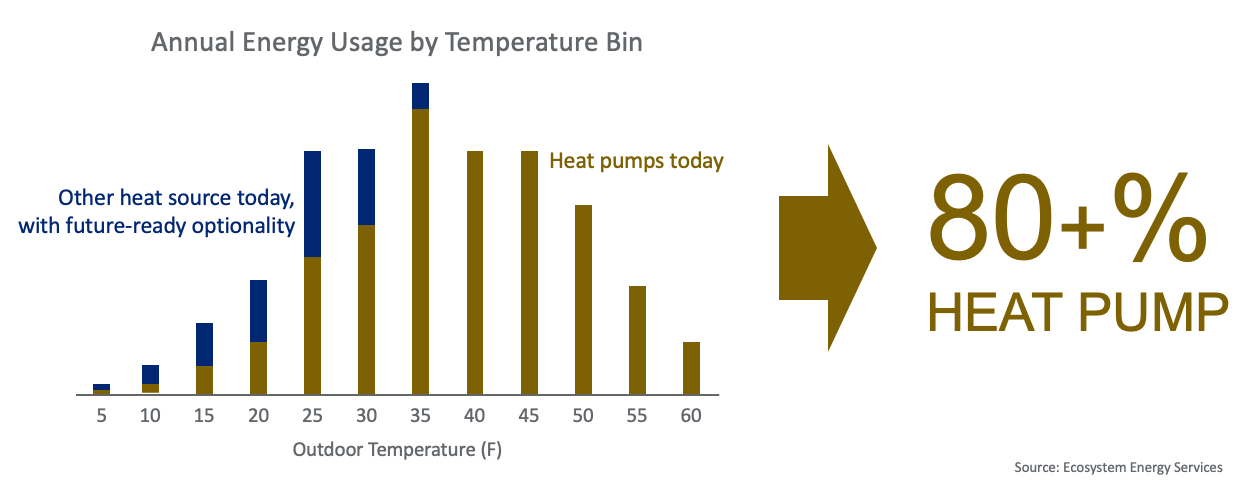
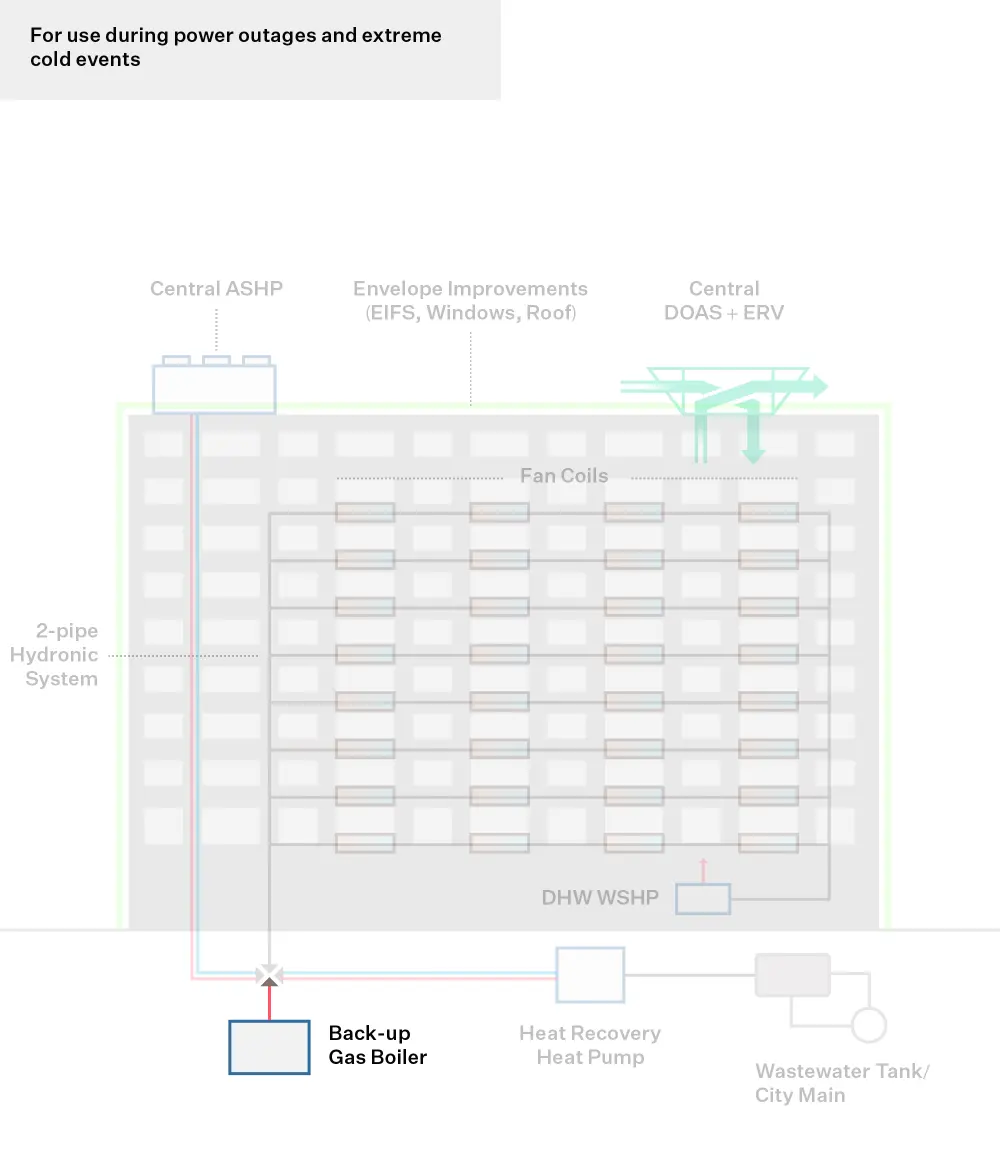
A more suitable slogan for Northeast electrification champions would be “Electrify Everything Efficiently.” Engineers should model building energy consumption data across granular temperature bins (see Figure below) and plan for electrification with “easy” loads like domestic hot water, then mild temperature loads (typically representing 80%+ of total loads), and finally for the extremes. This is the cascade approach. Until a viable solution emerges, a building owner might even keep a small gas-fired boiler and their steam radiators around as a reserve as they learn to grapple with resilient functionality at heating design conditions. Despite global average temperatures increasing, cold snaps may even become more extreme due to a collapsing winter Polar Vortex.
4. Technology Installed Today Will Be Obsolete Tomorrow
There are plenty of technology-neutral enabling steps to take prior to committing to a particular low-carbon retrofit technology. Buildings are constantly evolving and exist on a continuum unless demolition is planned. Reducing loads, enabling thermal recovery, sharing and networking, and implementing grid interactivity are all priority measures that might take place prior to electrifying heat sources. Consultants also must determine the value of inaction and the value at risk if a building owner decides to do nothing. Balancing this risk with the pace of technological innovation is a delicate analysis and is impossible to conduct without a Strategic Decarbonization Assessment. When in doubt, look to leverage existing infrastructure like using chilled water loops for heating to replace partial loads. Electrifying perimeter heating used during extreme temperatures may be a later priority or absent from the critical path on a strategic decarbonization roadmap. Look to the case studies emerging out of the Empire Building Challenge for more information on this strategy.
5. My Tenants Don’t Think This is a Priority
Consider the tangential benefits of pursuing decarbonization early. For example, more and more Class A tenants are demanding environmental action from landlords to comply with shareholder environmental, social, and corporate governance (ESG) requirements. Accelerating facade improvements may reduce the need for invasive and expensive maintenance down the line. Indoor air quality, improved comfort, and operability are emerging priorities among all tenant types.
6. Electricity Produces Emissions
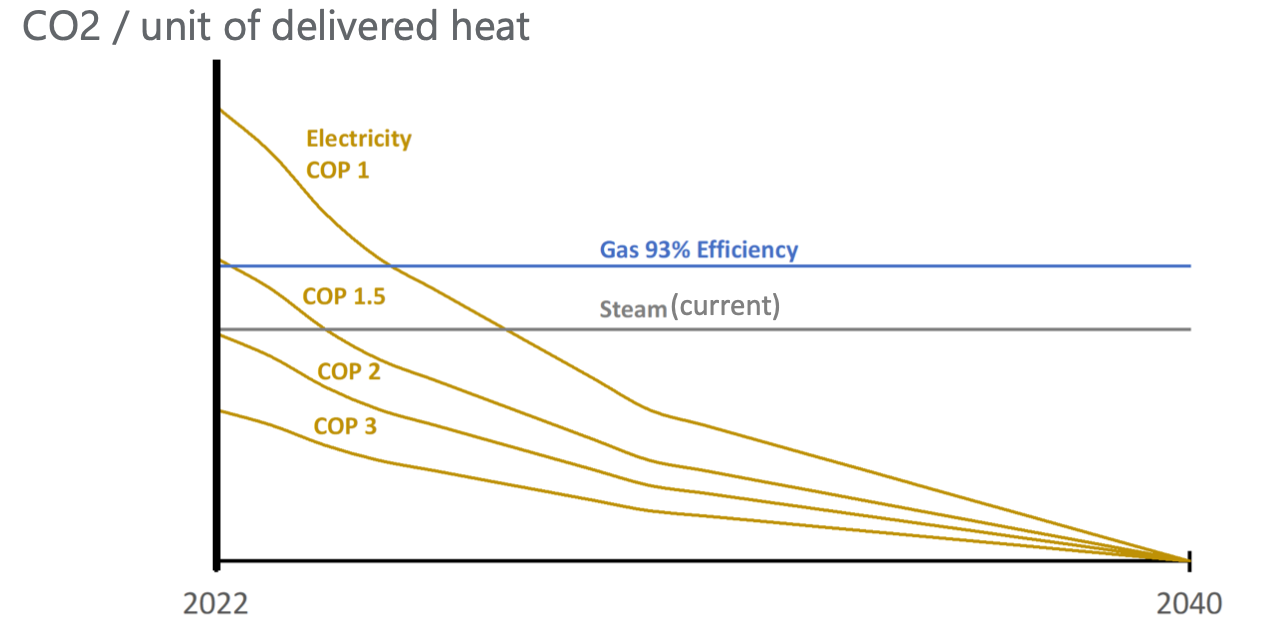
Yes, but not for too much longer. States are legislating 100% carbon-free electric grids like New York did in the Climate Leadership and Community Protection Act (Climate Act). Modeling total emissions over time using declining electric grid carbon emissions coefficients across multiple decarbonization scenarios is an important task. Phasing in electrification over time and in a strategic way is the only pathway to eliminating on-site emissions.
7. It’s Too Disruptive and Expensive to Decarbonize a Building All at Once
Achieving carbon neutrality typically requires and benefits from a phased approach versus decarbonizing all at once. Incremental implementation of low-carbon retrofits across a continuum is critical to reaching building operations carbon neutrality in cold climates. Evaluate the cost-effectiveness of phasing and maintaining technology optionality and the risk mitigation benefits these efforts might deliver. Decarbonization efforts fall on a decision-making tree, which evolves as time elapses and technology, policy, or other conditions change; each branch of the decision-making tree is a new decision point. Sustainability and asset managers can plan these intervention points over the decarbonization period.
A baseline assessment is key to understanding current systems and performance, then identifying conditions, requirements or events that will trigger a decarbonization effort. The assessment looks across technical systems, asset strategy and sectoral factors.
Building System Conditions
Asset Conditions
Market Conditions
Step 2
Step 2: Design Resource Efficient Solutions
Effective engineering integrates measures for reducing energy load, recovering wasted heat, and moving towards partial or full electrification. This increases operational efficiencies, optimizes energy peaks, and avoids oversized heating systems, thus alleviating space constraints and minimizing the cost of retrofits to decarbonize the building over time.
Step 3
Step 3: Build the Business Case
Making a business case for strategic decarbonization requires thinking beyond a traditional energy audit approach or simple payback analysis. It assesses business-as-usual costs and risks against the costs and added value of phased decarbonization investments in the long-term.
Decarbonization Costs
Business-as-Usual Costs
Business-as-Usual Risks
Decarbonization Value
Net Present Value
Strategic Decarbonization Action Plan
An emissions decarbonization roadmap helps building owners visualize their future emissions reductions by outlining the CO2 reductions from selected energy conservation measures. This roadmap is designed with a phased approach, considering a 20- or 30-year timeline, and incorporates the evolving benefits of grid decarbonization, ensuring a comprehensive view of long-term environmental impact.
Project Team
Additional Resources
Tags
The Empire Technology Prize is a $10 million competitive opportunity for global solution providers focused on advancing building technologies for low-carbon heating system retrofits in tall commercial and multifamily buildings across New York State. This NYSERDA initiative, administered by The Clean Fight with technical support from Rocky Mountain Institute, includes a $3 million sponsorship from Wells Fargo. Accelerating low-carbon building retrofits is fundamental to New York State’s national-leading Climate Act agenda, including the goal to achieve an 85% reduction in greenhouse gas emissions by 2050.
A baseline assessment is key to understanding current systems and performance, then identifying conditions, requirements or events that will trigger a decarbonization effort. The assessment looks across technical systems, asset strategy and sectoral factors.
Building System Conditions
Asset Conditions
Market Conditions
Step 2
Step 2: Design Resource Efficient Solutions
Effective engineering integrates measures for reducing energy load, recovering wasted heat, and moving towards partial or full electrification. This increases operational efficiencies, optimizes energy peaks, and avoids oversized heating systems, thus alleviating space constraints and minimizing the cost of retrofits to decarbonize the building over time.
Step 3
Step 3: Build the Business Case
Making a business case for strategic decarbonization requires thinking beyond a traditional energy audit approach or simple payback analysis. It assesses business-as-usual costs and risks against the costs and added value of phased decarbonization investments in the long-term.
Decarbonization Costs
Business-as-Usual Costs
Business-as-Usual Risks
Decarbonization Value
Net Present Value
Strategic Decarbonization Action Plan
An emissions decarbonization roadmap helps building owners visualize their future emissions reductions by outlining the CO2 reductions from selected energy conservation measures. This roadmap is designed with a phased approach, considering a 20- or 30-year timeline, and incorporates the evolving benefits of grid decarbonization, ensuring a comprehensive view of long-term environmental impact.
Project Team
Additional Resources
Tags
Insights from Empire Building Challenge
Prioritizing Decarbonization Interventions
While each individual building has a unique capital improvement plan and timeline, retrofit projects or decarbonization interventions may be organized and grouped by similarity as property owners plan for the future. Below is the overarching hierarchy for decarbonization intervention points according to industry best practices:
Facade Upgrades
Windows Upgrades
Ventilation Upgrades with Energy Recovery Ventilators (ERV)
Maximize the reduction of distribution temperatures
Maximize surface area of terminal units
Supplement 90% of peak load with hybrid electrification strategies
Eliminate peak load “last-mile” with innovative strategies in storage and/or thermal demand response
Delay replacement of gas-fired equipment with new gas-fired equipment as long as possible. Rebuild and maintain existing equipment until replacement.
Replace all remaining non-LED lighting and include lighting controls at the time of retrofit
Seal rooftop bulkhead doors and windows.
Add smoke-activated fire dampers or annealed glass to the elevator shaft vent grill in the elevator machine room.
Install algorithmic controls on top of the existing boiler control system.
Balance steam distribution systems:
Identify condensate return leaks.
Right-size air vents and master vents.
Ensure all radiators are properly draining condensate.
Ensure all steam traps are functioning properly.
Implement Radiator Efficiency and Controls Measures:
Install thermostatic radiator valves (TRV) where possible.
Install RadiatorLabs radiator cover systems where possible (integrate with algorithmic boiler control).
Balance air supply and ventilation systems using proper air registers, louvers, dampers, and technology like Constant Airflow Regulator (CAR) dampers:
Need innovative methods of balancing temperature across commercial office floors (heat shifting and sharing from one building exposure to another, e.g. north vs. south).
Balance air supply and return across vertical pressure gradients.
Seal vent stack perforations/leaks (e.g. mastic sealer).
Increase efficiency of pumps and motors:
Add VFD controllers to all pumps and motors.
Replace rooftop exhaust fans (e.g. mushroom fans or similar) with electronic commutated motors.
Implement algorithmic controls on top of existing Building Management Systems (BMS) in commercial office buildings.
Hybrid Domestic Hot Water (DHW) Plants: Add DHW heat pump equipment to an existing gas fired DHW plant.
Consider the option to direct bathroom exhaust air to DHW heat pump equipment.
Install Energy Recovery Ventilation (ERV) system.
Install rooftop solar.
Procure New York State-sourced renewable power.
Procure biomethane from utility via pilot program.
Procure renewable hydrogen blend from utility via pilot program.
Develop innovative means of participating in gas demand response:
Delay boiler firing with controls or other means.
Procure biodiesel blend for fuel switching requirement.
Thermal storage and hybrid plants (electrification)
DHW electrification (partial or full load)
Split system or PTAC partial load heating electrification
Add central-control compatible thermostats to apartments and office suites to control decentralized heating and cooling systems.
Enable aggregate demand response activity.
Fully electrify DHW systems:
Air source DHW heat pump.
Resistance DHW.
High-efficiency thermal storage.
Supplement with solar thermal where compatible.
Overlaid or insulated masonry facades with high ongoing Local Law 11 cost.
Eliminate uninsulated radiator cabinets/niches in exterior walls.
Install wall-mounted slim radiators with TRV or other controls.
Install RadiatorLabs technology.
Begin routine window replacement plan with high-performance windows.
Support cogeneration systems with biomethane (injection) procurement.
Explore hydrogen (injection) procurement to support cogeneration and centralized heating plants.
Develop on-site battery storage systems to manage building load profiles and reduce peak usage.
Integrate with an existing on-site generation where compatible.
Increase thermal mass/thermal inertia and expand thermal storage capacity using Phase Change Material (PCM) products. Products currently include: ceiling tiles, wall panels, AHU inserts, thermal storage tank inserts:
Embrace overnight free cooling.
Shift loads associated with thermal demand.
Capture and store waste heat.
Implement centralized or in-building distributed thermal storage systems to shift thermal loads to off-peak periods.
Convert low-temperature heating distribution systems to shared loop systems or geothermal systems; building distribution is already optimized for low-temperature distribution: water source heat pumps, large surface area terminal units (radiant panels, underfloor heat, fan coils, etc.)
Interconnect with early shared loop system phases (private or utility-led).
Eliminate cooling tower as a primary cooling system (may remain as a backup as feasible).
Where necessary, convert high-temperature heating distribution systems to low-temperature distribution systems; systems converted from fin tube to radiant panels, fan coils, or water source heat pumps as feasible.
The supplement heat source for hydronic heat pumps with solar thermal technology (water source heat pumps).
Embrace consumer products that reduce building loads and peak demand:
Appliances with onboard battery storage.
Networked smart appliances.
Power over Ethernet (PoE) DC-powered, low voltage products.
DC power distribution networks make use of on-site renewable energy and energy storage.
Advanced DC[1] and AC/DC hybrid Power Distribution Systems[2]
Install HVAC Load Reduction Technology:
Capture VOCs and CO2 in liquid sorbent.
Engage with the liquid sorbent management company to safely dispose of scrubbed gases (carbon sequestration, etc.).
Use buildings hosts for negative carbon technology and focusing on direct air capture to achieve larger decarbonization goals (carbon capture and sequestration)
Electric Distribution Upgrade Needed:
Begin replacement of centralized heating systems with decentralized heating and cooling systems where appropriate. Technology includes: PTAC, VTAC, ducted PTAC, VRF, and similar technology.
Replace stoves, ranges, and cooktops with electric equipment: resistance, convection, or induction.
Integrate Building Distribution with an advanced electric vehicle (EV) charging network to provide power to parked EVs and to extract power at peak periods (EV owners opt-in for reduced parking rates, other benefits, etc.).
Install multi-function glass during window or facade replacement:
Install building-integrated PV during facade retrofits.
PV glass.
Electrochromic glass.
Vacuum Insulated glass.
Install highly insulated panels at spandrels:
Vacuum insulated panels.
Aerogel insulated panels.
Replace cooling towers with advanced heat rejection technology:
Passive radiative cooling technology.
Interconnect with 100% hydrogen distribution network.
Pair advanced, on-site battery storage systems with hydrogen fuel cells.
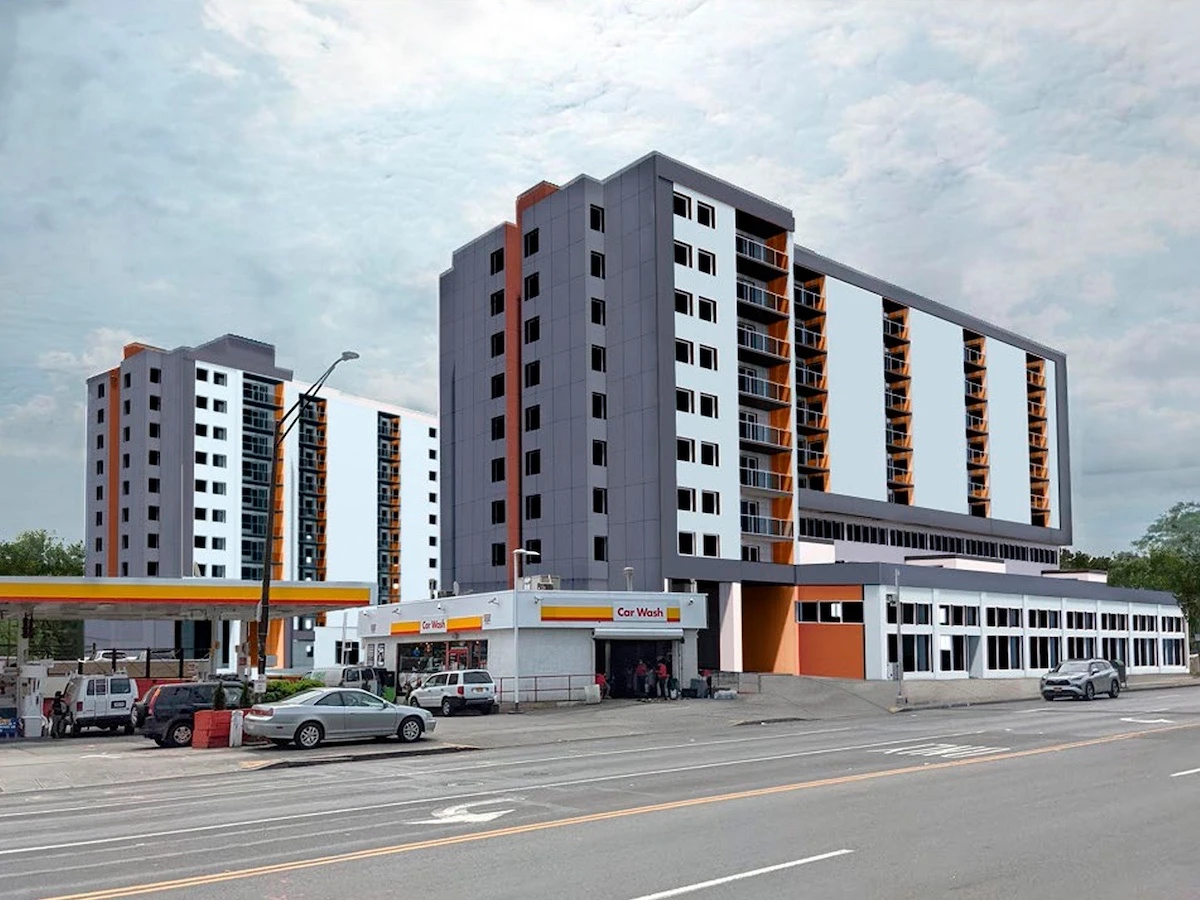
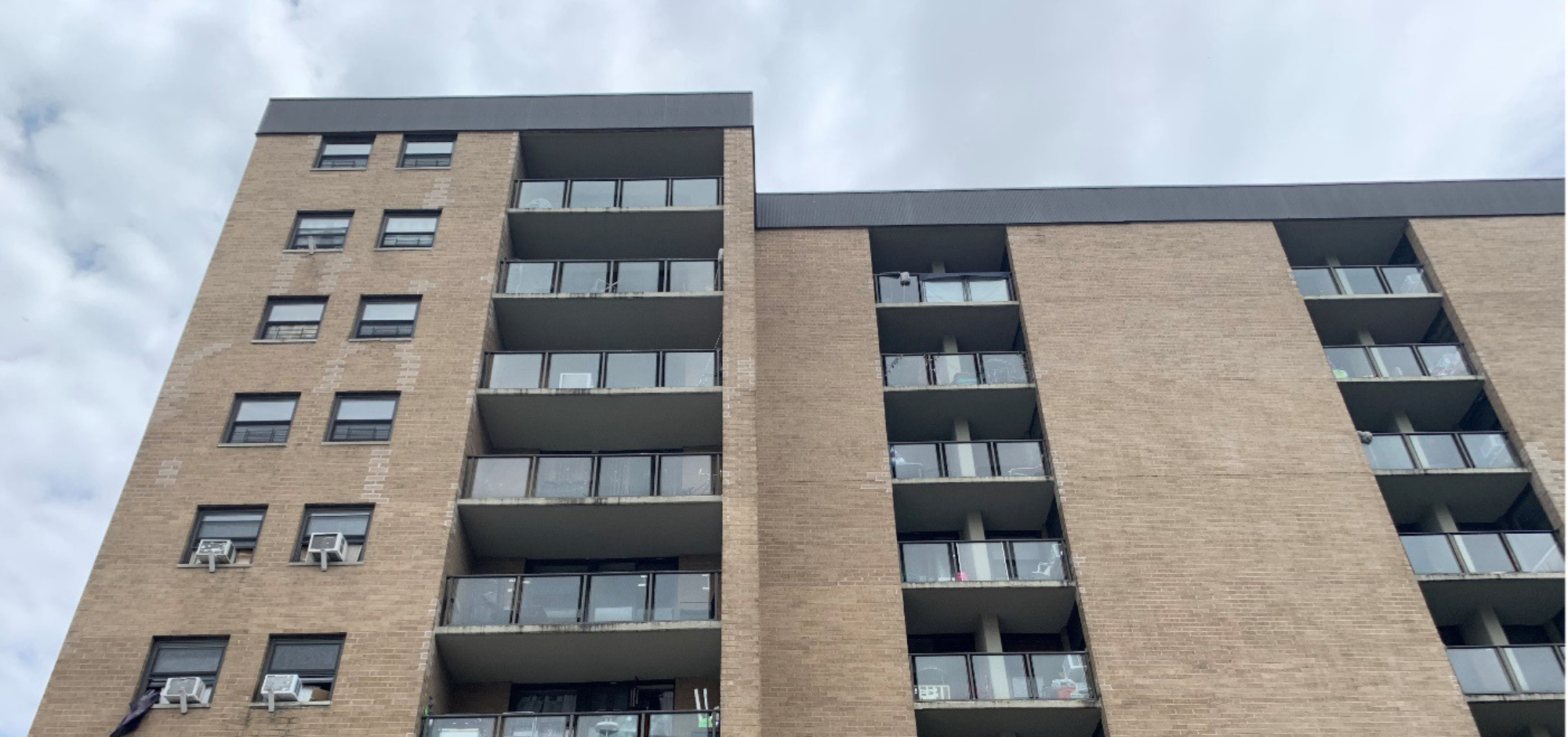
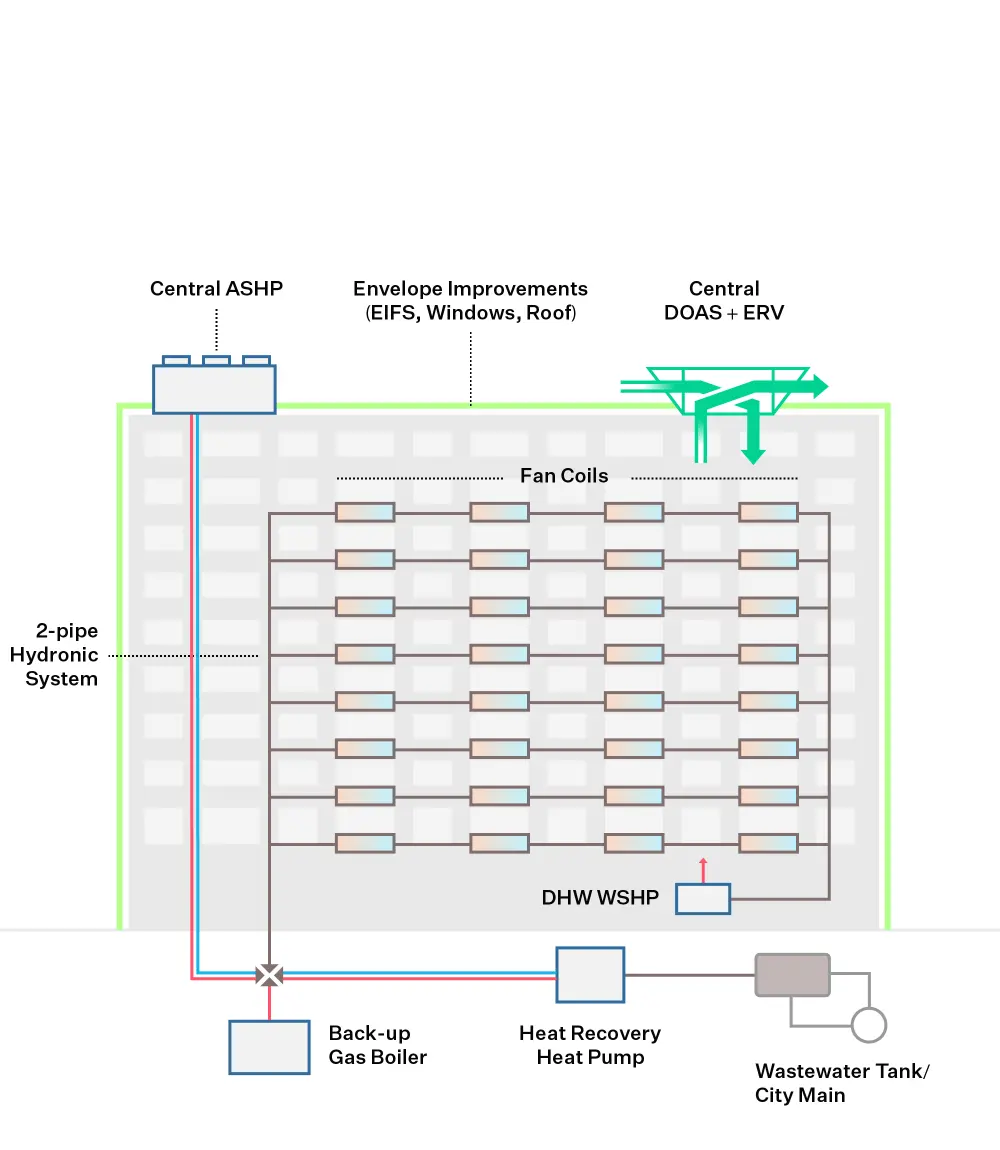
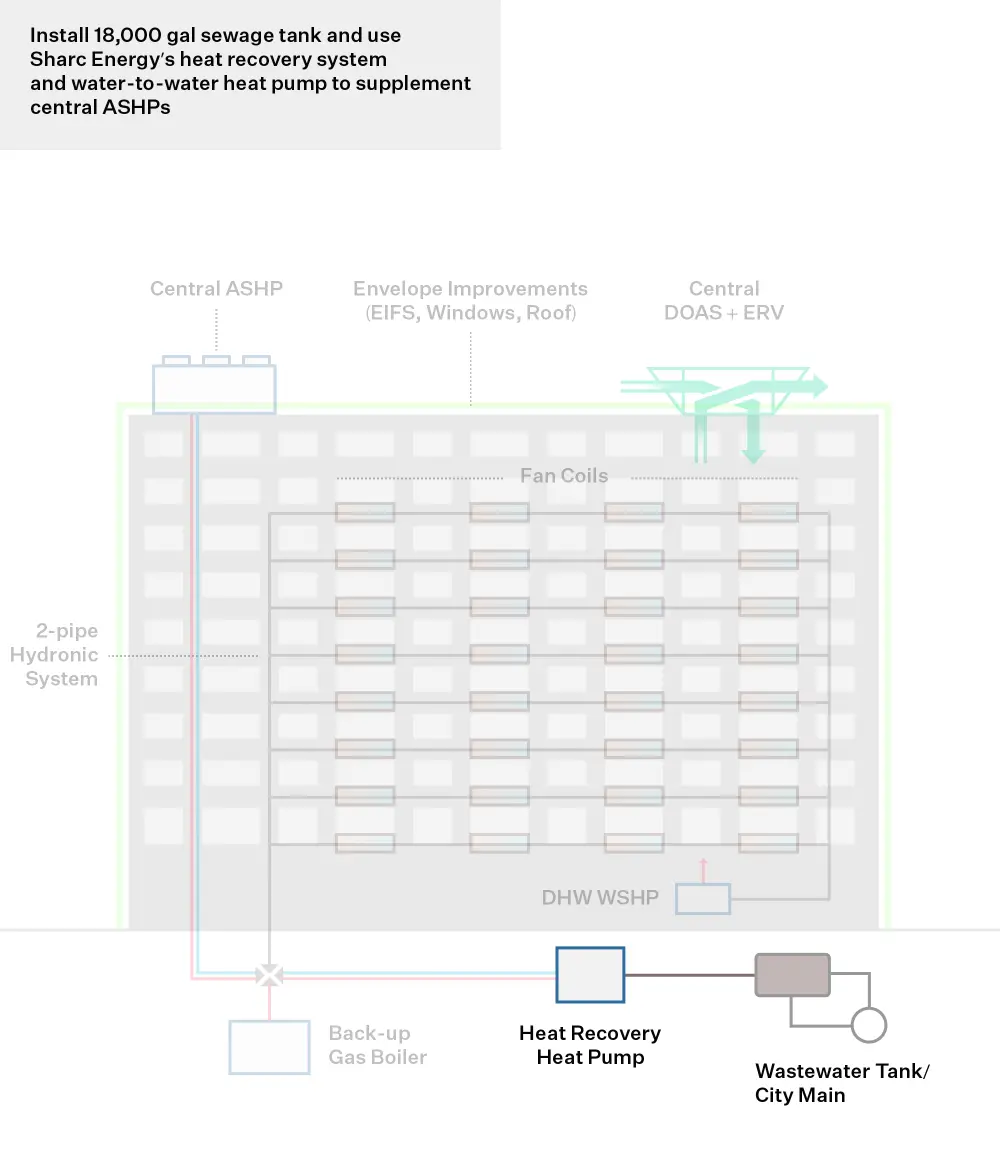
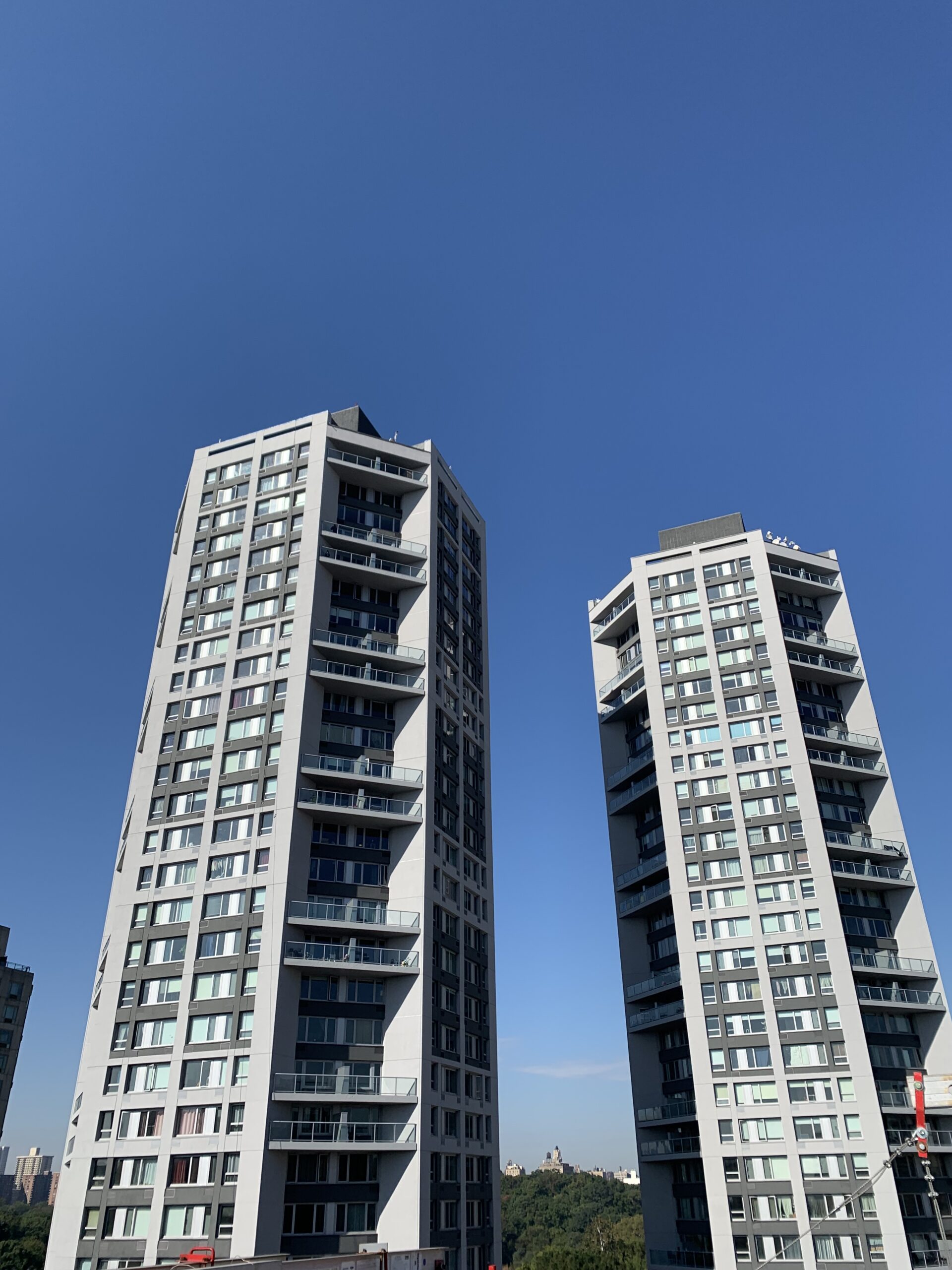
Located in Yonkers, NY, Whitney Young Manor, is a notable affordable housing complex with 195 apartments across 234,000 square feet and 12 stories. Built in 1974, the housing complex is now undergoing a $22 million makeover focusing heavily on decarbonization upgrades. This renovation aims to modernize the buildings by improving insulation and introducing a new heating and cooling system that’s energy efficient. These changes are expected to lower the buildings’ carbon footprint, enhance living conditions, and reduce energy costs. The developer, Paths Development LLC, is leveraging the recapitalization cycle of the property to upgrade its infrastructure and include decarbonization measures to meet its climate goals.
Project Highlights
Investment
12 million
of total investment allocated to bring Whitney Young Manor to carbon neutrality by 2035.
Project Scale
Project has potential replication across a portfolio of 51 existing affordable housing developments managed by Paths.
Testimonial
“The Empire Building Challenge is enabling Paths to pilot innovative approaches to decarbonization while at the same time helping to preserve affordable housing.”
Kenneth Spillberg
Head of Development
Paths Development LLC
Emissions Reductions
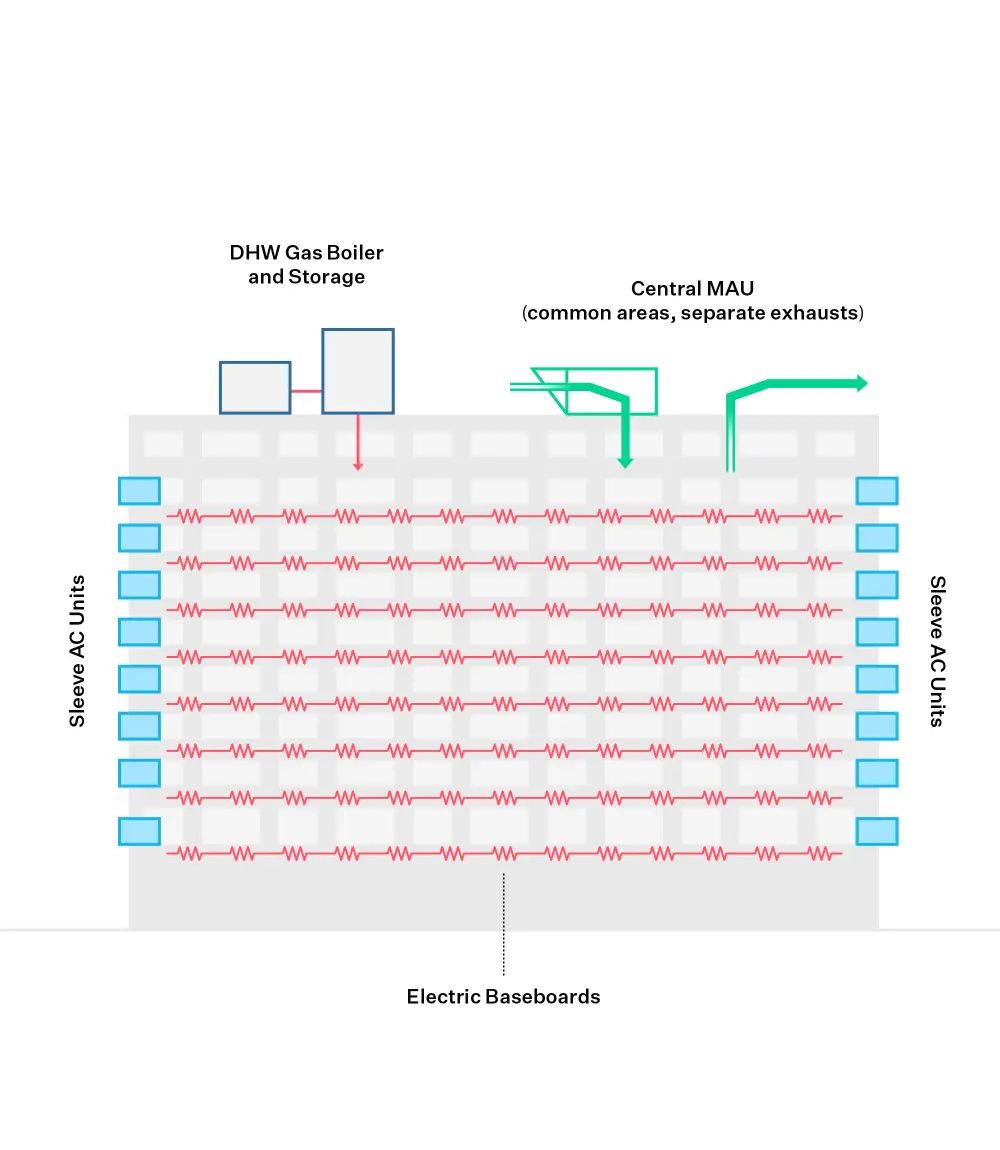
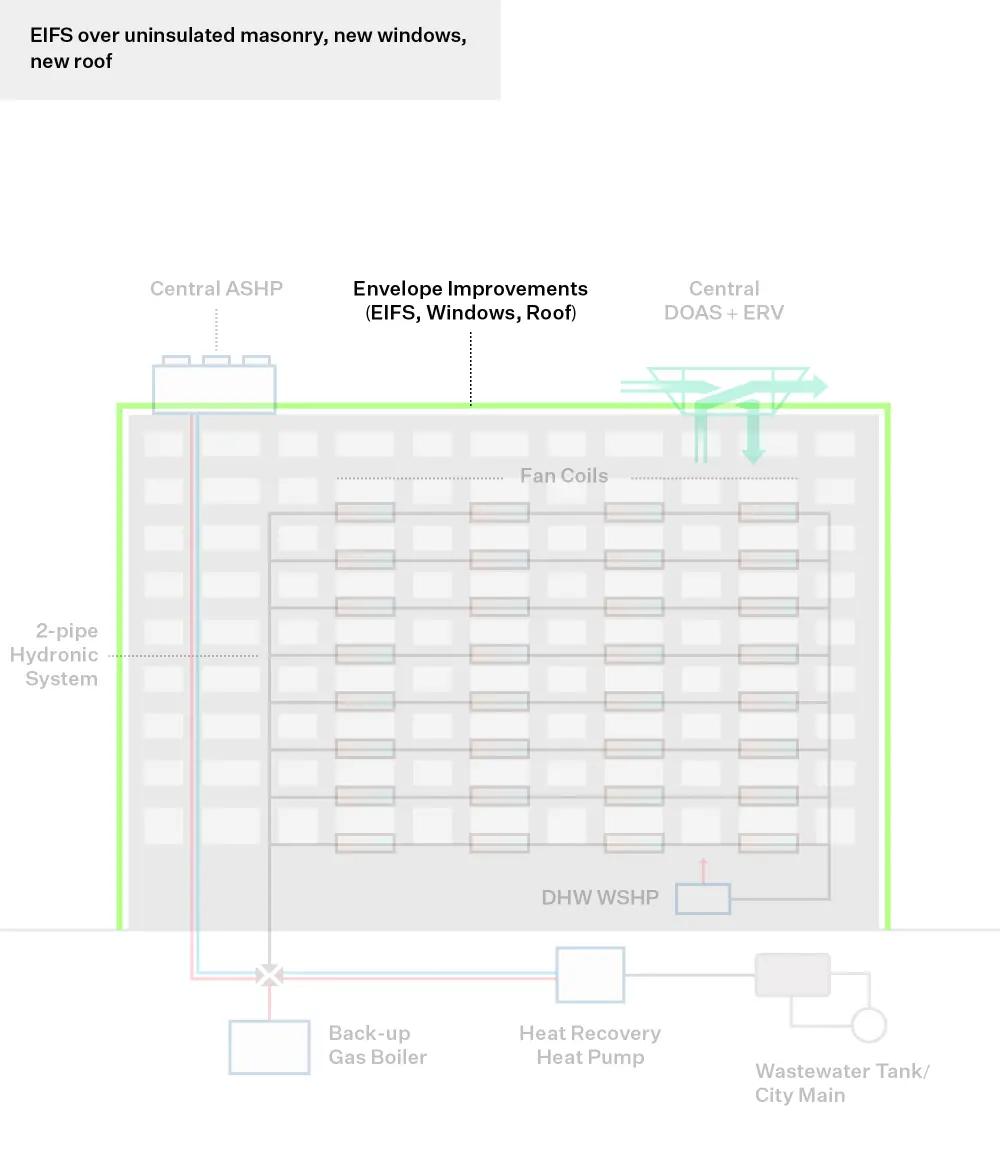
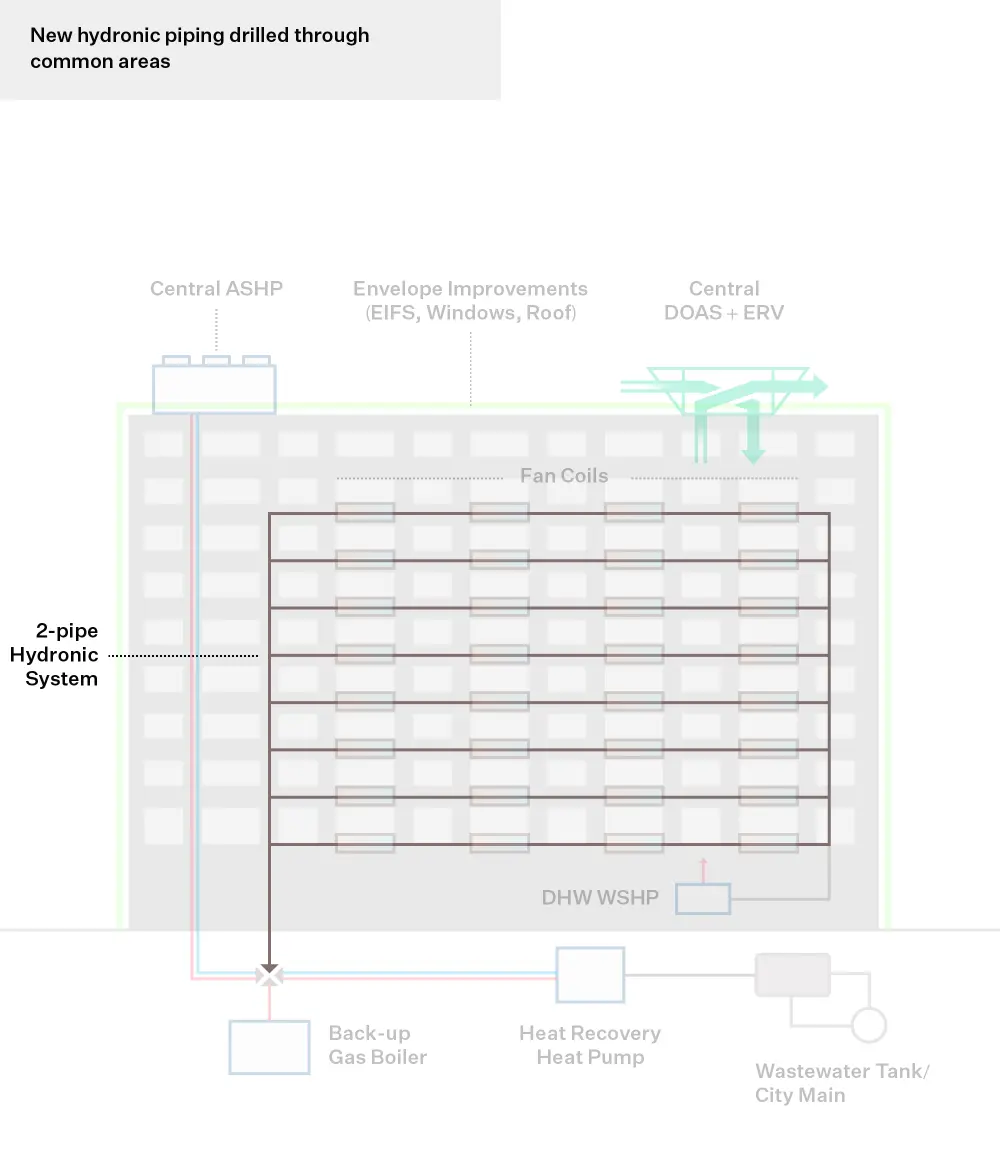
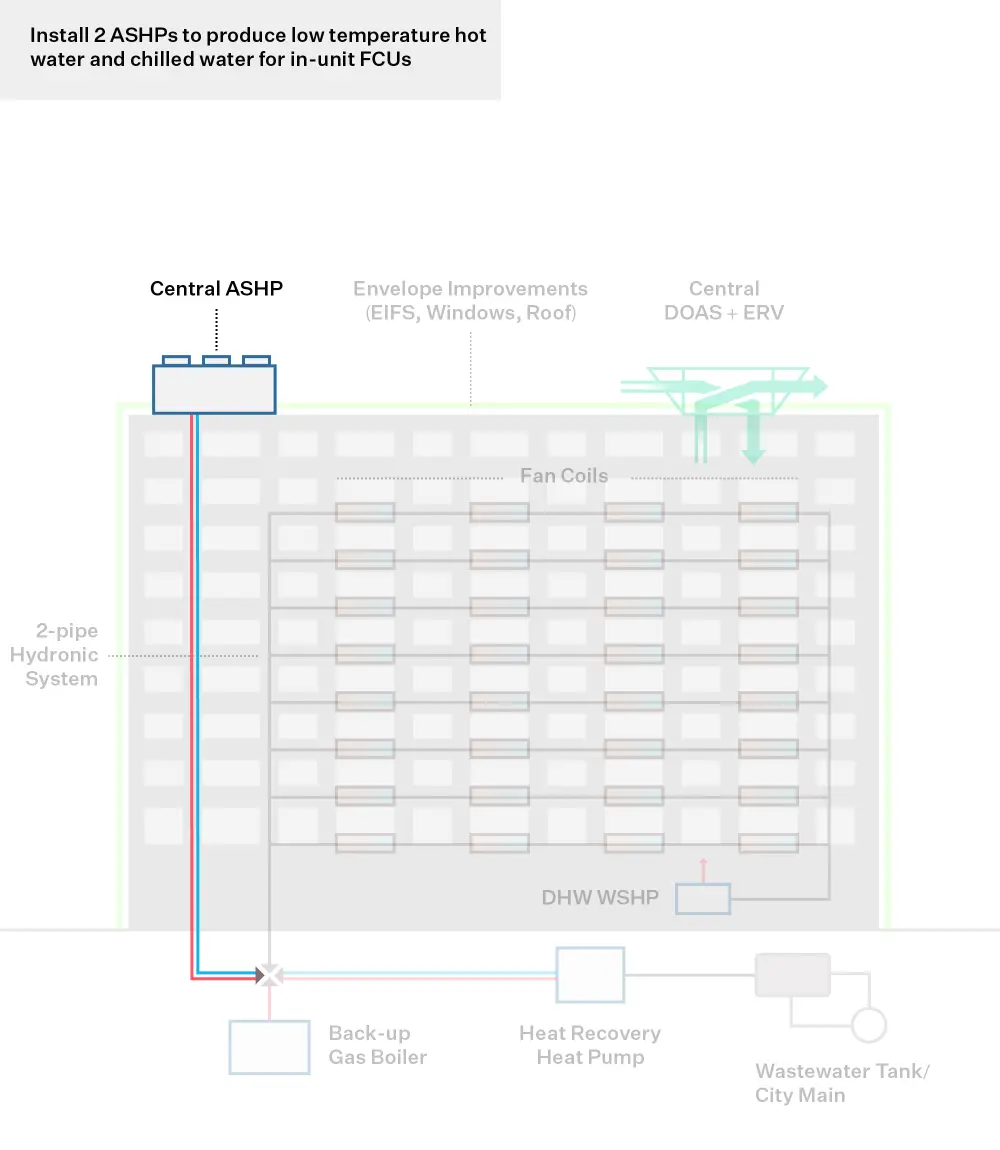
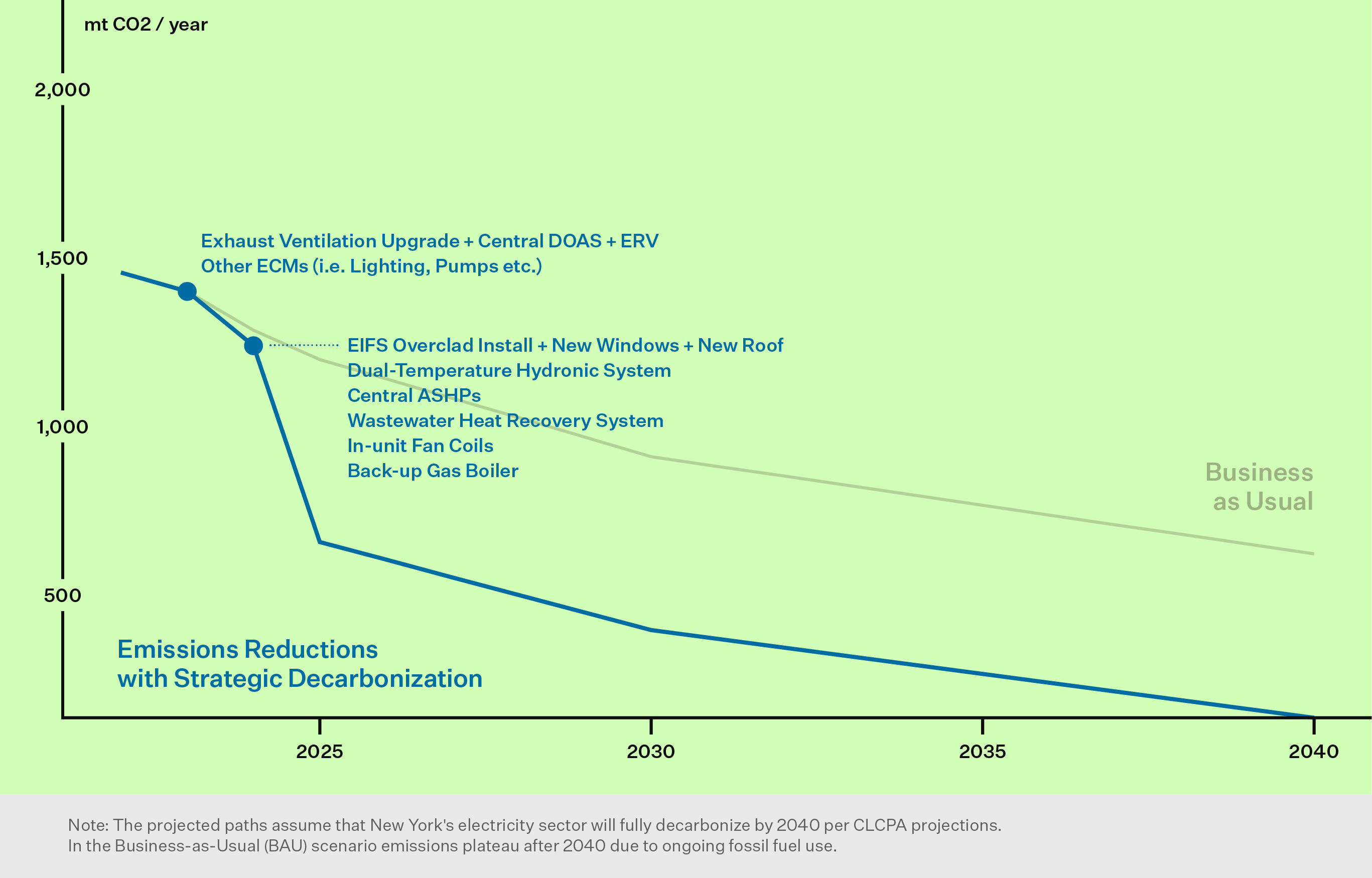
This project prioritizes intensive load reduction through envelope improvements and hydronic distribution to improve resident comfort while reducing carbon emissions, utility spend and maintenance costs.
Step 1
Step 1: Examine Current Conditions
A baseline assessment is key to understanding current systems and performance, then identifying conditions, requirements or events that will trigger a decarbonization effort. The assessment looks across technical systems, asset strategy and sectoral factors.
Building System Conditions
Equipment nearing end-of-life
New heat source potential
Comfort improvements
Indoor air quality improvements
Facade maintenance
Resilience upgrades
Efficiency improvements
Asset Conditions
Recapitalization
Carbon emissions limits
Owner sustainability goals
Market Conditions
Technology improves
Utility prices change
Fuels phase out
Whitney Young Manor is an aging affordable housing complex with open balconies, inefficient electric resistance baseboard heating, electric wall sleeve AC units, and gas-fired domestic hot water heaters.
The project team believes that with care, planning, and the appropriate resources, retrofitting these residential buildings can better serve tenants, deliver environmental benefits, and prove financially feasible for owners. Paths leverages the recapitalization cycle of the property to upgrade its infrastructure and include decarbonization measures to meet its climate goals.
This project prioritizes intensive load reduction through envelope improvements and hydronic distribution to improve resident comfort while reducing carbon emissions, utility spending, and maintenance costs.
Step 2
Step 2: Design Resource Efficient Solutions
Effective engineering integrates measures for reducing energy load, recovering wasted heat, and moving towards partial or full electrification. This increases operational efficiencies, optimizes energy peaks, and avoids oversized heating systems, thus alleviating space constraints and minimizing the cost of retrofits to decarbonize the building over time.
Existing Conditions
This diagram illustrates the building prior to the initiation of Strategic Decarbonization planning by the owners and their teams.
Click through the measures under “Building After” to understand the components of the building’s energy transition.
Sequence of Measures
2024
2025
Building System Affected
heating
cooling
ventilation
Reduce Energy Load
Whitney Young Manor demonstrates the benefits of over- cladding and hydronic distribution to enable heat pump technology:
New hydronic distribution: High efficiency water-based distribution system, lower supply temperature
The new hydronic distribution piping will enable the integration of different heating sources and allow heat sharing between end uses, such as DHW production during cooling season. The construction team plans to pilot cross-linked polyethylene (PEX) piping to reduce cost and improve durability.
Dedicated Outside Air System (DOAS): decouple ventilation from heat and cooling systems
Envelope Improvements: overclad, roof insulation and window replacement
Over-cladding using Exterior Insulation and Finishing System (EIFS) helps reduce heat loss and air infiltration while avoiding façade maintenance costs associated with LL11. This measure is combined with the new Dedicated Outside Air System (DOAS) to make sure adequate fresh air is injected into the building.
Recover Wasted Heat
The project team plans to integrate different heat sources connected to the central hydronic piping. This includes centralized air source heat pumps, Wastewater Energy Transfer (WET) system and gas-fired condensing boilers as back-up.
Wastewater Heat Recovery: Recapture heat from wastewater using WSHP
Energy Recovery Ventilator (ERV): Recapture heat from ventilation exhaust to condition make-up air
Electrification
Central Air Source Heat Pump (ASHP): Maintain design temperatures for the hydronic loop
Water Source Heat Pump (WSHP) for Domestic Hot Water (DHW): DHW production supplied by hydronic loop
Back-up gas condensing boiler: Provide supplemental heat during cold events as resiliency
Step 3
Step 3: Build the Business Case
Making a business case for strategic decarbonization requires thinking beyond a traditional energy audit approach or simple payback analysis. It assesses business-as-usual costs and risks against the costs and added value of phased decarbonization investments in the long-term.
Decarbonization Costs
$12M
Capital costs of decarbonization measures.
Business-as-Usual Costs
$1.92M
Energy cost savings, repairs and maintenance savings, BAU cost of system replacement and upgrades.
Business-as-Usual Risks
N/A
LL97 emissions fines don’t apply at this property.
Decarbonization Value
$6.14M
Incentives from Empire Building Challenge, Low-Carbon Pathways Program, and ConEd Clean Heat.
Net Present Value
TBD
Net difference between the present value of cash inflows and outflows over a period of time.
Paths Development LLC is a division of Paths, a full-scale, vertically integrated affordable housing developer, builder, and operator. Since 2004, the Paths team has created and preserved high-quality affordable housing across the U.S. that enhances communities and helps residents build better lives. With other 12,000 units across 9 states under management and more than 300 employees, Paths manages a suite of capabilities spanning the entire property life-cycle, including: development, construction, property management, maintenance, and security.
Strategic Decarbonization Action Plan
An emissions decarbonization roadmap helps building owners visualize their future emissions reductions by outlining the CO2 reductions from selected energy conservation measures. This roadmap is designed with a phased approach, considering a 20- or 30-year timeline, and incorporates the evolving benefits of grid decarbonization, ensuring a comprehensive view of long-term environmental impact.